
中枢神经系统疾病中干扰素基因信号通路的环鸟苷酸-腺苷酸合成酶刺激因子
cGAS- Stimulator of Interferon Genes Signaling in Central Nervous System Disorders.
作者信息
Li Fengjuan, Wang Ningqun, Zheng Yangmin, Luo Yumin, Zhang Yongbo
机构信息
1Department of Neurology, Beijing Friendship Hospital, Capital Medical University, Beijing 100050, China.
2Institute of Cerebrovascular Disease Research and Department of Neurology, Xuanwu Hospital of Capital Medical University, Beijing 100053, China.
出版信息
Aging Dis. 2021 Oct 1;12(7):1658-1674. doi: 10.14336/AD.2021.0304. eCollection 2021 Oct.
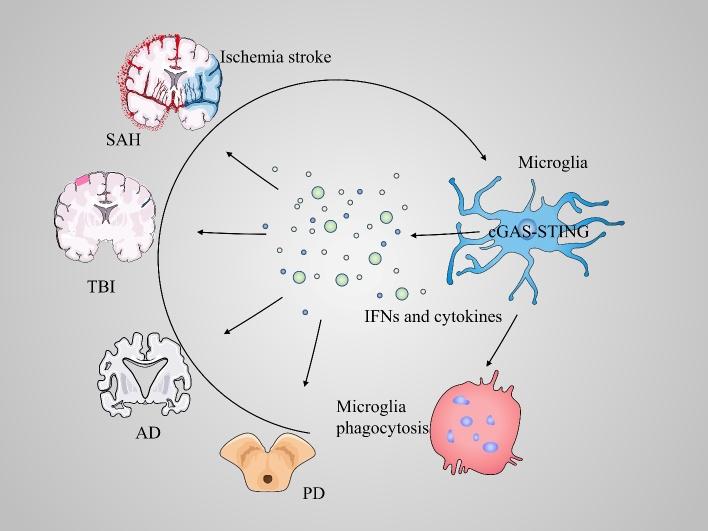
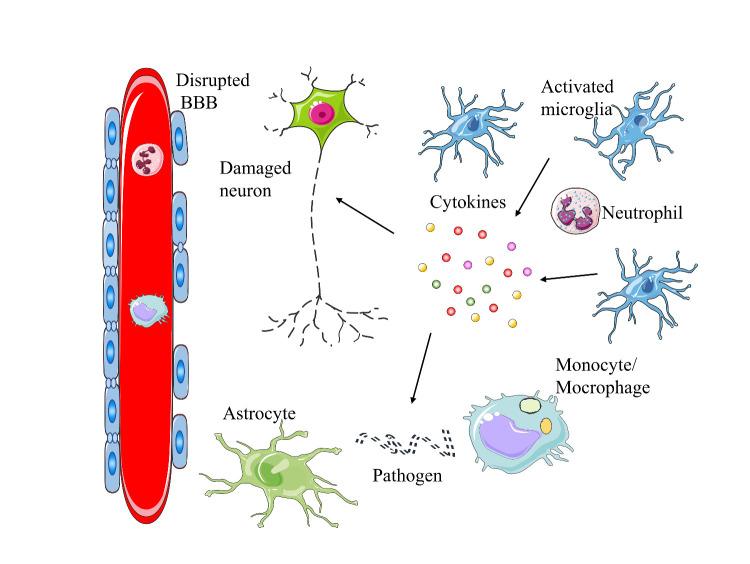
Cytosolic nucleic acid sensors contribute to the initiation of innate immune responses by playing a critical role in the detection of pathogens and endogenous nucleic acids. The cytosolic DNA sensor cyclic-GMP-AMP synthase (cGAS) and its downstream effector, stimulator of interferon genes (STING), mediate innate immune signaling by promoting the release of type I interferons (IFNs) and other inflammatory cytokines. These biomolecules are suggested to play critical roles in host defense, senescence, and tumor immunity. Recent studies have demonstrated that cGAS-STING signaling is strongly implicated in the pathogenesis of central nervous system (CNS) diseases which are underscored by neuroinflammatory-driven disease progression. Understanding and regulating the interactions between cGAS-STING signaling and the nervous system may thus provide an effective approach to prevent or delay late-onset CNS disorders. Here, we present a review of recent advances in the literature on cGAS-STING signaling and provide a comprehensive overview of the modulatory patterns of the cGAS-STING pathway in CNS disorders.
胞质核酸传感器通过在检测病原体和内源性核酸中发挥关键作用,有助于启动先天免疫反应。胞质DNA传感器环磷酸鸟苷-腺苷合成酶(cGAS)及其下游效应分子干扰素基因刺激因子(STING),通过促进I型干扰素(IFN)和其他炎性细胞因子的释放来介导先天免疫信号传导。这些生物分子被认为在宿主防御、衰老和肿瘤免疫中发挥关键作用。最近的研究表明,cGAS-STING信号传导与中枢神经系统(CNS)疾病的发病机制密切相关,这些疾病以神经炎症驱动的疾病进展为特征。因此,了解和调节cGAS-STING信号传导与神经系统之间的相互作用,可能为预防或延缓迟发性中枢神经系统疾病提供一种有效方法。在此,我们对cGAS-STING信号传导的文献最新进展进行综述,并全面概述cGAS-STING通路在中枢神经系统疾病中的调节模式。

 Zotero 插件