
IGF-II 衍生的 vesiculin 可增加糖尿病前期小鼠模型中的胰岛细胞质量。
Vesiculin derived from IGF-II drives increased islet cell mass in a mouse model of pre-diabetes.
机构信息
School of Biological Sciences, Faculty of Science, University of Auckland, Auckland, New Zealand.
Faculty of Medical and Health Sciences, School of Medical Sciences, Faculty of Medical and Health Sciences, University of Auckland, Auckland, New Zealand.
出版信息
Islets. 2022 Jan 1;14(1):14-22. doi: 10.1080/19382014.2021.1982326. Epub 2021 Oct 9.
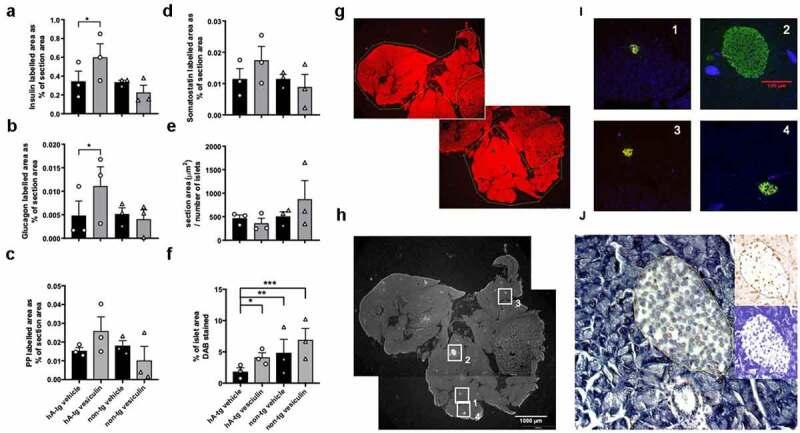
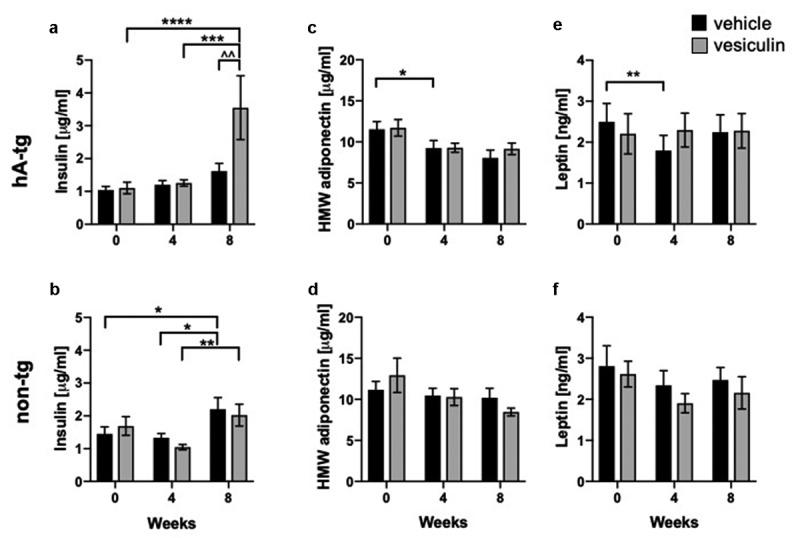
Pancreatic islet-cell function and volume are both key determinants of the maintenance of metabolic health. Insulin resistance and islet-cell dysfunction often occur in the earlier stages of type 2 diabetes (T2D) progression. The ability of the islet cells to respond to insulin resistance by increasing hormone output accompanied by increased islet-cell volume is key to maintaining blood glucose control and preventing further disease progression. Eventual β-cell loss is the main driver of full-blown T2D and insulin-dependency. Researchers are targeting T2D with approaches that include those aimed at enhancing the function of the patient's existing β-cell population, or replacing islet β-cells. Another approach is to look for agents that enhance the natural capacity of the β-cell population to expand. Here we aimed to study the effects of a new putative β-cell growth factor on a mouse model of pre-diabetes. We asked whether: 1) 4-week's treatment with vesiculin, a two-chain peptide derived by processing from IGF-II, had any measurable effect on pre-diabetic mice vs vehicle; and 2) whether the effects were the same in non-diabetic littermate controls. Although treatment with vesiculin did not alter blood glucose levels over this time period, there was a doubling of the Proliferating Cell Nuclear Antigen (PCNA) detectable in the islets of treated pre-diabetic but not control mice and this was accompanied by increased insulin- and glucagon-positive stained areas in the pancreatic islets.
胰岛细胞的功能和体积都是维持代谢健康的关键决定因素。胰岛素抵抗和胰岛细胞功能障碍通常发生在 2 型糖尿病(T2D)进展的早期阶段。胰岛细胞通过增加激素输出来应对胰岛素抵抗的能力,同时伴随着胰岛体积的增加,这是维持血糖控制和防止进一步疾病进展的关键。最终β细胞的损失是导致 2 型糖尿病和胰岛素依赖的主要原因。研究人员正在通过多种方法来治疗 2 型糖尿病,包括旨在增强患者现有β细胞群体功能的方法,或替代胰岛β细胞的方法。另一种方法是寻找能够增强β细胞群体自然扩张能力的药物。在这里,我们旨在研究一种新的假定β细胞生长因子对糖尿病前期小鼠模型的影响。我们提出了以下两个问题:1)用来源于 IGF-II 的二肽 vesiculin 处理 4 周对糖尿病前期小鼠与载体相比是否有任何可测量的影响;2)在非糖尿病同窝对照小鼠中,其效果是否相同。尽管在这段时间内,vesiculin 的治疗并没有改变血糖水平,但在治疗的糖尿病前期小鼠的胰岛中可检测到增殖细胞核抗原(PCNA)增加了一倍,而在非糖尿病对照小鼠中则没有,这伴随着胰岛中胰岛素和胰高血糖素阳性染色区域的增加。


 Zotero 插件