
虎杖苷的神经保护作用:神经药理学机制、分子靶点、治疗潜力及临床展望。
The Neuroprotective Role of Polydatin: Neuropharmacological Mechanisms, Molecular Targets, Therapeutic Potentials, and Clinical Perspective.
机构信息
Pharmaceutical Sciences Research Center, Health Institute, Kermanshah University of Medical Sciences, Kermanshah 6734667149, Iran.
Student Research Committee, Kermanshah University of Medical Sciences, Kermanshah 6714415153, Iran.
出版信息
Molecules. 2021 Oct 2;26(19):5985. doi: 10.3390/molecules26195985.
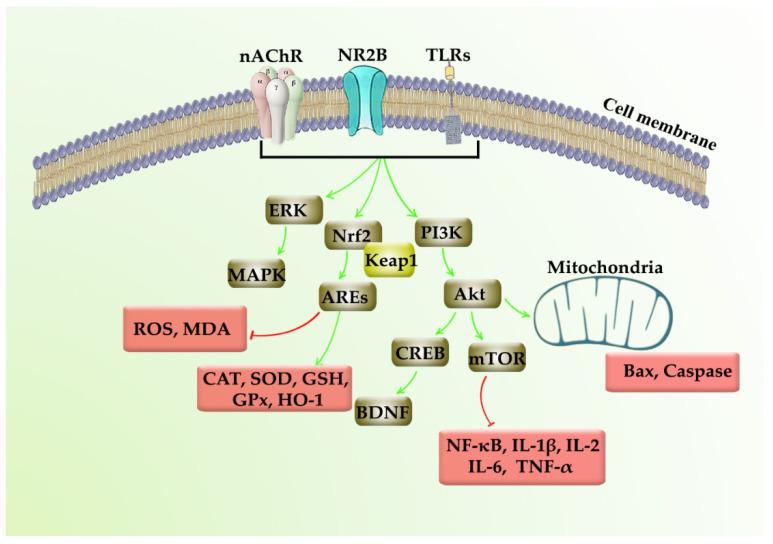
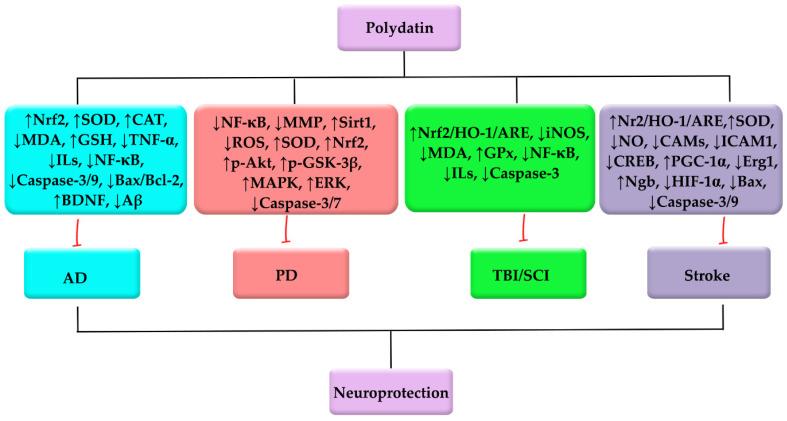
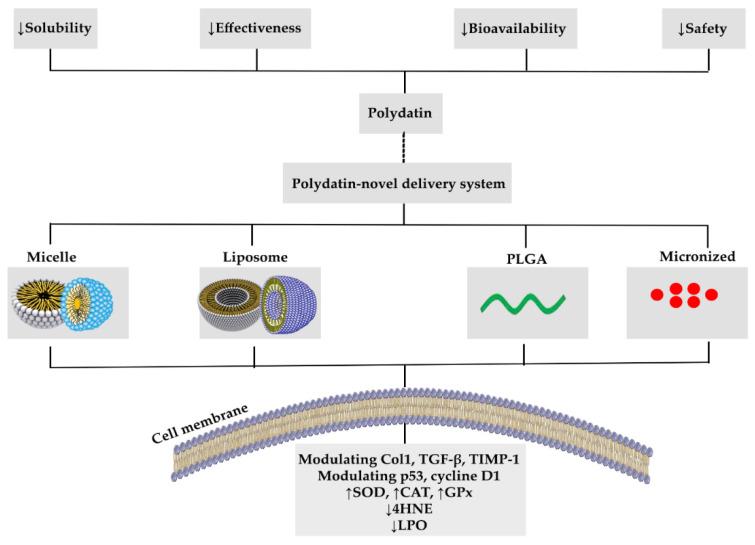
Neurodegenerative diseases (NDDs) are one of the leading causes of death and disability in humans. From a mechanistic perspective, the complexity of pathophysiological mechanisms contributes to NDDs. Therefore, there is an urgency to provide novel multi-target agents towards the simultaneous modulation of dysregulated pathways against NDDs. Besides, their lack of effectiveness and associated side effects have contributed to the lack of conventional therapies as suitable therapeutic agents. Prevailing reports have introduced plant secondary metabolites as promising multi-target agents in combating NDDs. Polydatin is a natural phenolic compound, employing potential mechanisms in fighting NDDs. It is considered an auspicious phytochemical in modulating neuroinflammatory/apoptotic/autophagy/oxidative stress signaling mediators such as nuclear factor-κB (NF-κB), NF-E2-related factor 2 (Nrf2)/antioxidant response elements (ARE), matrix metalloproteinase (MMPs), interleukins (ILs), phosphoinositide 3-kinases (PI3K)/protein kinase B (Akt), and the extracellular regulated kinase (ERK)/mitogen-activated protein kinase (MAPK). Accordingly, polydatin potentially counteracts Alzheimer's disease, cognition/memory dysfunction, Parkinson's disease, brain/spinal cord injuries, ischemic stroke, and miscellaneous neuronal dysfunctionalities. The present study provides all of the neuroprotective mechanisms of polydatin in various NDDs. Additionally, the novel delivery systems of polydatin are provided regarding increasing its safety, solubility, bioavailability, and efficacy, as well as developing a long-lasting therapeutic concentration of polydatin in the central nervous system, possessing fewer side effects.
神经退行性疾病(NDDs)是人类死亡和残疾的主要原因之一。从机制的角度来看,病理生理机制的复杂性导致了 NDDs 的发生。因此,迫切需要提供新的多靶点药物,以同时调节失调的通路,对抗 NDDs。此外,它们缺乏有效性和相关的副作用,导致缺乏常规疗法作为合适的治疗药物。现有的报道已经将植物次生代谢物作为对抗 NDDs 的有前途的多靶点药物。白藜芦醇是一种天然的酚类化合物,它在对抗 NDDs 方面具有潜在的机制。它被认为是一种有前途的植物化学物质,可以调节神经炎症/细胞凋亡/自噬/氧化应激信号介质,如核因子-κB(NF-κB)、核因子-E2 相关因子 2(Nrf2)/抗氧化反应元件(ARE)、基质金属蛋白酶(MMPs)、白细胞介素(ILs)、磷酸肌醇 3-激酶(PI3K)/蛋白激酶 B(Akt)和细胞外调节激酶(ERK)/丝裂原活化蛋白激酶(MAPK)。因此,白藜芦醇可能对抗阿尔茨海默病、认知/记忆功能障碍、帕金森病、脑/脊髓损伤、缺血性中风和各种神经元功能障碍。本研究提供了白藜芦醇在各种 NDDs 中的所有神经保护机制。此外,还提供了白藜芦醇的新型传递系统,以提高其安全性、溶解度、生物利用度和疗效,并在中枢神经系统中开发白藜芦醇的长效治疗浓度,减少副作用。

 Zotero 插件