
受体选择性白细胞介素-4突变体通过调节小鼠巨噬细胞极化减轻激光诱导的脉络膜新生血管形成。
Receptor-selective interleukin-4 mutein attenuates laser-induced choroidal neovascularization through the regulation of macrophage polarization in mice.
作者信息
Gao Limo, Jiang Wenmin, Liu Haiying, Chen Zhiheng, Lin Yanhui
机构信息
Department of Ophthalmology, The Second Xiangya Hospital, Central South University, Changsha, Hunan 410011, P.R. China.
Hunan University of Finance and Economics, Changsha, Hunan 410205, P.R. China.
出版信息
Exp Ther Med. 2021 Dec;22(6):1367. doi: 10.3892/etm.2021.10801. Epub 2021 Sep 27.
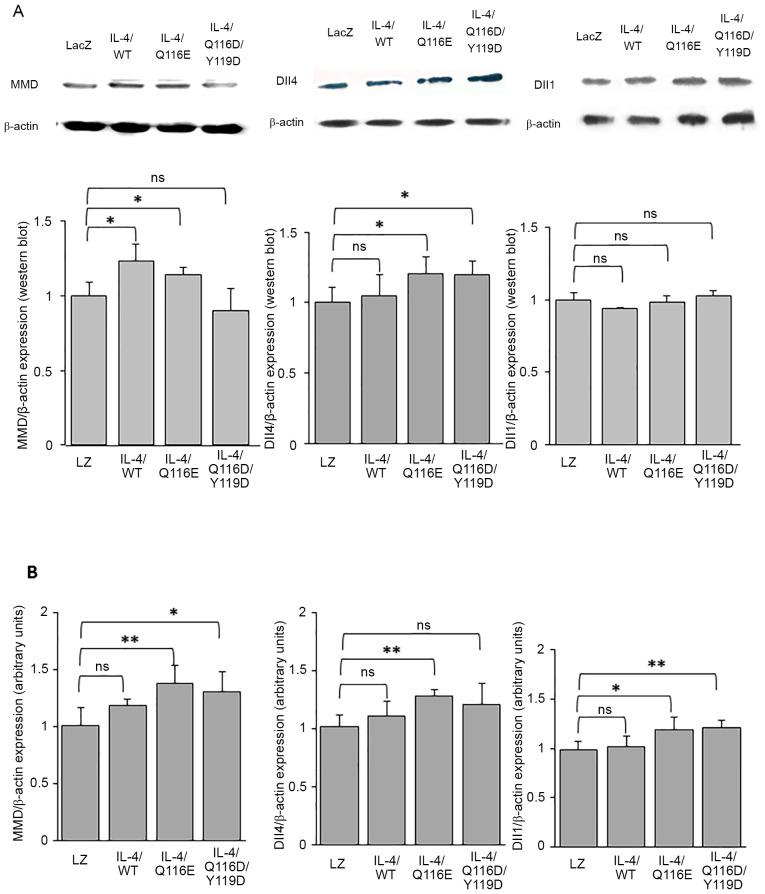
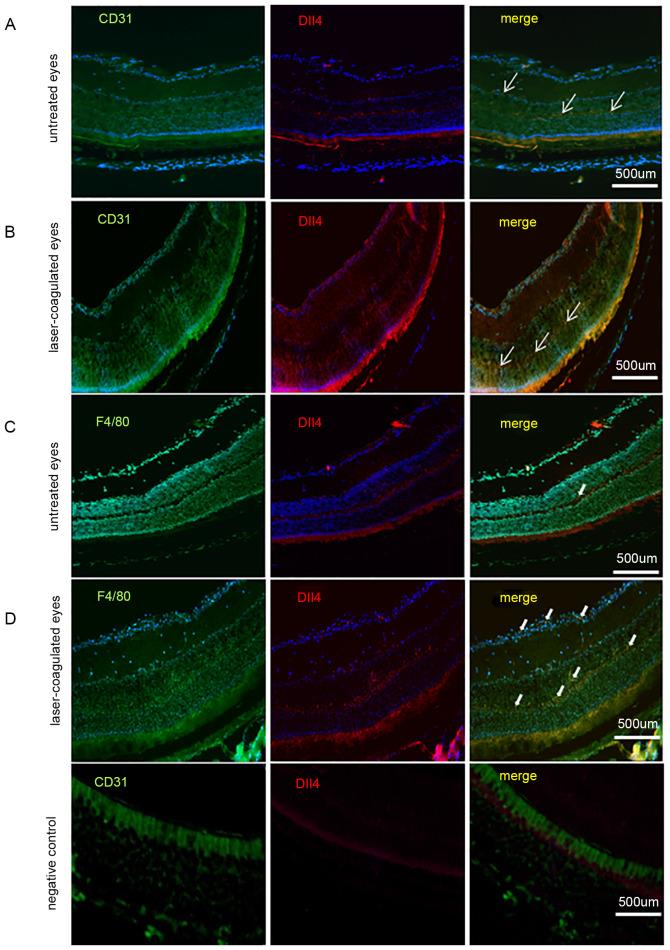
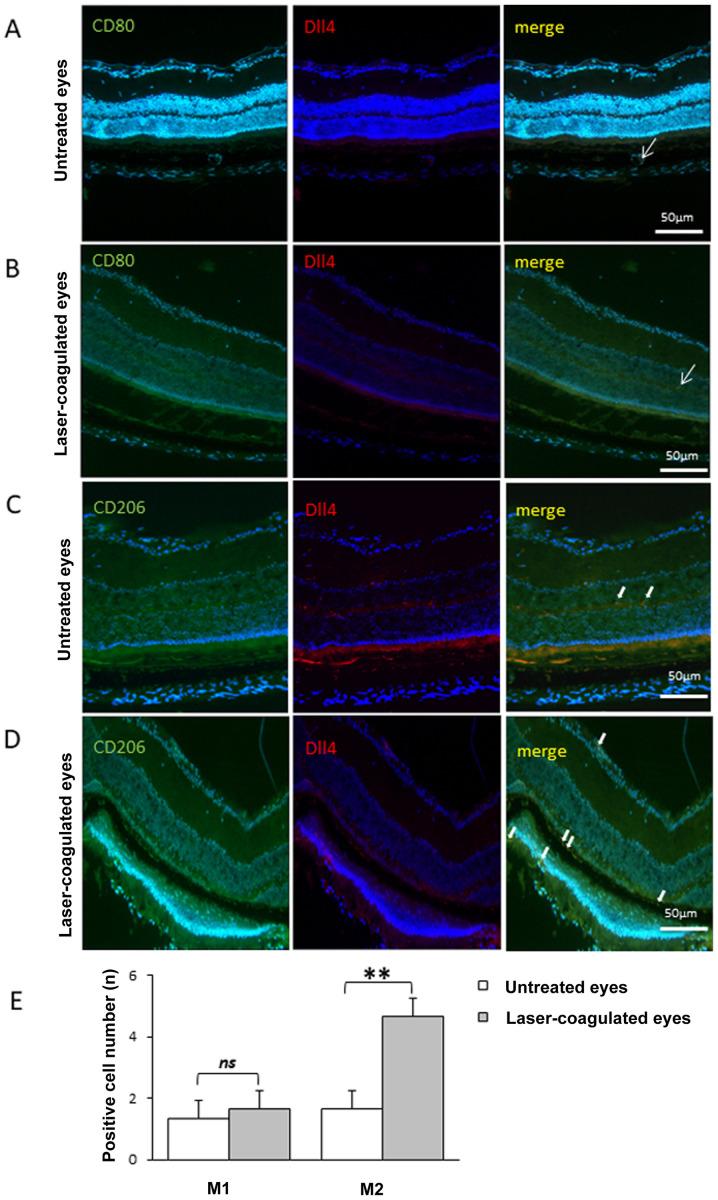
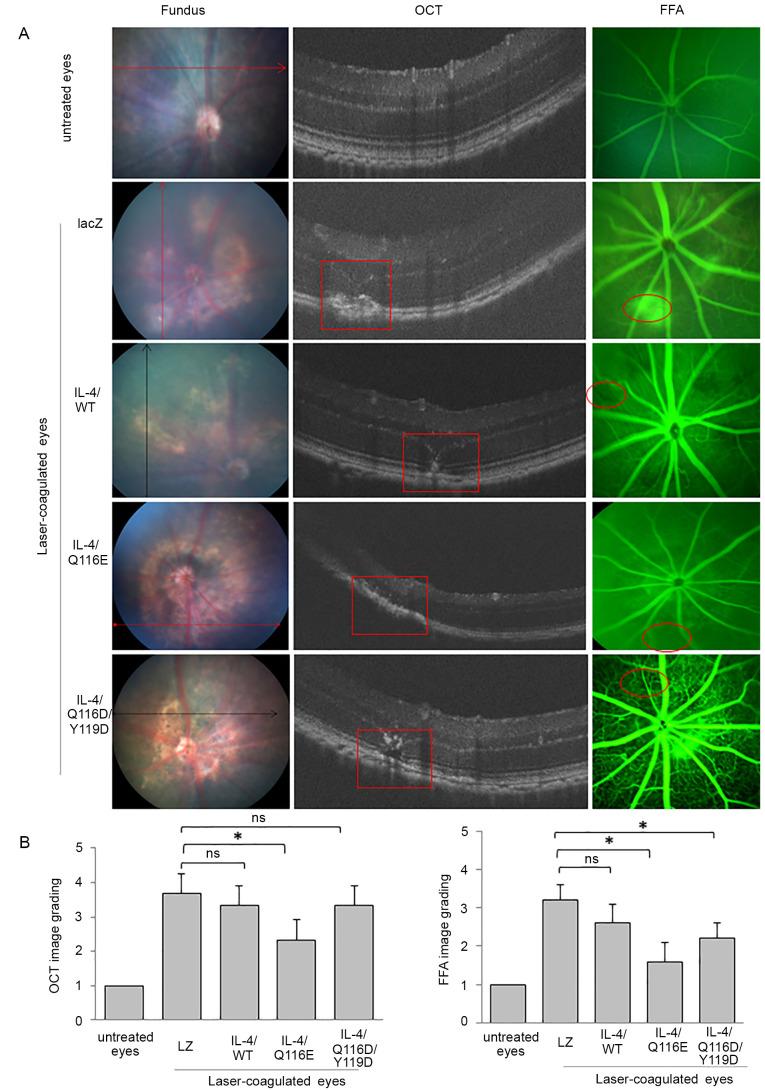
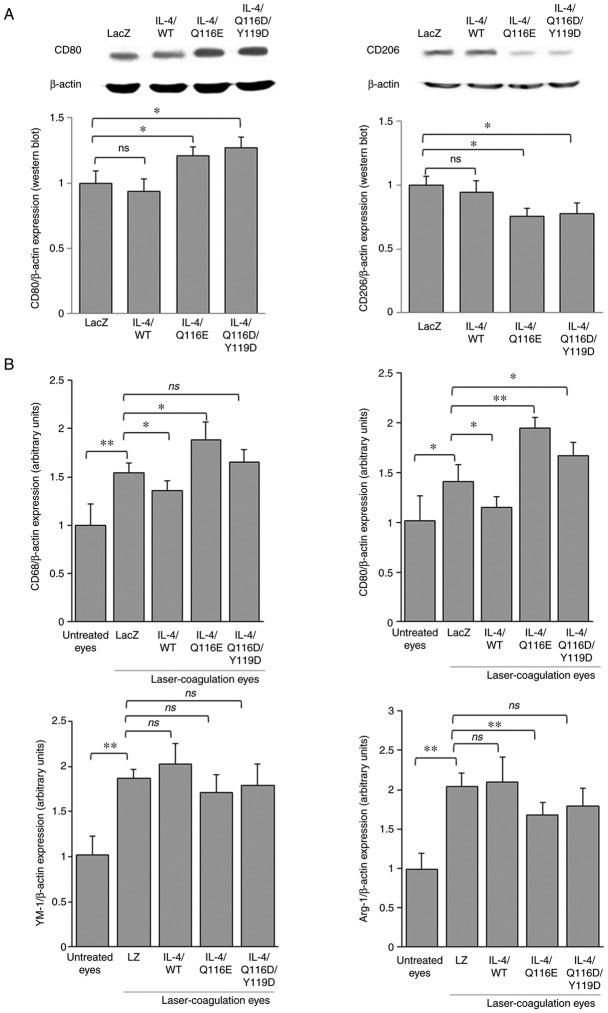
Macrophage polarization has been recognized as an important inflammatory regulator in choroidal neovascularization (CNV). However, the mechanisms regulating macrophage activation and polarization, as well as their effects on angiogenesis and CNV, have not yet been elucidated. IL-4 is implicated in macrophage activation and exerts different functions in various diseases through several receptors. In the current study, the effect of IL-4 muteins on CNV was investigated . CNV was induced by laser coagulation in wild type mice. IL-4 muteins were recombined into adenoviruses and injected into mice via the tail vein. To evaluate CNV, fluorescein fundus angiography and optical coherence tomography were performed on day 7 after coagulation. Quantitative PCR, western blotting and immunofluorescence staining were used to assess the levels of inflammatory markers. AdIL-4/Q116E, an adenovirus-expressed recombinant IL-4 mutein, selectively activated macrophages, alleviated laser-induced CNV in mice with reduced expression of M2 macrophages and increased the expression of M1 macrophages. Furthermore, the expression of monocyte to macrophage differentiation-associated and delta-like 4 (Dll4) in CNV lesions was upregulated. Employing AdIL-4/Q116E, a IL-4RI-selective mutein, may serve as a new strategy for CNV therapy. Moreover, the results indicated that Dll4 signaling served an important role in the regulation of macrophage polarization.
巨噬细胞极化已被公认为脉络膜新生血管(CNV)中的一种重要炎症调节因子。然而,调节巨噬细胞激活和极化的机制,以及它们对血管生成和CNV的影响,尚未阐明。白细胞介素-4(IL-4)与巨噬细胞激活有关,并通过几种受体在各种疾病中发挥不同作用。在本研究中,研究了IL-4突变体对CNV的影响。通过激光凝固在野生型小鼠中诱导CNV。将IL-4突变体重组到腺病毒中,并通过尾静脉注射到小鼠体内。为了评估CNV,在凝固后第7天进行荧光素眼底血管造影和光学相干断层扫描。采用定量PCR、蛋白质印迹和免疫荧光染色来评估炎症标志物的水平。AdIL-4/Q116E是一种腺病毒表达的重组IL-4突变体,可选择性激活巨噬细胞,减轻M2巨噬细胞表达降低的小鼠激光诱导的CNV,并增加M1巨噬细胞的表达。此外,CNV病变中单核细胞向巨噬细胞分化相关因子和Delta样4(Dll4)的表达上调。使用AdIL-4/Q116E这种IL-4RI选择性突变体可能是CNV治疗的一种新策略。此外,结果表明Dll4信号在巨噬细胞极化调节中起重要作用。
 Zotero 插件