
整合转录组-代谢组学分析揭示超声对酿酒酵母乙醇生产的影响。
Incorporating Transcriptomic-Metabolomic analysis reveal the effect of ultrasound on ethanol production in Saccharomyces Cerevisiae.
机构信息
School of the Environment and Safety Engineering, Jiangsu University, 301 Xuefu Road, Zhenjiang, Jiangsu 212013, China; School of Food and Biological Engineering, Jiangsu University, 301 Xuefu Road, Zhenjiang, Jiangsu 212013, China.
School of Food and Biological Engineering, Jiangsu University, 301 Xuefu Road, Zhenjiang, Jiangsu 212013, China; Institute of Food Physical Processing, Jiangsu University, 301 Xuefu Road, Zhenjiang, Jiangsu 212013, China.
出版信息
Ultrason Sonochem. 2021 Nov;79:105791. doi: 10.1016/j.ultsonch.2021.105791. Epub 2021 Oct 13.
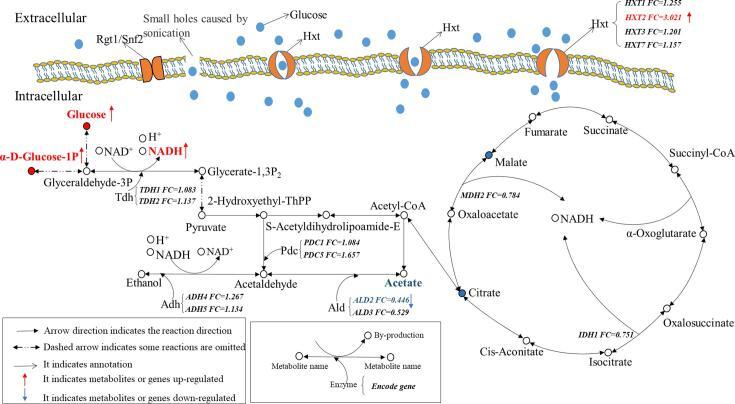
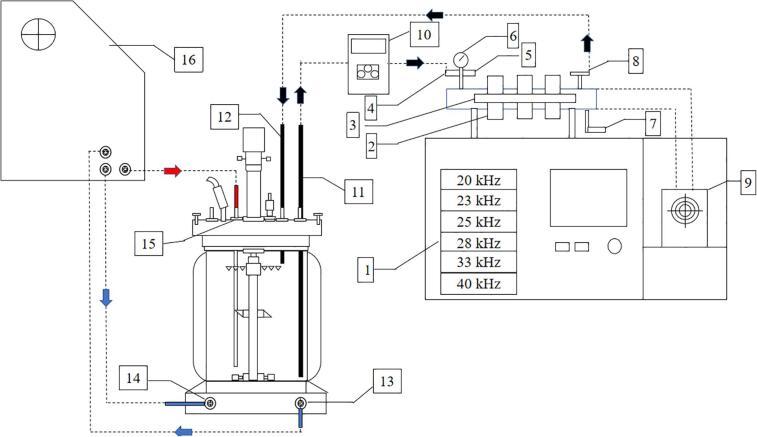
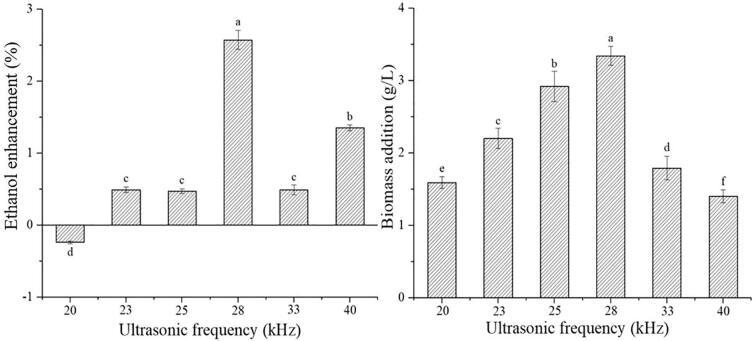
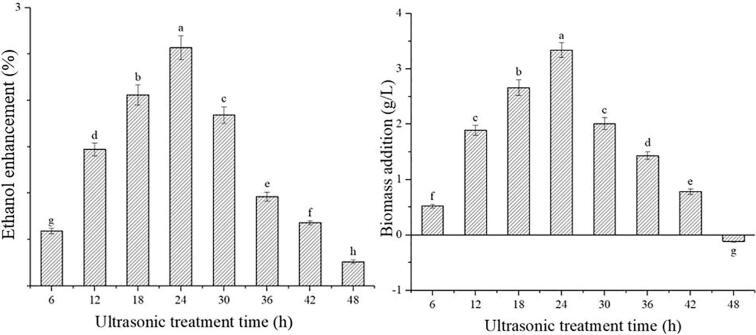
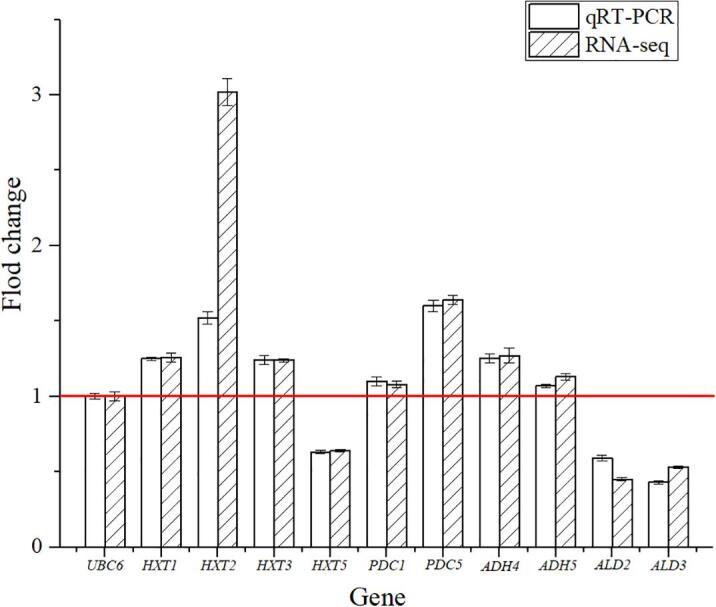
This study reports an enhancement of ethanol yield in Saccharomyces cerevisiae with low-intensity ultrasonic irradiation using fixed mode frequency generated by a self-developed six-frequencies (20, 23, 25, 28, 33, 40 kHz) ultrasonic device in our group. After sonication treatment, the ethanol production potential was determined. Under the optimal conditions of ultrasonic treatment (ultrasonic frequency 28 kHz, power density 180 W/L, and treatment time 24 h), the maximum ethanol yield increased by 34.87% compared to the control. Transcriptome sequencing showed that the ultrasonic treatment had expressional regulations on genes involved in pyruvate metabolism, glycolysis, pentose phosphate pathway, glucose transport, and reducing power production. The quantitative real-time polymerase chain reaction (qRT-PCR) further confirmed the changes in gene expression (up- or down-regulation). Metabolomics revealed that ultrasonic treatments increased intracellular glucose and nicotinamide adenine dinucleotide (NADH) contents, which are key metabolites for ethanol synthesis. Besides, ultrasonic treatments decreased the acetate and its derivatives resulting in lowered reverse consumption of pyruvate and thus promoted ethanol synthesis. These changes in gene expression and metabolites content might be the main reason why the ethanol yield in Saccharomyces cerevisiae increased after ultrasonic irradiation.
本研究采用课题组自主研发的六频(20、23、25、28、33、40 kHz)超声波装置,以固定模式频率对酿酒酵母进行低强度超声处理,提高了乙醇产量。经超声处理后,测定了乙醇生产潜力。在超声处理的最佳条件(超声频率 28 kHz、功率密度 180 W/L、处理时间 24 h)下,与对照组相比,最大乙醇产量提高了 34.87%。转录组测序表明,超声处理对参与丙酮酸代谢、糖酵解、戊糖磷酸途径、葡萄糖转运和还原力产生的基因有表达调控作用。实时荧光定量聚合酶链式反应(qRT-PCR)进一步证实了基因表达的变化(上调或下调)。代谢组学揭示,超声处理增加了细胞内葡萄糖和烟酰胺腺嘌呤二核苷酸(NADH)的含量,这是乙醇合成的关键代谢物。此外,超声处理降低了乙酸及其衍生物的含量,从而降低了丙酮酸的反向消耗,促进了乙醇的合成。这些基因表达和代谢物含量的变化可能是超声辐射后酿酒酵母乙醇产量增加的主要原因。






 Zotero 插件