
电针对膝骨关节炎患者肠道菌群的影响。
Effect of Electroacupuncture on Gut Microbiota in Participants With Knee Osteoarthritis.
机构信息
International Acupuncture and Moxibustion Innovation Institute, School of Acupuncture-Moxibustion and Tuina, Beijing University of Chinese Medicine, Beijing, China.
National Institute of Traditional Chinese Medicine Constitution and Preventive Treatment of Diseases, Beijing University of Chinese Medicine, Beijing, China.
出版信息
Front Cell Infect Microbiol. 2021 Oct 4;11:597431. doi: 10.3389/fcimb.2021.597431. eCollection 2021.
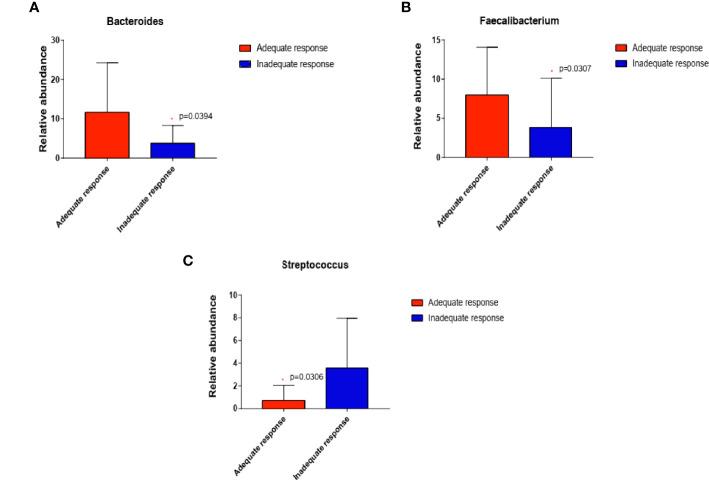
A close relationship between knee osteoarthritis (KOA) and gut microbiota has recently been described. Herein, we aim to investigate the effect of electroacupuncture (EA) on gut microbiota in participants with KOA. We conducted a study of 60 participants with KOA and 30 matched healthy controls (HCs). Sixty participants were allocated to either EA group (n=30) or sham acupuncture (SA) group (n=30). Five obligatory acupoints and three adjunct acupoints were punctured in the EA group. Eight non-acupoints that were separated from conventional acupoints or meridians were used for the SA group. Participants in both groups received 24 sessions within eight weeks. Fecal microbial analyses by 16S ribosomal RNA gene sequencing were carried out after collecting stools at and weeks (Four samples with changed defecation habits were excluded). The results showed that both Western Ontario and McMaster Universities Osteoarthritis Index (WOMAC) total score (0.043) and NRS score (0.002) decreased more in EA group than those in SA group. Moreover, EA could reverse more KOA-related bacteria including , , r . The number of significantly different genera between KOA patients and HCs were less after EA treatment than that after SA treatment. This meant that EA modified the composition of the gut microbiome, making it closer to healthy people, while not significantly affecting the microbial diversity. Two genera including (=0.0163), (=0.0144) were statistically increased than baseline in EA group (paired Wilcoxon rank sum test). After EA treatment, (0.0394) was more abundant and (0.0306) was significantly reduced in patients who demonstrated adequate response than in those with inadequate response (Wilcoxon rank-sum test). Spearman correlation test between gut microbe and KOA clinical outcomes indicated that and was negatively correlated with NRS score, WOMAC total score, and WOMAC pain, stiffness and pain scores (<0.001 or 0.05 or 0.01), while was positively correlated with them (<0.05 or 0.01). Our study suggests that EA contributes to the improvement of KOA and gut microbiota could be a potential therapeutic target.
膝关节骨关节炎(KOA)与肠道微生物群之间存在密切关系。本研究旨在探讨电针对 KOA 患者肠道微生物群的影响。
我们进行了一项包含 60 名 KOA 患者和 30 名匹配健康对照者(HCs)的研究。60 名参与者被分配至电针组(n=30)或假针刺组(n=30)。电针组针刺 5 个特定穴位和 3 个辅助穴位,假针刺组针刺 8 个与常规穴位或经络分离的非穴位。两组患者均在 8 周内接受 24 次治疗。在 和 周收集粪便后进行 16S 核糖体 RNA 基因测序进行粪便微生物分析(排除 4 例排便习惯改变的样本)。结果显示,电针组的 Western Ontario and McMaster Universities Osteoarthritis Index(WOMAC)总评分(0.043)和 NRS 评分(0.002)下降均较假针刺组更显著。此外,电针可以逆转更多与 KOA 相关的细菌,包括 、 、 、 、 、 、 、 、 。与假针刺组相比,电针治疗后 KOA 患者与 HCs 之间差异显著的菌属数量更少,这意味着电针可以调节肠道微生物群的组成,使其更接近健康人,而不会显著影响微生物多样性。电针组有两个菌属(=0.0163)和 (=0.0144)在治疗后较基线显著增加(配对 Wilcoxon 秩和检验)。在电针治疗后,在表现出充分反应的患者中, (0.0394)更为丰富, (0.0306)显著减少,而在反应不足的患者中则减少(Wilcoxon 秩和检验)。肠道微生物与 KOA 临床结局的 Spearman 相关性检验表明, 与 NRS 评分、WOMAC 总分、WOMAC 疼痛、僵硬和疼痛评分呈负相关(<0.001 或 0.05 或 0.01),而 与这些评分呈正相关(<0.05 或 0.01)。
我们的研究表明,电针有助于改善 KOA,肠道微生物群可能是一个潜在的治疗靶点。


 Zotero 插件