
大流行前对魁北克省医疗和外科病房中与医疗保健相关感染的预防和控制干预措施的成本进行的 COVID-19 评估。
A pre-pandemic COVID-19 assessment of the costs of prevention and control interventions for healthcare associated infections in medical and surgical wards in Québec.
机构信息
Department of Nursing Research, Université du Québec en Outaouais, St-Jérôme Campus, 5, rue Saint-Joseph, Office J-2204, Saint-Jérôme, Québec, J7Z 0B7, Canada.
Centre Intégré de Santé et de Services Sociaux Des Laurentides, Direction de la Santé Publique, Saint-Jérôme, Québec, Canada.
出版信息
Antimicrob Resist Infect Control. 2021 Oct 21;10(1):150. doi: 10.1186/s13756-021-01000-y.
BACKGROUND
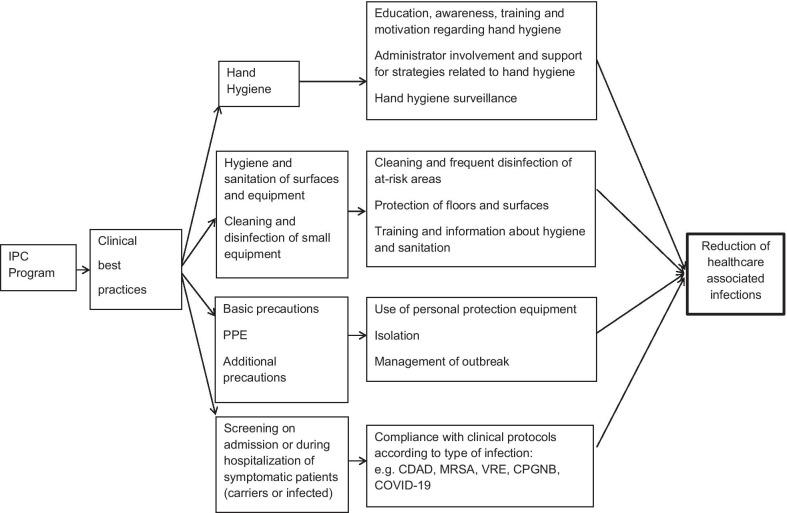
Healthcare-associated infections (HCAIs) present a major public health problem that significantly affects patients, health care providers and the entire healthcare system. Infection prevention and control programs limit HCAIs and are an indispensable component of patient and healthcare worker safety. The clinical best practices (CBPs) of handwashing, screening, hygiene and sanitation of surfaces and equipment, and basic and additional precautions (e.g., isolation, and donning and removing personal protective equipment) are keystones of infection prevention and control (IPC). There is a lack of rigorous IPC economic evaluations demonstrating the cost-benefit of IPC programs in general, and a lack of assessment of the value of investing in CBPs more specifically.
OBJECTIVE
This study aims to assess overall costs associated with each of the four CBPs.
METHODS
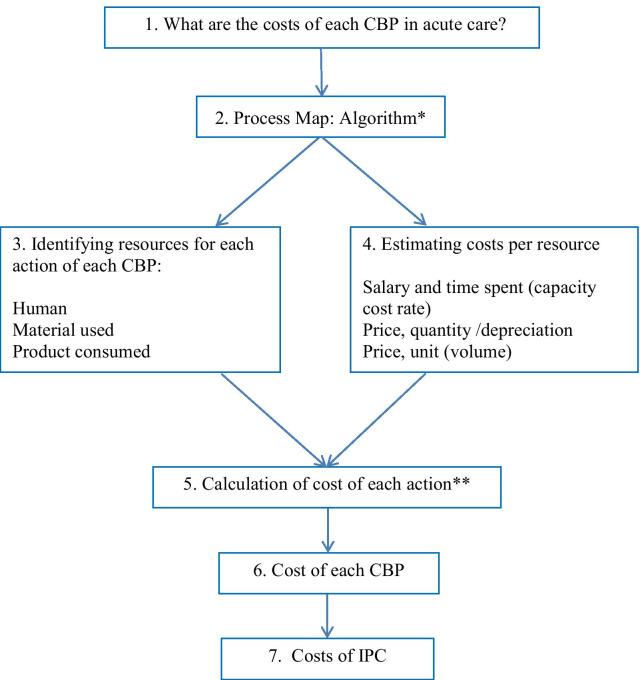
Across two Quebec hospitals, 48 healthcare workers were observed for two hours each shift, for two consecutive weeks. A modified time-driven activity-based costing framework method was used to capture all human resources (time) and materials (e.g. masks, cloths, disinfectants) required for each clinical best practice. Using a hospital perspective with a time horizon of one year, median costs per CBP per hour, as well as the cost per action, were calculated and reported in 2018 Canadian dollars ($). Sensitivity analyses were performed.
RESULTS
A total of 1831 actions were recorded. The median cost of hand hygiene (N = 867) was 20 cents per action. For cleaning and disinfection of surfaces (N = 102), the cost was 21 cents per action, while cleaning of small equipment (N = 85) was 25 cents per action. Additional precautions median cost was $4.1 per action. The donning or removing or personal protective equipment (N = 720) cost was 76 cents per action. Finally, the total median costs for the five categories of clinical best practiced assessed were 27 cents per action.
CONCLUSIONS
The costs of clinical best practices were low, from 20 cents to $4.1 per action. This study provides evidence based arguments with which to support the allocation of resources to infection prevention and control practices that directly affect the safety of patients, healthcare workers and the public. Further research of costing clinical best care practices is warranted.
背景
医疗保健相关感染(HAI)是一个重大的公共卫生问题,对患者、医疗保健提供者和整个医疗保健系统都有重大影响。感染预防和控制计划可以限制 HAI 的发生,是患者和医疗保健工作者安全的不可或缺的组成部分。洗手、筛查、表面和设备的卫生和清洁、基本和附加预防措施(例如隔离以及个人防护设备的穿戴和脱下)的临床最佳实践(CBPs)是感染预防和控制(IPC)的关键。目前缺乏严格的 IPC 经济评估,无法全面证明 IPC 计划的成本效益,也缺乏对投资 CBPs 价值的评估。
目的
本研究旨在评估四项 CBPs 中的每一项相关的总成本。
方法
在魁北克的两家医院中,连续两周内,每个班次每小时观察 48 名医护人员。采用改良的时间驱动活动基础成本核算框架方法,记录每项临床最佳实践所需的所有人力资源(时间)和材料(例如口罩、布、消毒剂)。采用医院视角,时间范围为一年,计算并报告了每小时每项 CBP 的中位数成本,以及每行动成本,并以 2018 年加元($)表示。进行了敏感性分析。
结果
共记录了 1831 次操作。手部卫生(N=867)的中位数成本为每次操作 20 美分。表面清洁和消毒(N=102)的成本为每次操作 21 美分,而小型设备的清洁(N=85)的成本为每次操作 25 美分。附加预防措施的中位数成本为每次操作 4.1 美元。穿戴或脱下个人防护设备(N=720)的成本为每次操作 76 美分。最后,评估的五类临床最佳实践的总中位数成本为每次操作 27 美分。
结论
临床最佳实践的成本较低,每次操作从 20 美分到 4.1 美元不等。本研究提供了基于证据的论据,支持将资源分配给直接影响患者、医疗保健工作者和公众安全的感染预防和控制措施。进一步研究临床最佳护理实践的成本是有必要的。
 Zotero 插件