
内分泌胰腺的体外疾病模型
In Vitro Disease Models of the Endocrine Pancreas.
作者信息
Milojević Marko, Rožanc Jan, Vajda Jernej, Činč Ćurić Laura, Paradiž Eva, Stožer Andraž, Maver Uroš, Vihar Boštjan
机构信息
Faculty of Medicine, Institute of Biomedical Sciences, University of Maribor, Taborska ulica 8, 2000 Maribor, Slovenia.
Department of Pharmacology, Faculty of Medicine, University of Maribor, Taborska ulica 8, 2000 Maribor, Slovenia.
出版信息
Biomedicines. 2021 Oct 8;9(10):1415. doi: 10.3390/biomedicines9101415.
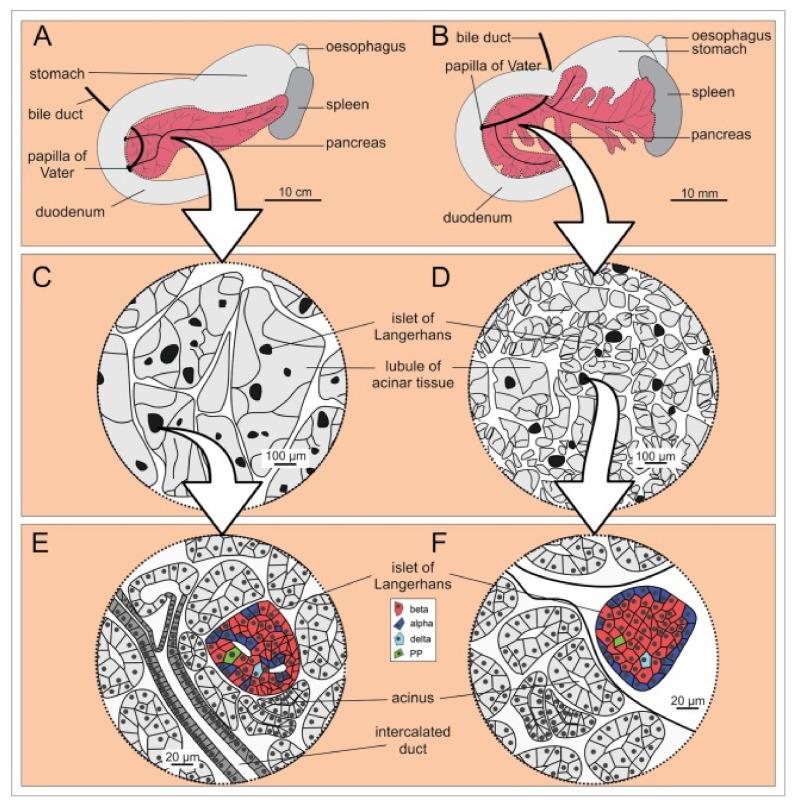
The ethical constraints and shortcomings of animal models, combined with the demand to study disease pathogenesis under controlled conditions, are giving rise to a new field at the interface of tissue engineering and pathophysiology, which focuses on the development of in vitro models of disease. In vitro models are defined as synthetic experimental systems that contain living human cells and mimic tissue- and organ-level physiology in vitro by taking advantage of recent advances in tissue engineering and microfabrication. This review provides an overview of in vitro models and focuses specifically on in vitro disease models of the endocrine pancreas and diabetes. First, we briefly review the anatomy, physiology, and pathophysiology of the human pancreas, with an emphasis on islets of Langerhans and beta cell dysfunction. We then discuss different types of in vitro models and fundamental elements that should be considered when developing an in vitro disease model. Finally, we review the current state and breakthroughs in the field of pancreatic in vitro models and conclude with some challenges that need to be addressed in the future development of in vitro models.
动物模型的伦理限制和缺点,再加上在可控条件下研究疾病发病机制的需求,催生了组织工程与病理生理学交叉领域的一个新方向,该方向专注于疾病体外模型的开发。体外模型被定义为包含活的人类细胞,并利用组织工程和微制造的最新进展在体外模拟组织和器官水平生理学的合成实验系统。本综述概述了体外模型,并特别关注内分泌胰腺和糖尿病的体外疾病模型。首先,我们简要回顾人类胰腺的解剖学、生理学和病理生理学,重点是胰岛和β细胞功能障碍。然后,我们讨论不同类型的体外模型以及开发体外疾病模型时应考虑的基本要素。最后,我们回顾胰腺体外模型领域的现状和突破,并总结体外模型未来发展中需要解决的一些挑战。



 Zotero 插件