
乳铁蛋白、乳铁肽及其它乳铁蛋白衍生肽的抗菌活性的多种机制。
Diverse Mechanisms of Antimicrobial Activities of Lactoferrins, Lactoferricins, and Other Lactoferrin-Derived Peptides.
机构信息
Department of Food Science and Technology, Biotechnical Faculty, University of Ljubljana, 1000 Ljubljana, Slovenia.
出版信息
Int J Mol Sci. 2021 Oct 19;22(20):11264. doi: 10.3390/ijms222011264.
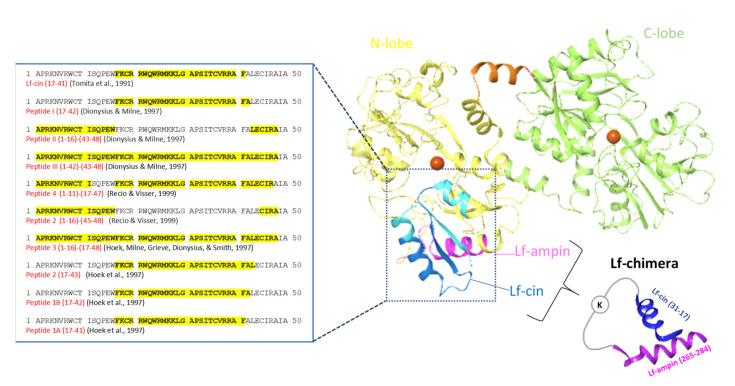
Lactoferrins are an iron-binding glycoprotein that have important protective roles in the mammalian body through their numerous functions, which include antimicrobial, antitumor, anti-inflammatory, immunomodulatory, and antioxidant activities. Among these, their antimicrobial activity has been the most studied, although the mechanism behind antimicrobial activities remains to be elucidated. Thirty years ago, the first lactoferrin-derived peptide was isolated and showed higher antimicrobial activity than the native lactoferrin lactoferricin. Since then, numerous studies have investigated the antimicrobial potencies of lactoferrins, lactoferricins, and other lactoferrin-derived peptides to better understand their antimicrobial activities at the molecular level. This review defines the current antibacterial, antiviral, antifungal, and antiparasitic activities of lactoferrins, lactoferricins, and lactoferrin-derived peptides. The primary focus is on their different mechanisms of activity against bacteria, viruses, fungi, and parasites. The role of their structure, amino-acid composition, conformation, charge, hydrophobicity, and other factors that affect their mechanisms of antimicrobial activity are also reviewed.
乳铁蛋白是一种铁结合糖蛋白,通过其多种功能,在哺乳动物体内具有重要的保护作用,包括抗菌、抗肿瘤、抗炎、免疫调节和抗氧化活性。在这些功能中,其抗菌活性研究最多,尽管抗菌活性的机制仍有待阐明。三十年前,第一个乳铁蛋白衍生肽被分离出来,表现出比天然乳铁蛋白乳铁蛋白更高的抗菌活性。自那时以来,许多研究已经研究了乳铁蛋白、乳铁蛋白肽和其他乳铁蛋白衍生肽的抗菌效力,以更好地了解它们在分子水平上的抗菌活性。这篇综述定义了乳铁蛋白、乳铁蛋白肽和乳铁蛋白衍生肽的当前抗菌、抗病毒、抗真菌和抗寄生虫活性。主要重点是它们针对细菌、病毒、真菌和寄生虫的不同作用机制。还回顾了影响其抗菌活性机制的结构、氨基酸组成、构象、电荷、疏水性和其他因素的作用。


 Zotero 插件