
茎的标准化提取物通过抑制小鼠原代巨噬细胞中的p44/42 MAPK和Akt磷酸化来减弱SARS-CoV-2刺突蛋白诱导的IL-6和IL-1β产生。
Standardized Extract of Stem Attenuates SARS-CoV-2 Spike Protein-Induced IL-6 and IL-1β Production by Suppressing p44/42 MAPK and Akt Phosphorylation in Murine Primary Macrophages.
作者信息
Shirato Ken, Takanari Jun, Kizaki Takako
机构信息
Department of Molecular Predictive Medicine and Sport Science, Kyorin University School of Medicine, 6-20-2 Shinkawa, Mitaka, Tokyo 181-8611, Japan.
Amino Up Co., Ltd., 363-32 Shin-ei, Kiyota, Sapporo 004-0839, Japan.
出版信息
Molecules. 2021 Oct 14;26(20):6189. doi: 10.3390/molecules26206189.
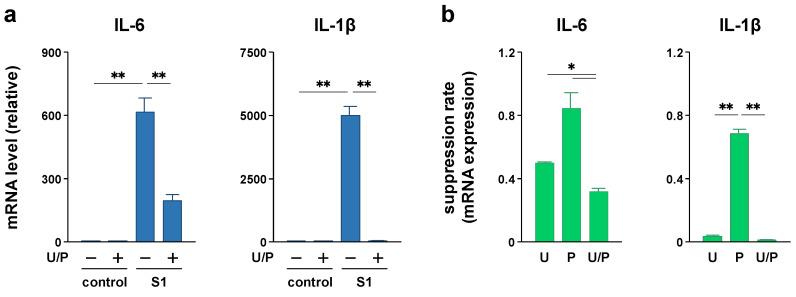
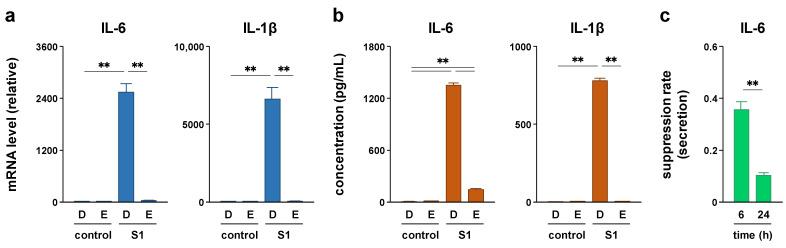
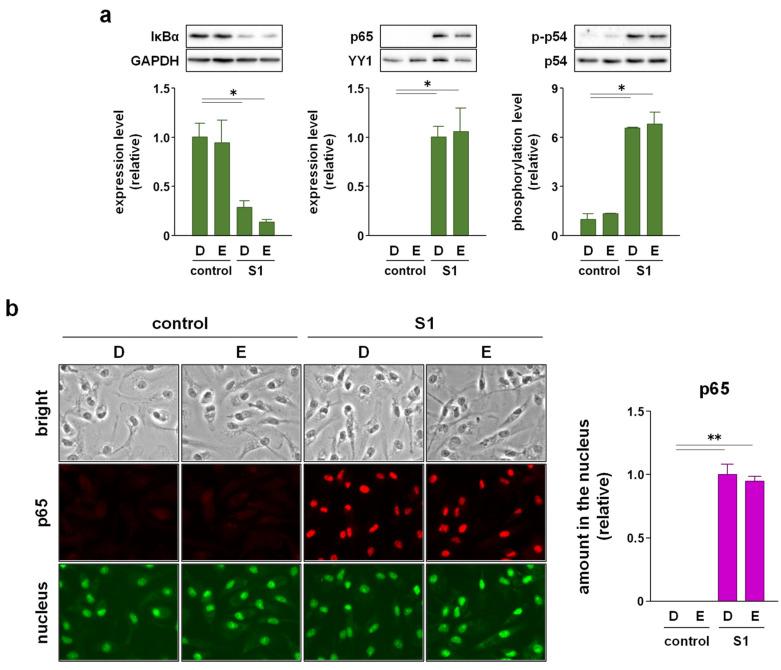
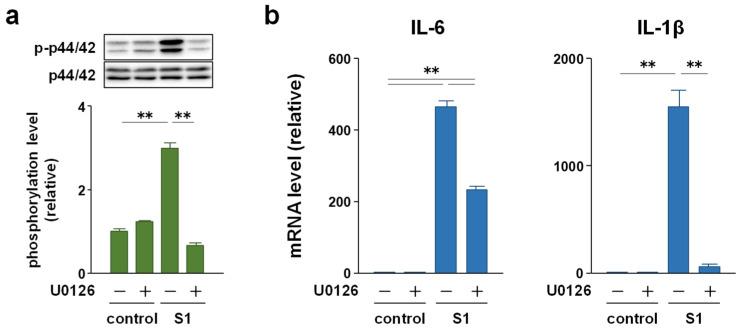
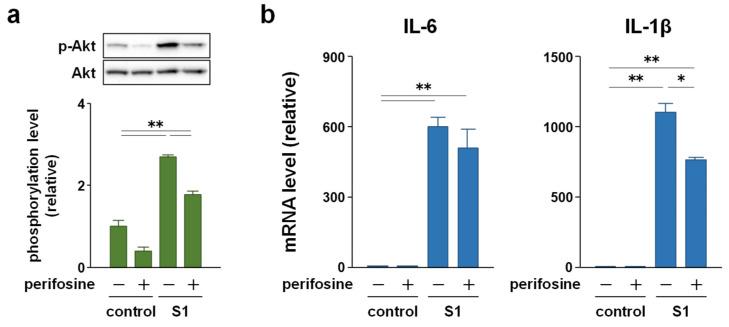
Excessive host inflammation following infection with severe acute respiratory syndrome coronavirus 2 (SARS-CoV-2) is associated with severity and mortality in coronavirus disease 2019 (COVID-19). We recently reported that the SARS-CoV-2 spike protein S1 subunit (S1) induces pro-inflammatory responses by activating toll-like receptor 4 (TLR4) signaling in macrophages. A standardized extract of stem (EAS) is a unique functional food that elicits anti-photoaging effects by suppressing pro-inflammatory signaling in hydrogen peroxide and ultraviolet B-exposed skin fibroblasts. To elucidate its potential in preventing excessive inflammation in COVID-19, we examined the effects of EAS on pro-inflammatory responses in S1-stimulated macrophages. Murine peritoneal exudate macrophages were co-treated with EAS and S1. Concentrations and mRNA levels of pro-inflammatory cytokines were assessed using enzyme-linked immunosorbent assay and reverse transcription and real-time polymerase chain reaction, respectively. Expression and phosphorylation levels of signaling proteins were analyzed using western blotting and fluorescence immunomicroscopy. EAS significantly attenuated S1-induced secretion of interleukin (IL)-6 in a concentration-dependent manner without reducing cell viability. EAS also markedly suppressed the S1-induced transcription of IL-6 and IL-1β. However, among the TLR4 signaling proteins, EAS did not affect the degradation of inhibitor κBα, nuclear translocation of nuclear factor-κB p65 subunit, and phosphorylation of c-Jun N-terminal kinase p54 subunit after S1 exposure. In contrast, EAS significantly suppressed S1-induced phosphorylation of p44/42 mitogen-activated protein kinase (MAPK) and Akt. Attenuation of S1-induced transcription of IL-6 and IL-1β by the MAPK kinase inhibitor U0126 was greater than that by the Akt inhibitor perifosine, and the effects were potentiated by simultaneous treatment with both inhibitors. These results suggest that EAS attenuates S1-induced IL-6 and IL-1β production by suppressing p44/42 MAPK and Akt signaling in macrophages. Therefore, EAS may be beneficial in regulating excessive inflammation in patients with COVID-19.
严重急性呼吸综合征冠状病毒2(SARS-CoV-2)感染后宿主炎症过度与2019冠状病毒病(COVID-19)的严重程度和死亡率相关。我们最近报道,SARS-CoV-2刺突蛋白S1亚基(S1)通过激活巨噬细胞中的Toll样受体4(TLR4)信号传导诱导促炎反应。标准化的茎提取物(EAS)是一种独特的功能性食品,通过抑制过氧化氢和紫外线B照射的皮肤成纤维细胞中的促炎信号传导发挥抗光老化作用。为了阐明其在预防COVID-19中过度炎症方面的潜力,我们研究了EAS对S1刺激的巨噬细胞中促炎反应的影响。将小鼠腹腔渗出巨噬细胞与EAS和S1共同处理。分别使用酶联免疫吸附测定、逆转录和实时聚合酶链反应评估促炎细胞因子的浓度和mRNA水平。使用蛋白质印迹和荧光免疫显微镜分析信号蛋白的表达和磷酸化水平。EAS以浓度依赖的方式显著减弱S1诱导的白细胞介素(IL)-6分泌,而不降低细胞活力。EAS还显著抑制S1诱导的IL-6和IL-1β转录。然而,在TLR4信号蛋白中,EAS不影响S1暴露后抑制剂κBα的降解、核因子κB p65亚基的核转位以及c-Jun N端激酶p54亚基的磷酸化。相反,EAS显著抑制S1诱导的p44/42丝裂原活化蛋白激酶(MAPK)和Akt的磷酸化。MAPK激酶抑制剂U0126对S1诱导的IL-6和IL-1β转录的减弱作用大于Akt抑制剂哌立福辛,并且两种抑制剂同时处理可增强这种作用。这些结果表明,EAS通过抑制巨噬细胞中的p44/42 MAPK和Akt信号传导减弱S1诱导的IL-6和IL-1β产生。因此,EAS可能有助于调节COVID-19患者的过度炎症。


 Zotero 插件