
不同锌效率的玉米基因型对低锌胁迫和异质锌供应的响应
Maize Genotypes With Different Zinc Efficiency in Response to Low Zinc Stress and Heterogeneous Zinc Supply.
作者信息
Xu Jianqin, Wang Xuejie, Zhu Huaqing, Yu Futong
机构信息
Key Laboratory of Plant-Soil Interaction (MOE), Centre for Resources, Environment and Food Security, College of Resources and Environmental Sciences, China Agricultural University, Beijing, China.
出版信息
Front Plant Sci. 2021 Oct 8;12:736658. doi: 10.3389/fpls.2021.736658. eCollection 2021.
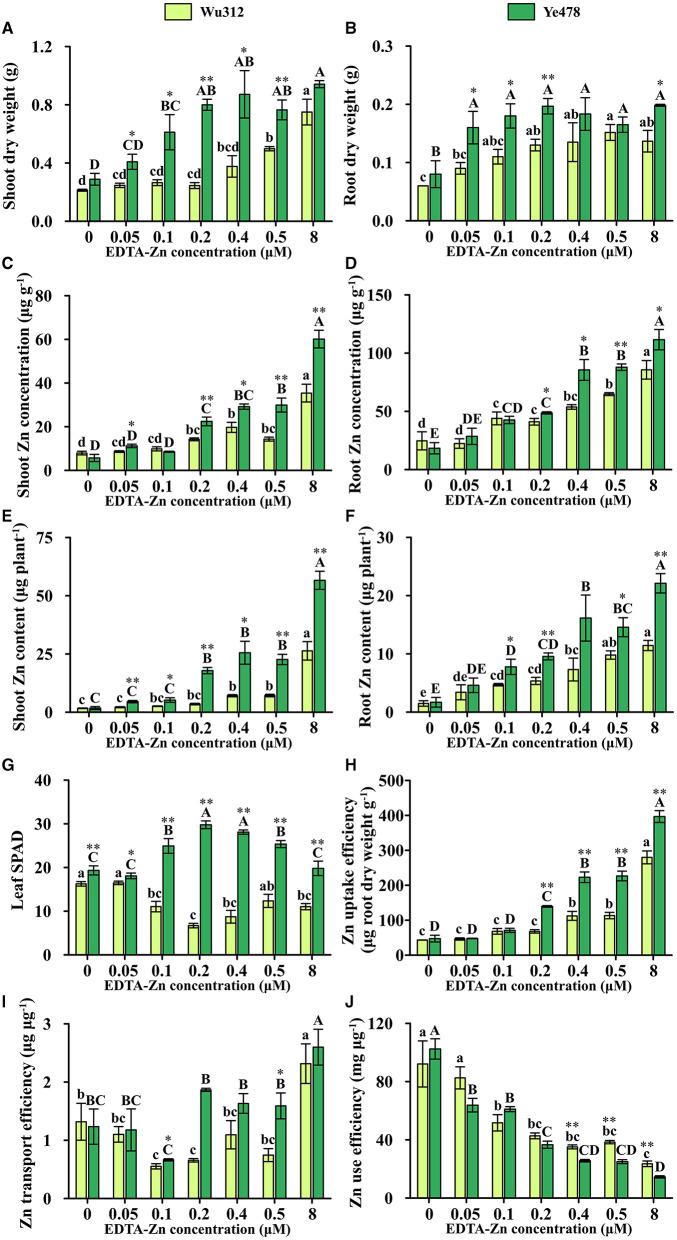
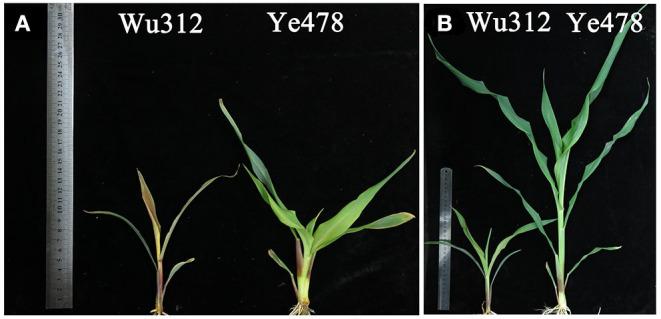
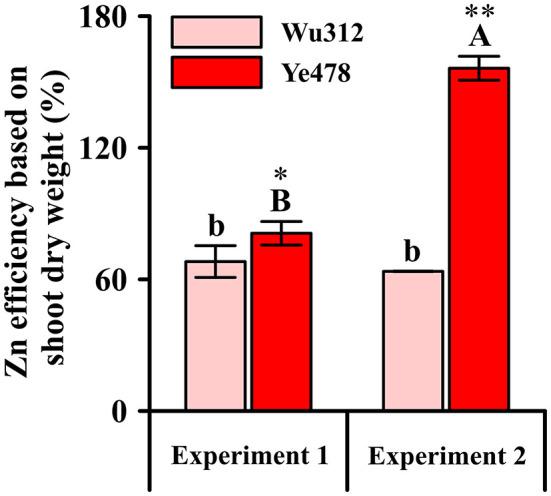
All over the world, a common problem in the soil is the low content of available zinc (Zn), which is unevenly distributed and difficult to move. However, information on the foraging strategies of roots in response to heterogeneous Zn supply is still very limited. Few studies have analyzed the adaptability of maize inbred lines with different Zn efficiencies to different low Zn stress time lengths in maize. This study analyzed the effects of different time lengths of low Zn stress on various related traits in different inbred lines. In addition, morphological plasticity of roots and the response of Zn-related important gene iron-regulated transporter-like proteins (ZIPs) were studied via simulating the heterogeneity of Zn nutrition in the soil. In this report, when Zn deficiency stress duration was extended (from 14 to 21 days), under Zn-deficient supply (0.5 μM), Zn efficiency (ZE) based on shoot dry weight of Wu312 displayed no significant difference, and ZE for Ye478 was increased by 92.9%. Under longer-term Zn deficiency, shoot, and root dry weights of Ye478 were 6.5 and 2.1-fold higher than those of Wu312, respectively. Uneven Zn supply strongly inhibited the development of some root traits in the -Zn region. Difference in shoot dry weights between Wu312 and Ye478 was larger in T1 (1.97 times) than in T2 (1.53 times). Under heterogeneous condition of Zn supply, both the -Zn region and the +Zn region upregulated the expressions of , and in the roots of two inbred lines. These results indicate that extended time length of low-Zn stress will enlarge the difference of multiple physiological traits, especially biomass, between Zn-sensitive and Zn-tolerant inbred lines. There were significant genotypic differences of root morphology in response to heterogeneous Zn supply. Compared with split-supply with +Zn/+Zn, the difference of above-ground biomass between Zn-sensitive and Zn-tolerant inbred lines under split-supply with -Zn/+Zn was higher. Under the condition of heterogeneous Zn supply, several genes may play important roles in tolerance to low Zn stress, which can provide a basis for further functional characterization.
在全球范围内,土壤中普遍存在有效锌(Zn)含量低的问题,其分布不均且难以移动。然而,关于根系响应锌供应不均的觅食策略的信息仍然非常有限。很少有研究分析不同锌效率的玉米自交系对玉米不同低锌胁迫时长的适应性。本研究分析了不同时长的低锌胁迫对不同自交系各种相关性状的影响。此外,通过模拟土壤中锌营养的异质性,研究了根系的形态可塑性以及与锌相关的重要基因铁调节转运蛋白样蛋白(ZIPs)的响应。在本报告中,当锌缺乏胁迫持续时间延长(从14天延长到21天)时,在缺锌供应(0.5 μM)条件下,基于武312地上部干重的锌效率(ZE)无显著差异,而掖478的ZE提高了92.9%。在长期缺锌条件下,掖478的地上部和根部干重分别比武312高6.5倍和2.1倍。锌供应不均强烈抑制了缺锌区域某些根系性状的发育。武312和掖478在T1时地上部干重差异(1.97倍)大于T2时(1.53倍)。在锌供应异质条件下,缺锌区域和富锌区域均上调了两个自交系根系中、和的表达。这些结果表明,低锌胁迫时间延长会扩大锌敏感和锌耐受自交系之间多种生理性状(尤其是生物量)的差异。响应锌供应不均时,根系形态存在显著的基因型差异。与+Zn/+Zn分根供应相比,-Zn/+Zn分根供应下锌敏感和锌耐受自交系地上部生物量差异更大。在锌供应异质条件下,几个基因可能在低锌胁迫耐受中起重要作用,这可为进一步的功能表征提供依据。




 Zotero 插件