
中国 ISPED 项目报告的 2016 至 2020 年儿童细菌流行病学和抗菌药物耐药性特征。
Bacterial Epidemiology and Antimicrobial Resistance Profiles in Children Reported by the ISPED Program in China, 2016 to 2020.
机构信息
Department of Clinical Microbiology Laboratory, Children's Hospital of Fudan University, National Children's Medical Center, Shanghai, China.
Nosocomial Infection Control Department, Children's Hospital of Fudan University, National Children's Medical Center, Shanghai, China.
出版信息
Microbiol Spectr. 2021 Dec 22;9(3):e0028321. doi: 10.1128/Spectrum.00283-21. Epub 2021 Nov 3.
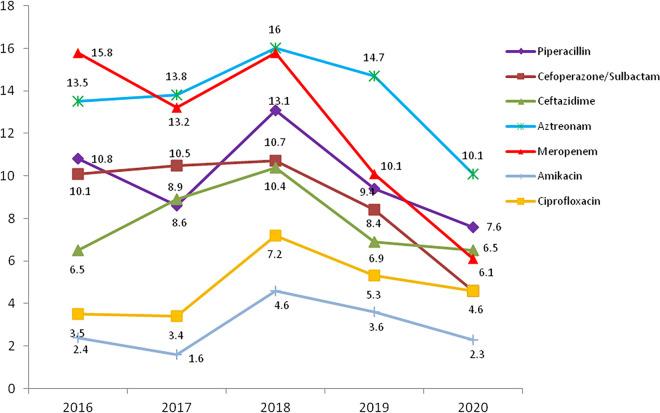
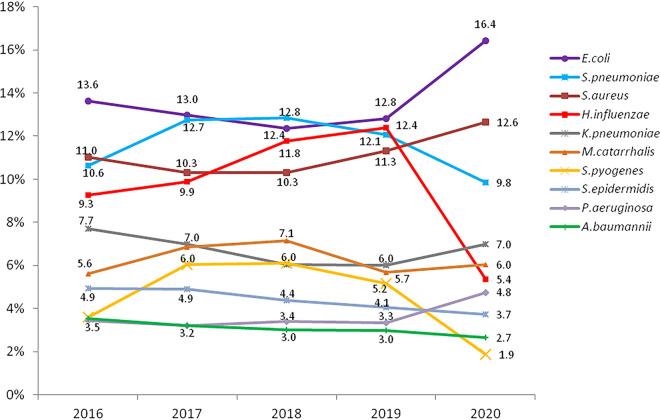
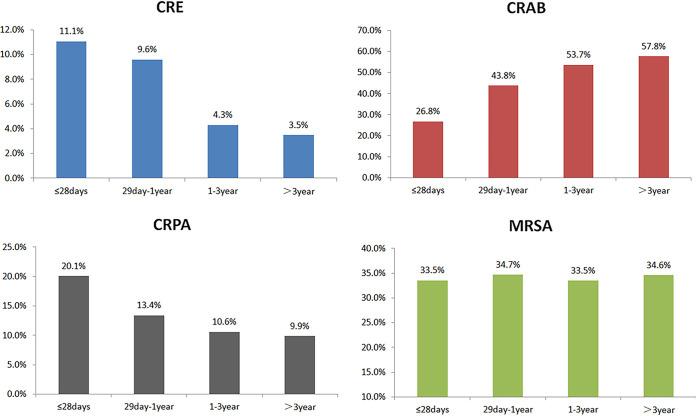
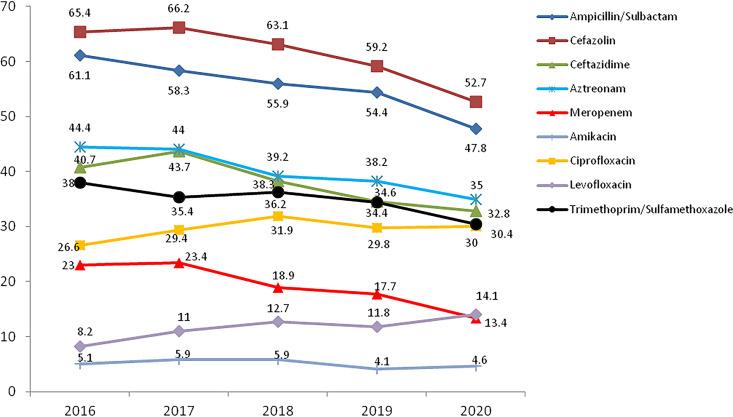
The Infectious Disease Surveillance of Pediatrics (ISPED) program was established in 2015 to monitor and analyze the trends of bacterial epidemiology and antimicrobial resistance (AMR) in children. Clinical bacterial isolates were collected from 11 tertiary care children's hospitals in China in 2016 to 2020. Antimicrobial susceptibility testing was carried out using the Kirby-Bauer method or automated systems, with interpretation according to the Clinical and Laboratory Standards Institute 2019 breakpoints. A total of 288,377 isolates were collected, and the top 10 predominant bacteria were Escherichia coli, Streptococcus pneumoniae, Staphylococcus aureus, Haemophilus influenzae, Klebsiella pneumoniae, Moraxella catarrhalis, Streptococcus pyogenes, Staphylococcus epidermidis, Pseudomonas aeruginosa, and Acinetobacter baumannii. In 2020, the coronavirus disease 2019 (COVID-19) pandemic year, we observed a significant reduction in the proportion of respiratory tract samples (from 56.9% to 44.0%). A comparable reduction was also seen in the primary bacteria mainly isolated from respiratory tract samples, including S. pneumoniae, H. influenzae, and S. pyogenes. Multidrug-resistant organisms (MDROs) in children were commonly observed and presented higher rates of drug resistance than sensitive strains. The proportions of carbapenem-resistant K. pneumoniae (CRKP), carbapenem-resistant A. baumannii (CRAB), carbapenem-resistant P. aeruginosa (CRPA), and methicillin-resistant S. aureus (MRSA) strains were 19.7%, 46.4%%, 12.8%, and 35.0%, respectively. The proportions of CRKP, CRAB, and CRPA strains all showed decreasing trends between 2015 and 2020. Carbapenem-resistant (CRE) and CRPA gradually decreased with age, while CRAB showed the opposite trend with age. Both CRE and CRPA pose potential threats to neonates. MDROs show very high levels of AMR and have become an urgent threat to children, suggesting that effective monitoring of AMR and antimicrobial stewardship among children in China are required. AMR, especially that involving multidrug-resistant organisms (MDROs), is recognized as a global threat to human health; AMR renders infections increasingly difficult to treat, constituting an enormous economic burden and producing tremendous negative impacts on patient morbidity and mortality rates. There are many surveillance programs in the world to address AMR profiles and MDRO prevalence in humans. However, published studies evaluating the overall AMR rates or MDRO distributions in children are very limited or are of mixed quality. In this study, we showed the bacterial epidemiology and resistance profiles of primary pathogens in Chinese children from 2016 to 2020 for the first time, analyzed MDRO distributions with time and with age, and described MDROs' potential threats to children, especially low-immunity neonates. Our study will be very useful to guide antiinfection therapy in Chinese children, as well as worldwide pediatric patients.
儿科传染病监测(ISPED)计划于 2015 年成立,旨在监测和分析儿童细菌流行病学和抗生素耐药性(AMR)的趋势。2016 年至 2020 年,从中国 11 家三级儿童保健医院采集临床细菌分离株。采用 Kirby-Bauer 法或自动化系统进行抗菌药物敏感性试验,根据临床和实验室标准协会 2019 年的折点进行解释。共采集 288377 株分离株,排名前 10 的主要细菌为大肠埃希菌、肺炎链球菌、金黄色葡萄球菌、流感嗜血杆菌、肺炎克雷伯菌、卡他莫拉菌、化脓性链球菌、表皮葡萄球菌、铜绿假单胞菌和鲍曼不动杆菌。2020 年,在新冠疫情大流行的一年,我们观察到呼吸道样本的比例显著下降(从 56.9%降至 44.0%)。主要从呼吸道样本中分离的主要细菌,包括肺炎链球菌、流感嗜血杆菌和化脓性链球菌,也出现了类似的减少。儿童中常见的多药耐药菌(MDRO)表现出更高的耐药率,耐药菌株比敏感菌株更高。耐碳青霉烯类肺炎克雷伯菌(CRKP)、耐碳青霉烯类鲍曼不动杆菌(CRAB)、耐碳青霉烯类铜绿假单胞菌(CRPA)和耐甲氧西林金黄色葡萄球菌(MRSA)的比例分别为 19.7%、46.4%、12.8%和 35.0%。2015 年至 2020 年间,CRKP、CRAB 和 CRPA 菌株的比例均呈下降趋势。耐碳青霉烯类(CRE)和 CRPA 随年龄增长逐渐减少,而 CRAB 则随年龄增长呈相反趋势。CRE 和 CRPA 对新生儿都构成潜在威胁。MDRO 对 AMR 的耐药率非常高,对儿童构成紧迫威胁,这表明中国需要对儿童的 AMR 进行有效监测和抗菌药物管理。抗生素耐药性(AMR),特别是多药耐药菌(MDRO),被认为是对人类健康的全球性威胁;AMR 使感染越来越难以治疗,给医疗带来了巨大的经济负担,也对患者的发病率和死亡率产生了巨大的负面影响。全球有许多监测计划用于解决人类的 AMR 状况和 MDRO 流行情况。然而,评估儿童整体 AMR 率或 MDRO 分布的已发表研究非常有限或质量参差不齐。在这项研究中,我们首次展示了 2016 年至 2020 年中国儿童主要病原体的细菌流行病学和耐药谱,随时间和年龄分析了 MDRO 的分布,并描述了 MDRO 对儿童,特别是低免疫力新生儿的潜在威胁。我们的研究将非常有助于指导中国儿童的抗感染治疗,以及全球儿科患者的治疗。


 Zotero 插件