
草酸、一水合草酸钙和草酸钙肾结石患者尿液引起的氧化应激导致的过早衰老和端粒缩短。
Premature Senescence and Telomere Shortening Induced by Oxidative Stress From Oxalate, Calcium Oxalate Monohydrate, and Urine From Patients With Calcium Oxalate Nephrolithiasis.
机构信息
Department of Biochemistry, Faculty of Medicine, Chulalongkorn University, Bangkok, Thailand.
Division of Urology, Mahasarakham Hospital, Mahasarakham, Thailand.
出版信息
Front Immunol. 2021 Oct 21;12:696486. doi: 10.3389/fimmu.2021.696486. eCollection 2021.
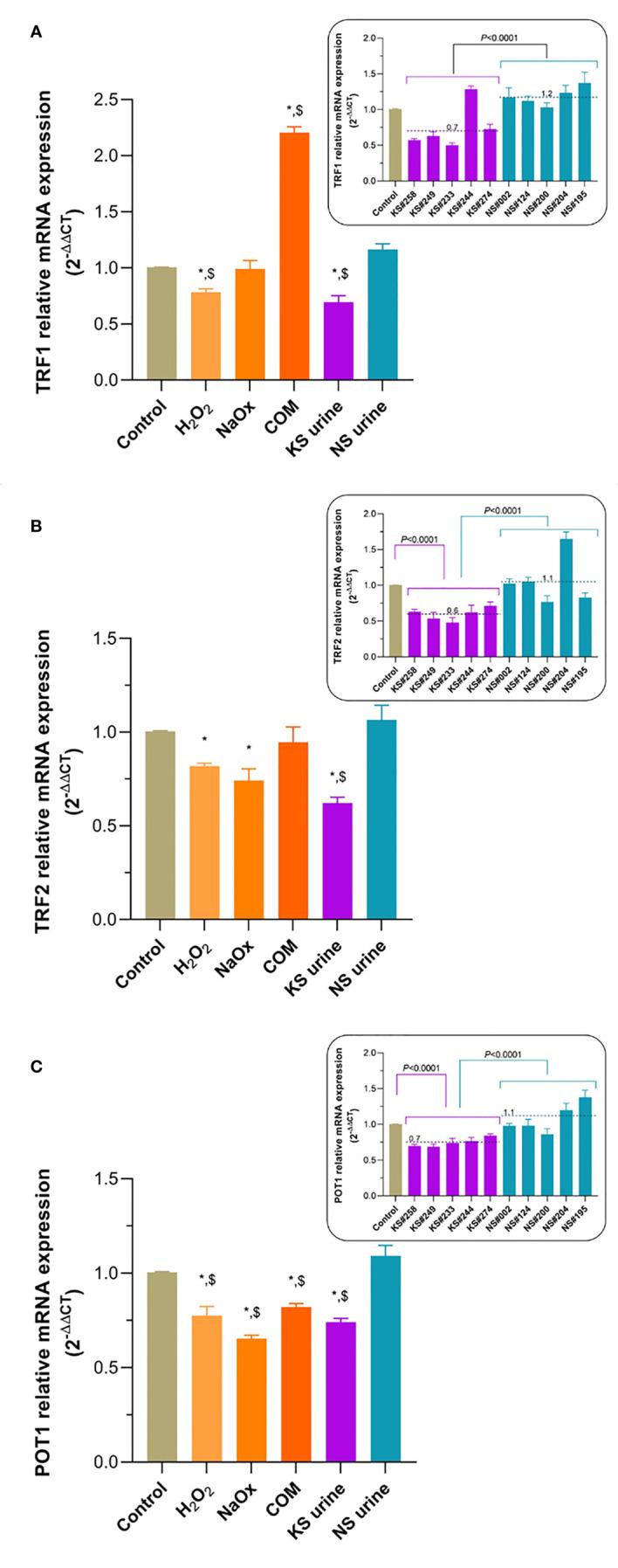
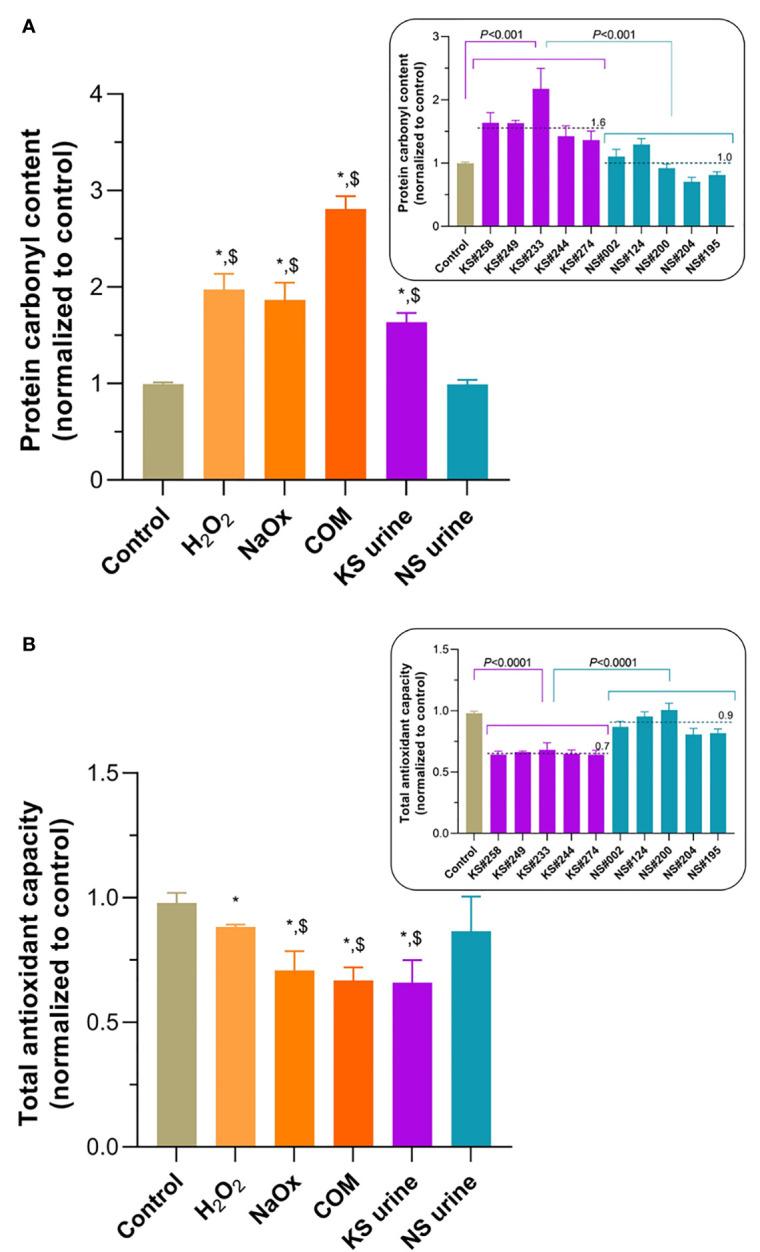
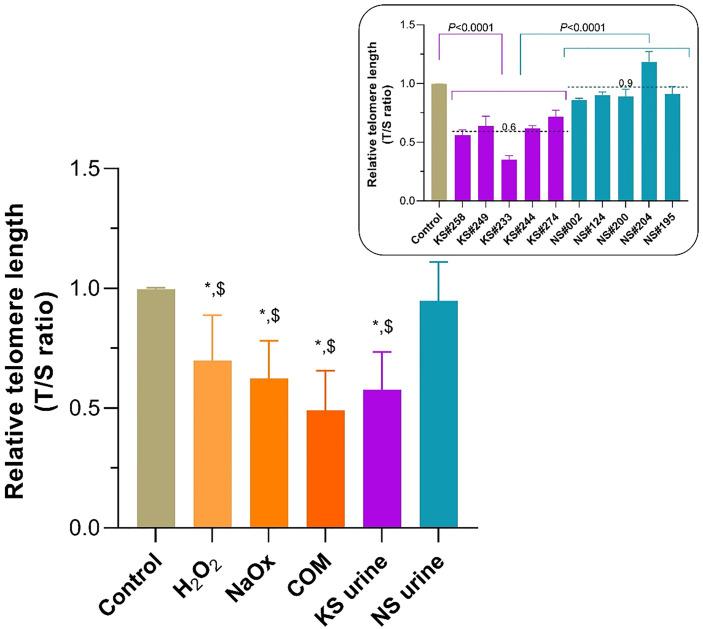
Oxidative stress, a well-known cause of stress-induced premature senescence (SIPS), is increased in patients with calcium oxalate (CaOx) kidney stones (KS). Oxalate and calcium oxalate monohydrate (COM) induce oxidative stress in renal tubular cells, but to our knowledge, their effect on SIPS has not yet been examined. Here, we examined whether oxalate, COM, or urine from patients with CaOx KS could induce SIPS and telomere shortening in human kidney (HK)-2 cells, a proximal tubular renal cell line. Urine from age- and sex-matched individuals without stones was used as a control. In sublethal amounts, HO, oxalate, COM, and urine from those with KS evoked oxidative stress in HK-2 cells, indicated by increased protein carbonyl content and decreased total antioxidant capacity, but urine from those without stones did not. The proportion of senescent HK-2 cells, as indicated by SA-βgal staining, increased after treatment with HO, oxalate, COM, and urine from those with KS. Expression of p16 was higher in HK-2 cells treated with HO, oxalate, COM, and urine from those with KS than it was in cells treated with urine from those without stones and untreated controls. p16 was upregulated in the SA-βgal positive cells. Relative telomere length was shorter in HK-2 cells treated with HO, oxalate, COM, and urine from those with KS than that in cells treated with urine from those without stones and untreated controls. Transcript expression of shelterin components (TRF1, TRF2 and POT1) was decreased in HK-2 cells treated with HO, oxalate, COM, and urine from those with KS, in which case the expression was highest. Urine from those without KS did not significantly alter TRF1, TRF2, and POT1 mRNA expression in HK-2 cells relative to untreated controls. In conclusion, oxalate, COM, and urine from patients with CaOx KS induced SIPS and telomere shortening in renal tubular cells. SIPS induced by a lithogenic milieu may result from upregulation of p16 and downregulation of shelterin components, specifically POT1, and might contribute, at least in part, to the development of CaOx KS.
氧化应激是应激诱导早衰(SIPS)的已知原因,在草酸钙(CaOx)肾结石(KS)患者中增加。草酸盐和草酸钙一水合物(COM)诱导肾小管细胞发生氧化应激,但据我们所知,它们对 SIPS 的影响尚未得到检验。在这里,我们研究了草酸盐、COM 或来自 CaOx KS 患者的尿液是否可以在人肾(HK)-2 细胞中诱导 SIPS 和端粒缩短,HK-2 细胞是一种近端肾小管肾细胞系。来自无结石的年龄和性别匹配个体的尿液被用作对照。在亚致死剂量下,HO、草酸盐、COM 和 KS 患者的尿液在 HK-2 细胞中引起氧化应激,表现为蛋白质羰基含量增加和总抗氧化能力降低,但无结石患者的尿液则没有。用 HO、草酸盐、COM 和 KS 患者的尿液处理后,SA-βgal 染色指示的衰老 HK-2 细胞的比例增加。与用无结石患者的尿液和未处理对照处理的细胞相比,用 HO、草酸盐、COM 和 KS 患者的尿液处理的 HK-2 细胞中 p16 的表达更高。p16 在 SA-βgal 阳性细胞中上调。用 HO、草酸盐、COM 和 KS 患者的尿液处理的 HK-2 细胞中的相对端粒长度比用无结石患者的尿液和未处理对照处理的细胞更短。HK-2 细胞中庇护素成分(TRF1、TRF2 和 POT1)的转录表达在用 HO、草酸盐、COM 和 KS 患者的尿液处理后降低,在这种情况下表达最高。与未处理对照相比,无 KS 患者的尿液对 HK-2 细胞中 TRF1、TRF2 和 POT1 mRNA 表达没有显著改变。总之,草酸盐、COM 和来自 CaOx KS 患者的尿液在肾小管细胞中诱导 SIPS 和端粒缩短。成石环境诱导的 SIPS 可能是由于 p16 的上调和庇护素成分,特别是 POT1 的下调引起的,并且可能至少部分导致 CaOx KS 的发生。


 Zotero 插件