
COVIDetectioNet:基于X射线图像的COVID-19诊断系统,使用从预学习深度特征集成中选择的特征。
COVIDetectioNet: COVID-19 diagnosis system based on X-ray images using features selected from pre-learned deep features ensemble.
作者信息
Turkoglu Muammer
机构信息
Computer Engineering Department, Engineering Faculty, Bingol University, 12000 Bingol, Turkey.
出版信息
Appl Intell (Dordr). 2021;51(3):1213-1226. doi: 10.1007/s10489-020-01888-w. Epub 2020 Sep 18.
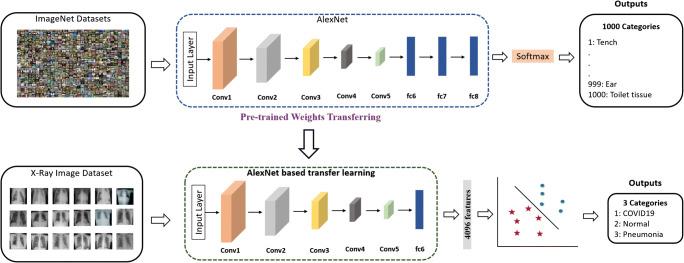
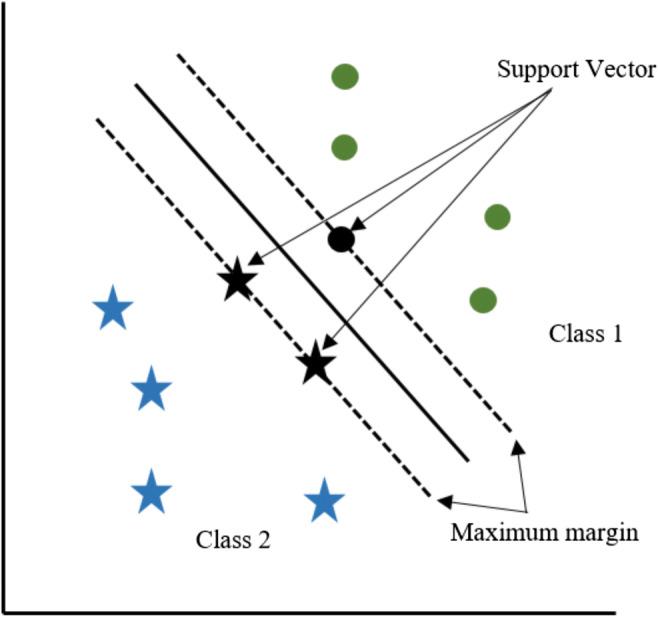
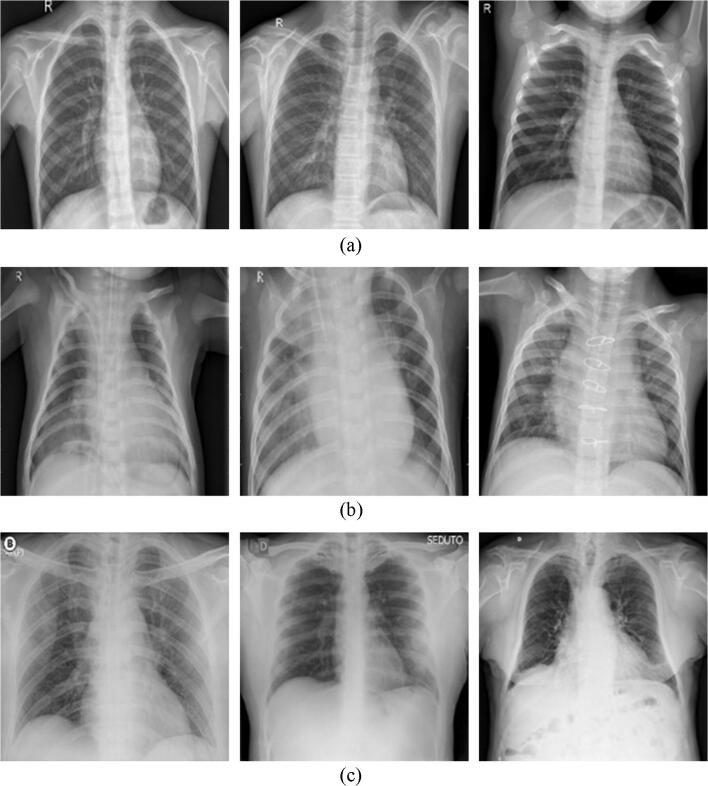
The recent novel coronavirus (also known as COVID-19) has rapidly spread worldwide, causing an infectious respiratory disease that has killed hundreds of thousands and infected millions. While test kits are used for diagnosis of the disease, the process takes time and the test kits are limited in their availability. However, the COVID-19 disease is also diagnosable using radiological images taken through lung X-rays. This process is known to be both faster and more reliable as a form of identification and diagnosis. In this regard, the current study proposes an expert-designed system called COVIDetectioNet model, which utilizes features selected from combination of deep features for diagnosis of COVID-19. For this purpose, a pretrained Convolutional Neural Network (CNN)-based AlexNet architecture that employed the transfer learning approach, was used. The effective features that were selected using the Relief feature selection algorithm from all layers of the architecture were then classified using the Support Vector Machine (SVM) method. To verify the validity of the model proposed, a total of 6092 X-ray images, classified as Normal (healthy), COVID-19, and Pneumonia, were obtained from a combination of public datasets. In the experimental results, an accuracy of 99.18% was achieved using the model proposed. The results demonstrate that the proposed COVIDetectioNet model achieved a superior level of success when compared to previous studies.
最近的新型冠状病毒(也称为COVID-19)已在全球迅速传播,引发了一种传染性呼吸道疾病,导致数十万人死亡,数百万人感染。虽然检测试剂盒用于该疾病的诊断,但这个过程需要时间,而且检测试剂盒的供应有限。然而,COVID-19疾病也可以通过肺部X光拍摄的放射图像进行诊断。众所周知,作为一种识别和诊断形式,这个过程更快且更可靠。在这方面,当前的研究提出了一种由专家设计的系统,称为COVIDetectioNet模型,该模型利用从深度特征组合中选择的特征来诊断COVID-19。为此,使用了采用迁移学习方法的基于预训练卷积神经网络(CNN)的AlexNet架构。然后,使用支持向量机(SVM)方法对从该架构的所有层中使用Relief特征选择算法选择的有效特征进行分类。为了验证所提出模型的有效性,从公共数据集的组合中获得了总共6092张X光图像,分为正常(健康)、COVID-19和肺炎三类。在实验结果中,所提出的模型实现了99.18%的准确率。结果表明,与先前的研究相比,所提出的COVIDetectioNet模型取得了更高的成功水平。





 Zotero 插件