
艾迪注射液联合鸦胆子油乳注射液对结直肠癌患者 CapeOX 辅助化疗期间的疗效观察。
Efficacy of Aidi Injection and Brucea javanica Oil Emulsion Injection in Rectal Cancer during CapeOX Adjuvant Chemotherapy.
机构信息
Department of Gastrointestinal Surgery, Yongchuan Hospital, Chongqing Medical University, Chongqing 402160, China.
College of Acupuncture-Moxibustion and Tuina, Chengdu University of Traditional Chinese Medicine, Chengdu 610075, China.
出版信息
Biomed Res Int. 2021 Nov 2;2021:2033353. doi: 10.1155/2021/2033353. eCollection 2021.
BACKGROUND
Adjuvant chemotherapy with CapeOX regimen is widely used in resected rectal cancer, which brings benefits to patients. But drug-related toxicities are severe during this process; thus, survival outcomes may potentially be affected. This study explored the efficacy of two Chinese herbal injections, Aidi injection (ADI) and Brucea javanica oil emulsion injection (BJOEI), as adjuvant drugs in CapeOX adjuvant chemotherapy on rectal cancer patients.
METHODS
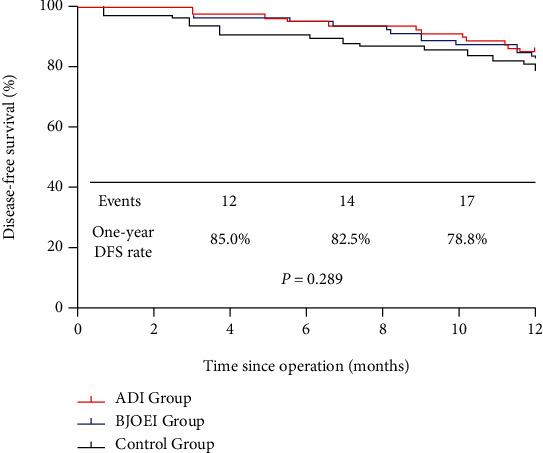
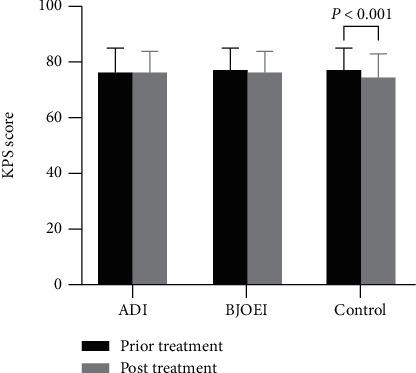
A total of 240 cases were enrolled in this retrospective study. 80 cases received CapeOX with ADI (the ADI group), 80 cases received CapeOX with BJOEI (the BJOEI group), and the rest 80 cases received CapeOX alone (the control group). After four cycles' chemotherapy, adverse reactions (ADRs) and quality of life (QOL) were analyzed. Then, patients received follow-up for at least one year, and the endpoint was disease-free survival (DFS).
RESULTS
All patients completed at least four cycles' adjuvant chemotherapy. The incidence of leukopenia and thrombocytopenia was significantly lower in the ADI group; the incidence of nausea was significantly lower in the BJOEI group; the incidence of hand-foot syndrome was significantly lower in both the ADI group and BJOEI group. Significant difference was found in the control group regarding the Karnofsky Performance Status (KPS) scores prior and posttreatment. No difference was found among three groups regarding one-year DFS.
CONCLUSION
As adjuvant drugs for rectal cancer during CapeOX chemotherapy, ADI shows advantages in decreasing leukopenia and thrombocytopenia, while BJOEI results better in remitting nausea. Both two CHIs had positive impacts on decreasing hand-foot syndrome and the maintenance of patients' QOL. It is worthy of further study and promotion for CHIs.
背景
卡培他滨奥沙利铂(CapeOX)方案辅助化疗被广泛应用于直肠癌术后,为患者带来获益。但该方案在应用过程中存在药物相关毒性反应重等问题,可能影响患者的生存结局。本研究探讨艾迪注射液(ADI)和鸦胆子油乳注射液(BJOEI)两种中药制剂作为辅助药物应用于 CapeOX 方案辅助化疗治疗直肠癌的效果。
方法
本回顾性研究共纳入 240 例患者,80 例接受 CapeOX 联合 ADI(ADI 组)、80 例接受 CapeOX 联合 BJOEI(BJOEI 组)、80 例接受 CapeOX 单药化疗(对照组)。化疗 4 个周期后分析不良反应(ADR)和生活质量(QOL),然后对所有患者进行至少 1 年的随访,终点为无疾病生存(DFS)。
结果
所有患者均完成至少 4 个周期的辅助化疗。ADR 中白细胞减少和血小板减少的发生率在 ADI 组显著降低,恶心的发生率在 BJOEI 组显著降低,手足综合征的发生率在 ADI 组和 BJOEI 组均显著降低。治疗前后,对照组 Karnofsky 表现状态(KPS)评分差异有统计学意义,三组间 1 年 DFS 差异无统计学意义。
结论
ADI 在降低白细胞减少和血小板减少方面优于 CapeOX 单药化疗,BJOEI 在缓解恶心方面优于 CapeOX 单药化疗,两种 CHI 均能降低手足综合征的发生率,维持患者 QOL,值得进一步研究和推广。


 Zotero 插件