
建立和验证用于预测儿童脓毒性休克严重程度的逻辑回归模型。
Establishment and validation of a logistic regression model for prediction of septic shock severity in children.
机构信息
Department of Neonatal, Qilu Children's Hospital of Shandong University, No. 23976, Huaiyin District, Jinan City, 250022, Shandong, People's Republic of China.
出版信息
Hereditas. 2021 Nov 12;158(1):45. doi: 10.1186/s41065-021-00206-9.
BACKGROUND
Septic shock is the most severe complication of sepsis, and is a major cause of childhood mortality, constituting a heavy public health burden.
METHODS
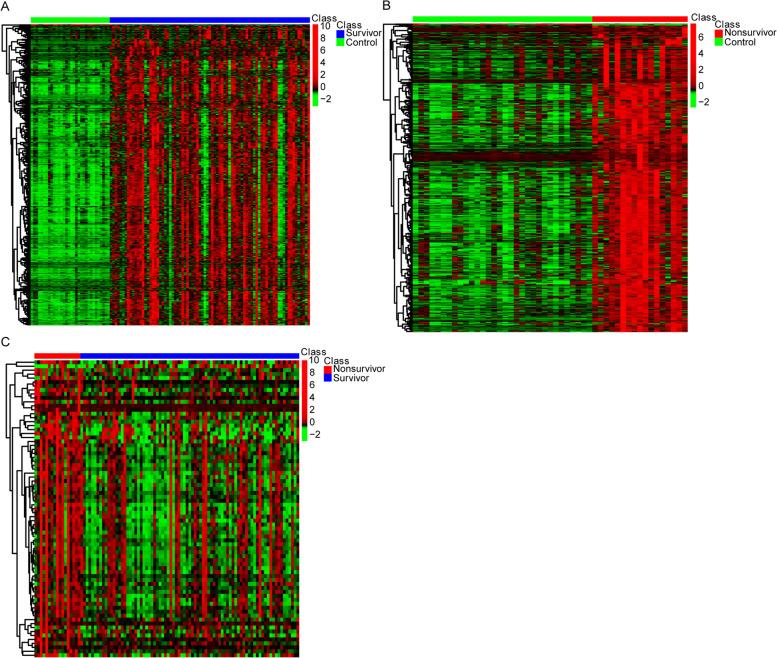
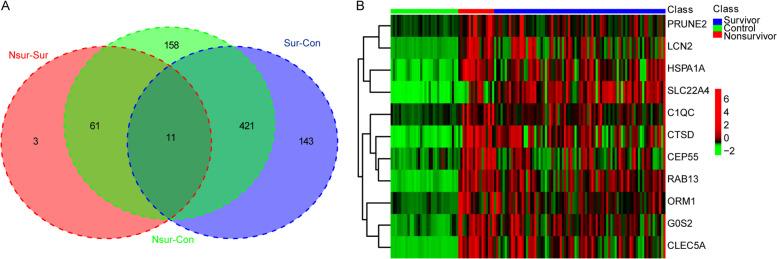
We analyzed the gene expression profiles of septic shock and control samples from the Gene Expression Omnibus (GEO). Four differentially expressed genes (DEGs) from survivor and control groups, non-survivor and control groups, and survivor and non-survivor groups were selected. We used data about these genes to establish a logistic regression model for predicting the survival of septic shock patients.
RESULTS
Leave-one-out cross validation and receiver operating characteristic (ROC) analysis indicated that this model had good accuracy. Differential expression and Gene Set Enrichment Analysis (GSEA) between septic shock patients stratified by prediction score indicated that the systemic lupus erythematosus pathway was activated, while the limonene and pinene degradation pathways were inactivated in the high score group.
CONCLUSIONS
Our study provides a novel approach for the prediction of the severity of pathology in septic shock patients, which are significant for personalized treatment as well as prognostic assessment.
背景
感染性休克是脓毒症最严重的并发症,也是导致儿童死亡的主要原因,给公共卫生带来了沉重负担。
方法
我们分析了来自基因表达综合数据库(GEO)的感染性休克和对照样本的基因表达谱。从幸存者和对照组、非幸存者和对照组以及幸存者和非幸存者组中选择了四个差异表达基因(DEGs)。我们使用这些基因的数据建立了一个逻辑回归模型,用于预测感染性休克患者的生存情况。
结果
留一法交叉验证和受试者工作特征(ROC)分析表明,该模型具有良好的准确性。根据预测评分对感染性休克患者进行分层后的差异表达和基因集富集分析(GSEA)表明,系统性红斑狼疮途径在高分组中被激活,而柠檬烯和蒎烯降解途径在低分组中被抑制。
结论
我们的研究为感染性休克患者病情严重程度的预测提供了一种新方法,这对个性化治疗和预后评估具有重要意义。


 Zotero 插件