
生物信息学分析基因表达谱预测脓毒性休克患者的风险
Bioinformatics Analysis of Gene Expression Profiles for Risk Prediction in Patients with Septic Shock.
机构信息
Department of Emergency Medicine, The Affiliated Hospital of Southwest Medical University, Luzhou, Sichuan, China (mainland).
Department of Infectious Diseases, The Affiliated Hospital of Southwest Medical University, Luzhou, Sichuan, China (mainland).
出版信息
Med Sci Monit. 2019 Dec 15;25:9563-9571. doi: 10.12659/MSM.918491.
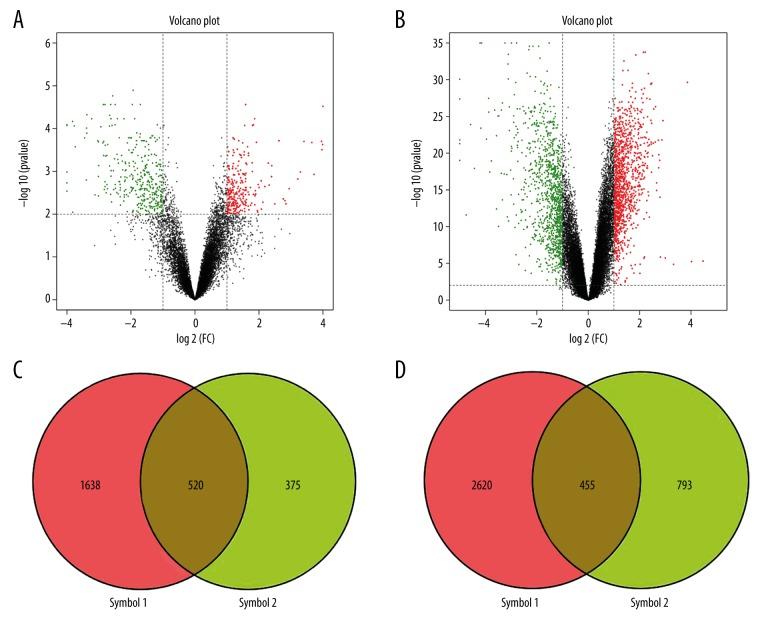
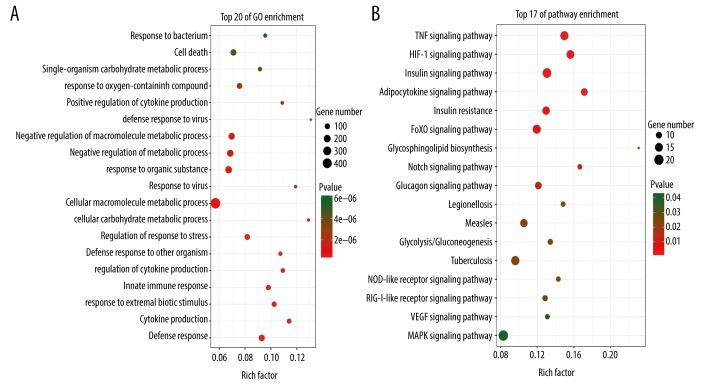
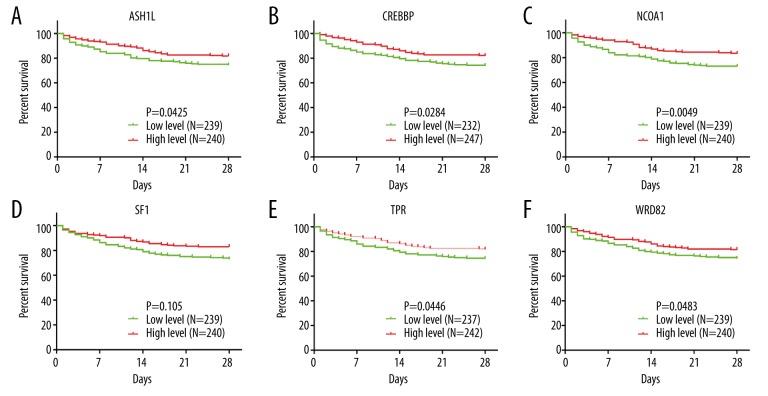
BACKGROUND Septic shock occurs when sepsis is associated with critically low blood pressure, and has a high mortality rate. This study aimed to undertake a bioinformatics analysis of gene expression profiles for risk prediction in septic shock. MATERIAL AND METHODS Two good quality datasets associated with septic shock were downloaded from the Gene Expression Omnibus (GEO) database, GSE64457 and GSE57065. Patients with septic shock had both sepsis and hypotension, and a normal control group was included. The differentially expressed genes (DEGs) were identified using OmicShare tools based on R. Functional enrichment of DEGs was analyzed using DAVID. The protein-protein interaction (PPI) network was established using STRING. Survival curves of key genes were constructed using GraphPad Prism version 7.0. Each putative central gene was analyzed by receiver operating characteristic (ROC) curves using MedCalc statistical software. RESULTS GSE64457 and GSE57065 included 130 RNA samples derived from whole blood from 97 patients with septic shock and 33 healthy volunteers to obtain 975 DEGs, 455 of which were significantly down-regulated and 520 were significantly upregulated (P<0.05). Kyoto Encyclopedia of Genes and Genomes (KEGG) pathway analysis identified significantly enriched DEGs in four signaling pathways, MAPK, TNF, HIF-1, and insulin. Six genes, WDR82, ASH1L, NCOA1, TPR, SF1, and CREBBP in the center of the PPI network were associated with septic shock, according to survival curve and ROC analysis. CONCLUSIONS Bioinformatics analysis of gene expression profiles identified four signaling pathways and six genes, potentially representing molecular mechanisms for the occurrence, progression, and risk prediction in septic shock.
背景
当败血症伴有严重低血压时会发生感染性休克,其死亡率很高。本研究旨在对败血症休克的基因表达谱进行生物信息学分析,以进行风险预测。
材料和方法
从基因表达综合数据库(GEO)下载了两个与败血症休克相关的高质量数据集,GSE64457 和 GSE57065。败血症休克患者既有败血症又有低血压,并且纳入了一个正常对照组。使用基于 R 的 OmicShare 工具识别差异表达基因(DEGs)。使用 DAVID 分析 DEGs 的功能富集。使用 STRING 建立蛋白质-蛋白质相互作用(PPI)网络。使用 GraphPad Prism 版本 7.0 构建关键基因的生存曲线。使用 MedCalc 统计软件通过接收者操作特征(ROC)曲线分析每个假定的核心基因。
结果
GSE64457 和 GSE57065 分别包含 130 个源自败血症休克患者和 33 名健康志愿者的全血 RNA 样本,以获得 97 个 DEGs,其中 455 个显著下调,520 个显著上调(P<0.05)。京都基因与基因组百科全书(KEGG)通路分析鉴定出四个信号通路(MAPK、TNF、HIF-1 和胰岛素)中存在显著富集的 DEGs。根据生存曲线和 ROC 分析,PPI 网络中心的六个基因(WDR82、ASH1L、NCOA1、TPR、SF1 和 CREBBP)与败血症休克有关。
结论
基因表达谱的生物信息学分析确定了四个信号通路和六个基因,这些可能代表败血症休克发生、进展和风险预测的分子机制。


 Zotero 插件