
长链非编码RNA TMPO-AS1通过调控微小RNA-1179/E2F2轴促进胆囊癌细胞的增殖、迁移、侵袭及上皮-间质转化。
Long non-coding RNA TMPO-AS1 promotes cell proliferation, migration, invasion and epithelial-to-mesenchymal transition in gallbladder carcinoma by regulating the microRNA-1179/E2F2 axis.
作者信息
Sui Zhenghui, Sui Xin
机构信息
Department of General Surgery, The People's Hospital of Danyang and Affiliated Danyang Hospital of Nantong University, Danyang, Jiangsu 212300, P.R. China.
出版信息
Oncol Lett. 2021 Dec;22(6):855. doi: 10.3892/ol.2021.13116. Epub 2021 Oct 29.
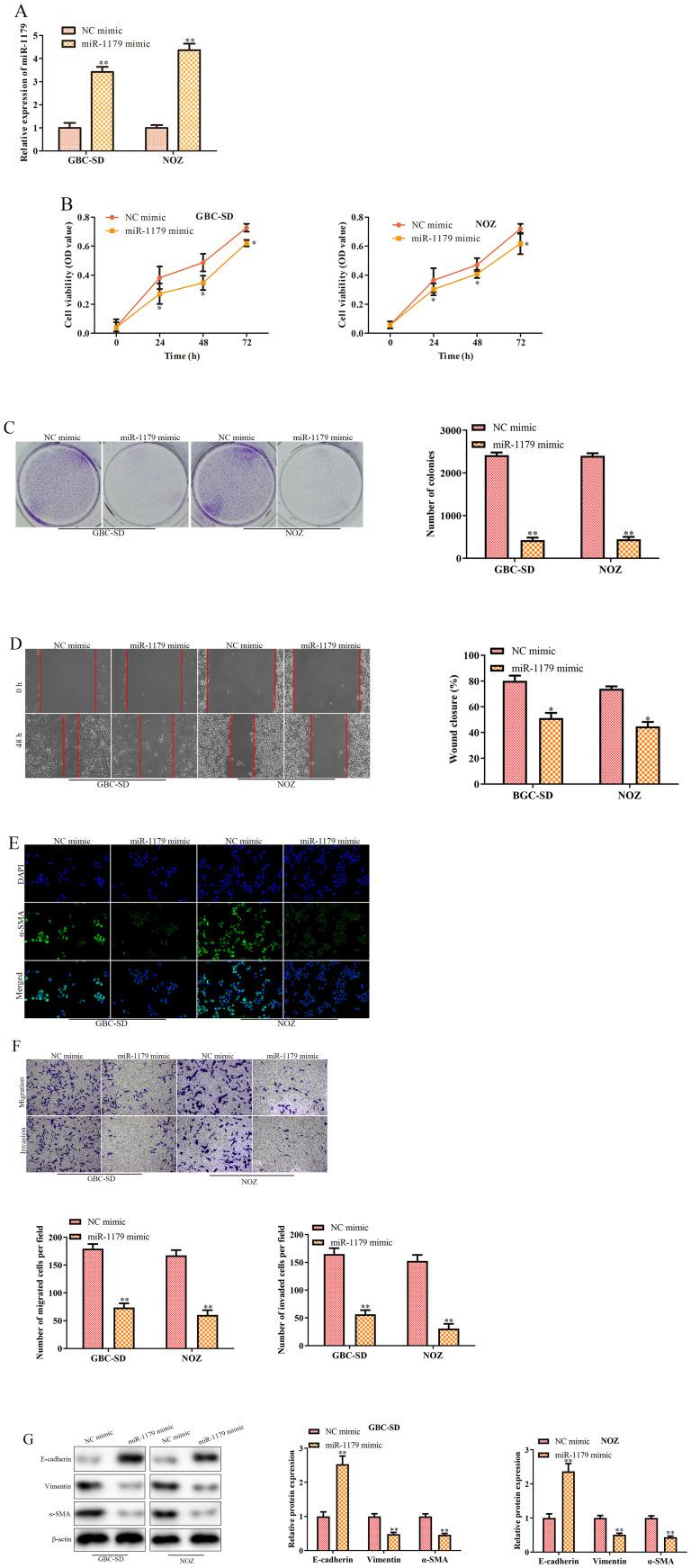
Gallbladder carcinoma (GBC), which is a common tumor of the biliary system, poses a serious threat to human life and health. The present study aimed to investigate the molecular mechanism of the long non-coding (lnc)RNA thymopoietin antisense transcript 1 (TMPO-AS1)/microRNA (miRNA/miR)-1179/E2F transcription factor 2 (E2F2) axis in GBC. The viability, proliferation, migration, invasion and epithelial-to-mesenchymal transition (EMT) of GBC cell lines were assessed via the Cell Counting Kit-8, colony formation, Transwell migration and invasion, immunofluorescence and western blot assays. In the present study, lncRNA TMPO-AS1 was significantly upregulated in clinical GBC tissues and cell lines, and was highly expressed in stage III+IV patients with GBC compared with stage I+II patients with GBC. In addition, the overall survival rate of patients with low TMPO-AS1 expression levels was higher than those with high TMPO-AS1 expression levels. Furthermore, TMPO-AS1 knockdown inhibited the viability, proliferation, migration, invasion and EMT of GBC cell lines. In addition, miR-1179 expression was downregulated in clinical GBC tissues and cell lines, and negatively correlated with TMPO-AS1 expression. The results revealed that miR-1179 is a target of TMPO-AS1, which was confirmed via the dual-luciferase reporter assay and RNA pull-down analysis. Overexpression of miR-1179 inhibited the viability, proliferation, migration, invasion and EMT of GBC cell lines. Furthermore, E2F2 was verified as a direct target of miR-1179 by binding to its 3'-untranslated region. E2F2 expression was significantly upregulated in clinical GBC tissues and cell lines, and negatively correlated with miR-1179 expression. Notably, E2F2 knockdown partially hindered the effects of TMPO-AS1/miR-1179 on the proliferation and metastasis of GBC cell lines. Taken together, the results of the present study suggest that TMPO-AS1 potentially plays a tumor-promoting role in the occurrence and development of GBC, which may be achieved by regulating the miR-1179/E2F2 axis.
胆囊癌(GBC)是胆道系统的常见肿瘤,对人类生命健康构成严重威胁。本研究旨在探讨长链非编码(lnc)RNA胸腺生成素反义转录本1(TMPO-AS1)/微小RNA(miRNA/miR)-1179/E2F转录因子2(E2F2)轴在胆囊癌中的分子机制。通过细胞计数试剂盒-8、集落形成、Transwell迁移和侵袭、免疫荧光及蛋白质印迹分析评估胆囊癌细胞系的活力、增殖、迁移、侵袭及上皮-间质转化(EMT)。在本研究中,lncRNA TMPO-AS1在临床胆囊癌组织和细胞系中显著上调,与I+II期胆囊癌患者相比,在III+IV期胆囊癌患者中高表达。此外,TMPO-AS1表达水平低的患者总生存率高于TMPO-AS1表达水平高的患者。此外,TMPO-AS1敲低抑制了胆囊癌细胞系的活力、增殖、迁移、侵袭及EMT。此外,miR-1179在临床胆囊癌组织和细胞系中表达下调,且与TMPO-AS1表达呈负相关。结果显示,miR-1179是TMPO-AS1的靶标,这通过双荧光素酶报告基因检测和RNA下拉分析得以证实。miR-1179过表达抑制了胆囊癌细胞系的活力、增殖、迁移、侵袭及EMT。此外,通过与E2F2的3'-非翻译区结合,证实E2F2是miR-1179的直接靶标。E2F2在临床胆囊癌组织和细胞系中表达显著上调,且与miR-1179表达呈负相关。值得注意的是,E2F2敲低部分阻碍了TMPO-AS1/miR-1179对胆囊癌细胞系增殖和转移的影响。综上所述,本研究结果表明,TMPO-AS1可能在胆囊癌的发生发展中发挥促肿瘤作用,这可能是通过调节miR-1179/E2F2轴实现的。



 Zotero 插件