
妊娠期糖尿病后 2 型糖尿病发病风险的系统评价与荟萃分析。
Risk of type 2 diabetes mellitus after gestational diabetes mellitus: A systematic review & meta-analysis.
机构信息
Key Laboratory of Birth Defects & Related Diseases of Women & Children, Ministry of Education; Department of Gynecology and Obstetrics, West China Second University Hospital, Sichuan University, Chengdu, China.
Key Laboratory of Birth Defects & Related Diseases of Women & Children, Ministry of Education; Department of Emergency, West China Second University Hospital, Sichuan University, Chengdu, China.
出版信息
Indian J Med Res. 2021 Jul;154(1):62-77. doi: 10.4103/ijmr.IJMR_852_18.
BACKGROUND &OBJECTIVES: Women with gestational diabetes are at an increased risk of being diagnosed as type 2 diabetes, but the postpartum screening rate is low. To provide evidence-based data for health providers and promote postpartum screening, this systematic review and meta-analysis was conducted to access the risks of type 2 diabetes mellitus (T2DM) diagnosis after gestational diabetes mellitus (GDM) in different demographic and maternal subgroups.
METHODS
MEDLINE, Embase and Cochrane Library were searched systematically. Unadjusted relative risks (RRs) and 95 per cent confidence intervals (CIs) were calculated and pooled using a random-effects model. Heterogeneity was assessed with Cochrane's Q text and by calculating I values. Subgroup analyses were conducted to address the disparities of type 2 diabetes conversion after gestational diabetes in different demographic and maternal subgroups.
RESULTS
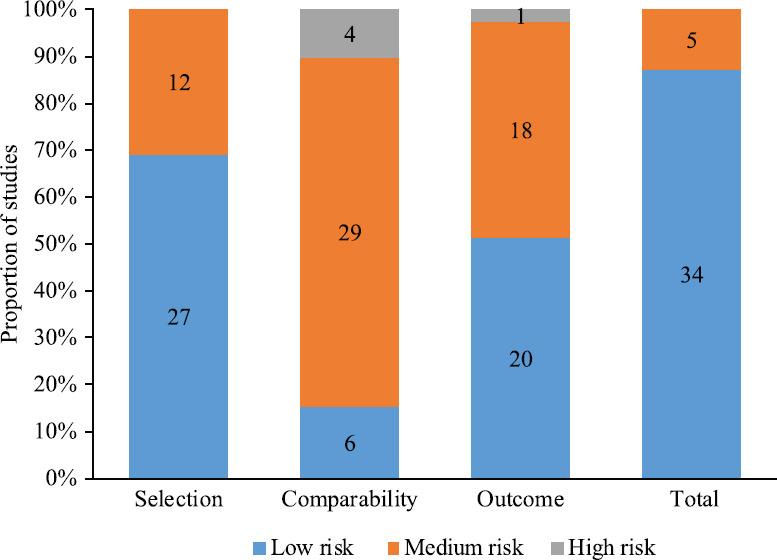
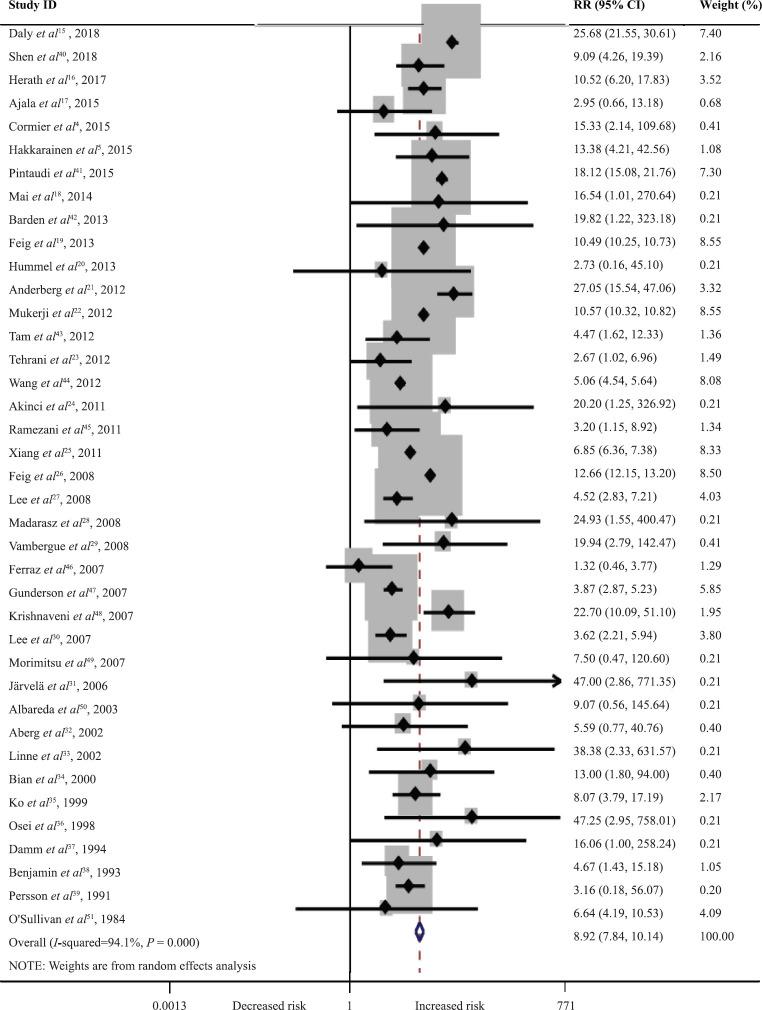
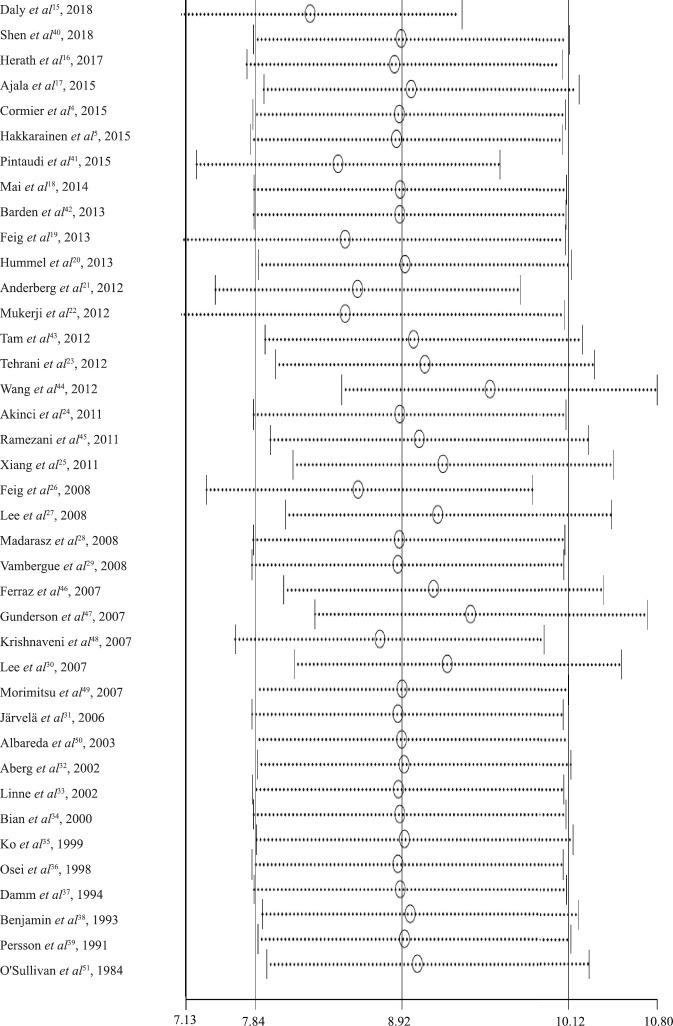
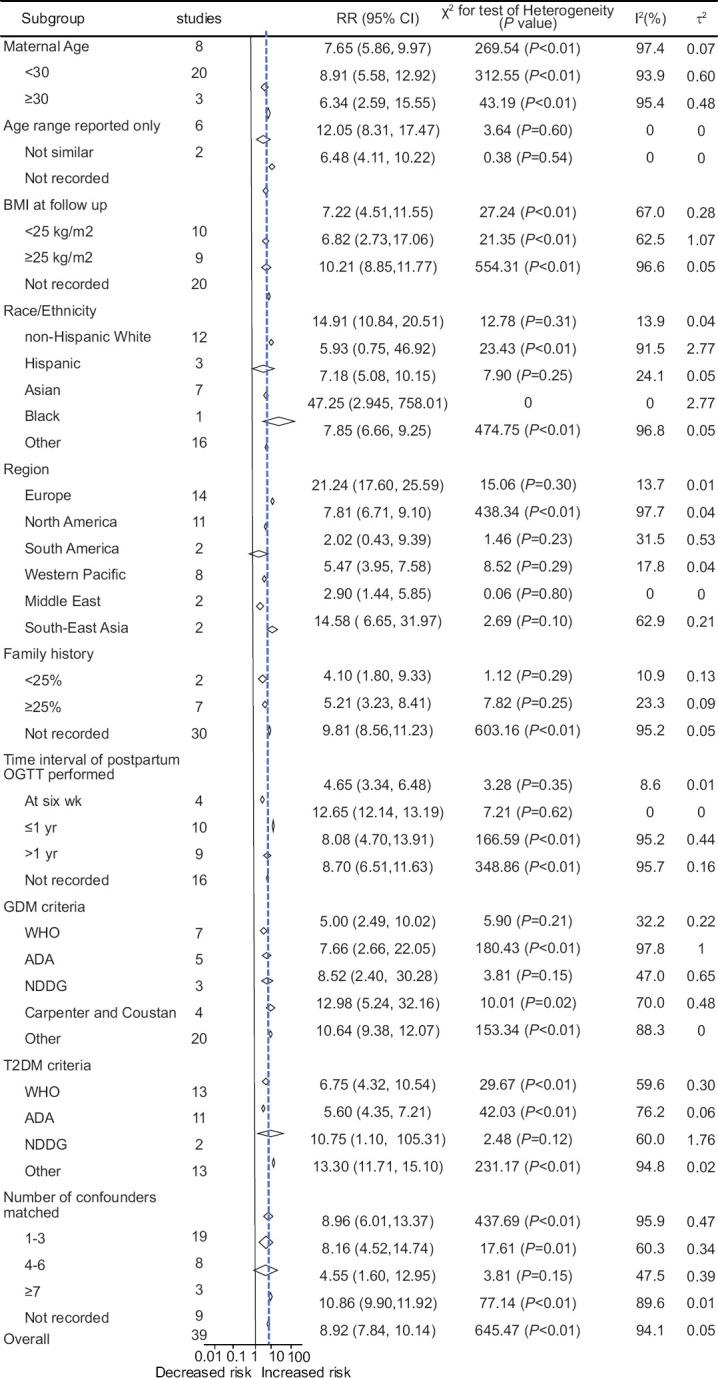
1809 publications were screened and 39 cohort studies including 2,847,596 women were selected. In these studies, 78,893 women were diagnosed as T2DM at six weeks or later after delivery. The unadjusted RRs of women diagnosed T2DM at six weeks or later after delivery ranged from 1.32 (95% CI, 0.46-3.37) to 47.25 (95% CI, 2.95-758.01) with a pooled unadjusted RR of 8.92 (95% CI, 7.84-10.14). Older women, women with a family history of diabetes, Black and non-Hispanic White women and women living in Europe and South-East Asia had a higher risk of developing T2DM after GDM.
INTERPRETATION & CONCLUSIONS: It is suggested that healthcare providers may focus on older women with GDM and women with GDM and a family history of diabetes. Black and non-Hispanic White women with GDM may receive more attention, and healthcare providers, especially those in Europe and South-East Asia, may pay more attention to preventive measures for postpartum T2DM.
背景与目的
患有妊娠糖尿病的女性患 2 型糖尿病的风险增加,但产后筛查率较低。为了为卫生保健提供者提供循证数据,并促进产后筛查,本系统评价和荟萃分析旨在评估不同人口统计学和产妇亚组中妊娠糖尿病(GDM)后 2 型糖尿病(T2DM)诊断的风险。
方法
系统检索 MEDLINE、Embase 和 Cochrane Library。使用随机效应模型计算并合并未调整的相对风险(RR)和 95%置信区间(CI)。使用 Cochrane Q 检验和计算 I 值评估异质性。进行亚组分析,以解决不同人口统计学和产妇亚组中妊娠糖尿病后 2 型糖尿病转换的差异。
结果
筛选出 1809 篇文献,选择了 39 项队列研究,共纳入 2847596 名女性。在这些研究中,78893 名女性在产后 6 周或之后被诊断为 T2DM。未调整的 RR 范围为 1.32(95%CI,0.46-3.37)至 47.25(95%CI,2.95-758.01),合并未调整的 RR 为 8.92(95%CI,7.84-10.14)。年龄较大的女性、有糖尿病家族史的女性、黑人和非西班牙裔白人女性以及居住在欧洲和东南亚的女性发生 GDM 后发生 T2DM 的风险较高。
结论与解释
建议卫生保健提供者可能会关注患有 GDM 的老年女性和有 GDM 及糖尿病家族史的女性。患有 GDM 的黑人和非西班牙裔白人女性可能会受到更多关注,尤其是欧洲和东南亚的卫生保健提供者,可能会更加关注产后 T2DM 的预防措施。


 Zotero 插件