
从批量、单细胞到空间 RNA 测序。
From bulk, single-cell to spatial RNA sequencing.
机构信息
UCLA Technology Center for Genomics & Bioinformatics, Department of Pathology and Laboratory Medicine, David Geffen School of Medicine, UCLA, Los Angeles, CA, USA.
Laboratory of Molecular Signaling, Division of Oral Biology and Medicine, School of Dentistry and Jonsson Comprehensive Cancer Center, UCLA, Los Angeles, CA, USA.
出版信息
Int J Oral Sci. 2021 Nov 15;13(1):36. doi: 10.1038/s41368-021-00146-0.
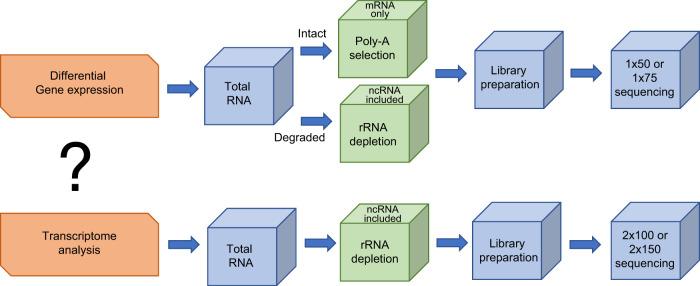
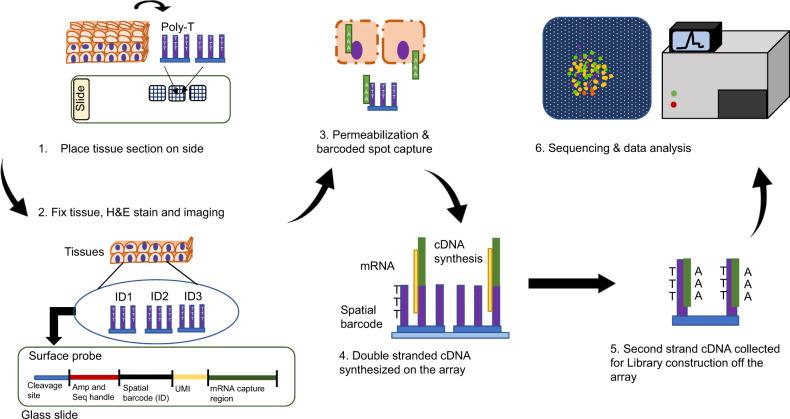
RNA sequencing (RNAseq) can reveal gene fusions, splicing variants, mutations/indels in addition to differential gene expression, thus providing a more complete genetic picture than DNA sequencing. This most widely used technology in genomics tool box has evolved from classic bulk RNA sequencing (RNAseq), popular single cell RNA sequencing (scRNAseq) to newly emerged spatial RNA sequencing (spRNAseq). Bulk RNAseq studies average global gene expression, scRNAseq investigates single cell RNA biology up to 20,000 individual cells simultaneously, while spRNAseq has ability to dissect RNA activities spatially, representing next generation of RNA sequencing. This article highlights these technologies, characteristic features and suitable applications in precision oncology.
RNA 测序 (RNAseq) 除了差异基因表达外,还可以揭示基因融合、剪接变体、突变/缺失,从而提供比 DNA 测序更完整的遗传图谱。这种在基因组学工具盒中最广泛使用的技术已经从经典的批量 RNA 测序 (RNAseq)、流行的单细胞 RNA 测序 (scRNAseq) 发展到新出现的空间 RNA 测序 (spRNAseq)。批量 RNAseq 研究平均的全局基因表达,scRNAseq 同时研究多达 20000 个单个细胞的单细胞 RNA 生物学,而 spRNAseq 则具有空间解析 RNA 活性的能力,代表了 RNA 测序的下一代。本文重点介绍了这些技术在精准肿瘤学中的特点和适用范围。


 Zotero 插件