
金属和碳基纳米材料对人胰腺癌细胞系 AsPC-1 和 BxPC-3 的影响。
Effects of Metallic and Carbon-Based Nanomaterials on Human Pancreatic Cancer Cell Lines AsPC-1 and BxPC-3.
机构信息
Department of Nanobiotechnology, Institute of Biology, Warsaw University of Life Sciences, Ciszewskiego 8, 02-786 Warsaw, Poland.
Department of Veterinary and Animal Sciences, University of Copenhagen, Groennegaardsvej 3, 1870 Frederiksberg, Denmark.
出版信息
Int J Mol Sci. 2021 Nov 9;22(22):12100. doi: 10.3390/ijms222212100.
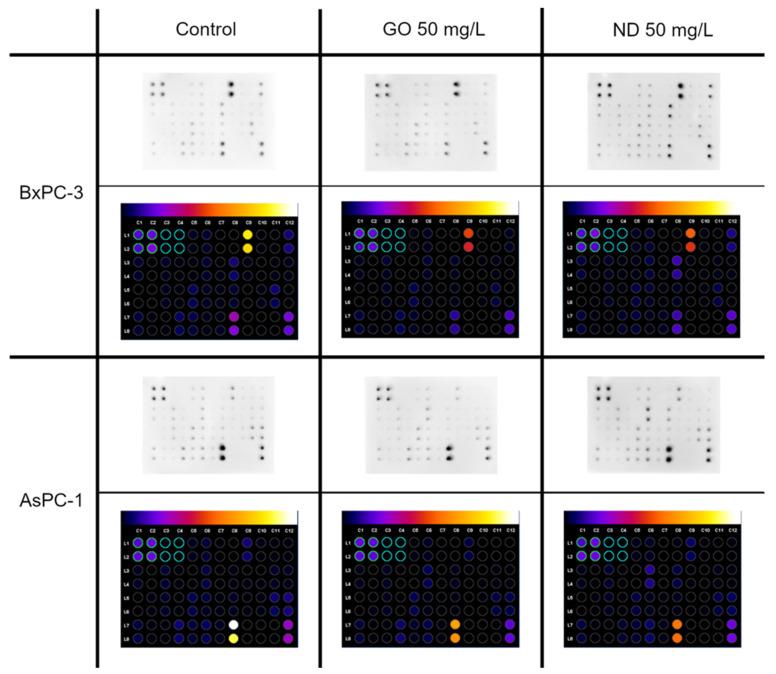
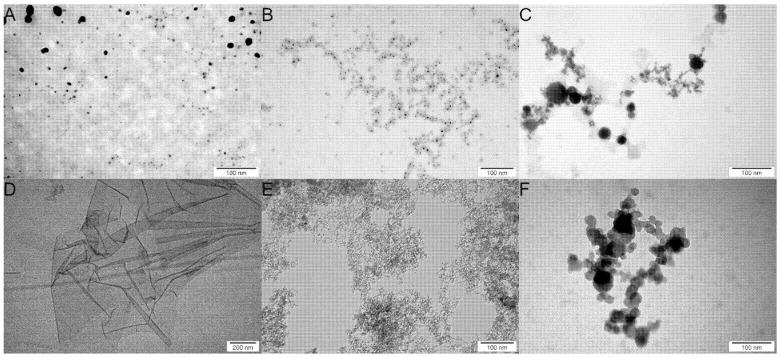
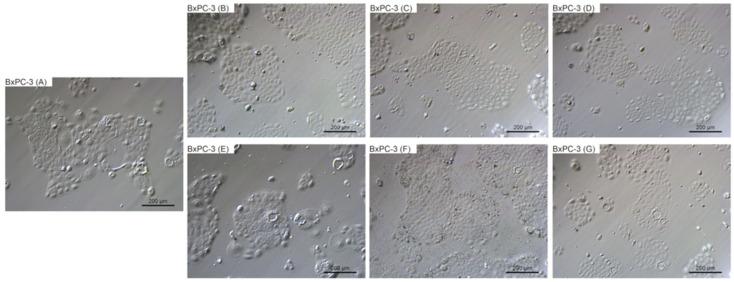
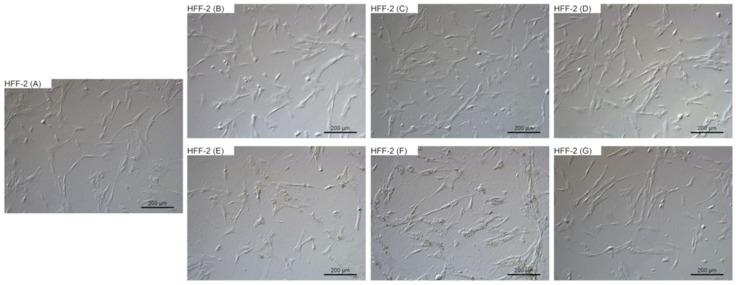
Pancreatic cancer, due to its asymptomatic development and drug-resistance, is difficult to cure. As many metallic and carbon-based nanomaterials have shown anticancer properties, we decided to investigate their potential use as anticancer agents against human pancreatic adenocarcinoma. The objective of the study was to evaluate the toxic properties of the following nanomaterials: silver (Ag), gold (Au), platinum (Pt), graphene oxide (GO), diamond (ND), and fullerenol (C(OH)) against the cell lines BxPC-3, AsPC-1, HFFF-2, and HS-5. The potential cytotoxic properties were evaluated by the assessment of the cell morphology, cell viability, and cell membrane damage. The cancer cell responses to GO and ND were analysed by determination of changes in the levels of 40 different pro-inflammatory proteins. Our studies revealed that the highest cytotoxicity was obtained after the ND treatment. Moreover, BxPC-3 cells were more sensitive to ND than AsPC-1 cells due to the ND-induced ROS production. Furthermore, in both of the cancer cell lines, ND caused an increased level of IL-8 and a decreased level of TIMP-2, whereas GO caused only decreased levels of TIMP-2 and ICAM-1 proteins. This work provides important data on the toxicity of various nanoparticles against pancreatic adenocarcinoma cell lines.
胰腺癌由于其无症状的发展和耐药性,难以治愈。由于许多金属和基于碳的纳米材料具有抗癌特性,我们决定研究它们作为抗癌剂对抗人胰腺腺癌细胞的潜力。本研究的目的是评估以下纳米材料的毒性特性:银(Ag)、金(Au)、铂(Pt)、氧化石墨烯(GO)、金刚石(ND)和富勒醇(C(OH))对 BxPC-3、AsPC-1、HFFF-2 和 HS-5 细胞系的细胞形态、细胞活力和细胞膜损伤的影响。通过评估细胞形态、细胞活力和细胞膜损伤来评估潜在的细胞毒性。通过测定 40 种不同促炎蛋白水平的变化来分析 GO 和 ND 对癌细胞的影响。我们的研究表明,ND 处理后获得了最高的细胞毒性。此外,由于 ND 诱导的 ROS 产生,BxPC-3 细胞比 AsPC-1 细胞对 ND 更敏感。此外,在这两种癌细胞系中,ND 导致 IL-8 水平升高和 TIMP-2 水平降低,而 GO 仅导致 TIMP-2 和 ICAM-1 蛋白水平降低。这项工作提供了有关各种纳米颗粒对胰腺腺癌细胞系毒性的重要数据。





 Zotero 插件