
多能干细胞中的mTOR信号通路:理解癌细胞休眠的启示
The mTOR Pathway in Pluripotent Stem Cells: Lessons for Understanding Cancer Cell Dormancy.
作者信息
Alhasan Bashar A, Gordeev Sergei A, Knyazeva Aleksandra R, Aleksandrova Kseniia V, Margulis Boris A, Guzhova Irina V, Suvorova Irina I
机构信息
Institute of Cytology, Russian Academy of Sciences, 194064 St. Petersburg, Russia.
出版信息
Membranes (Basel). 2021 Nov 7;11(11):858. doi: 10.3390/membranes11110858.
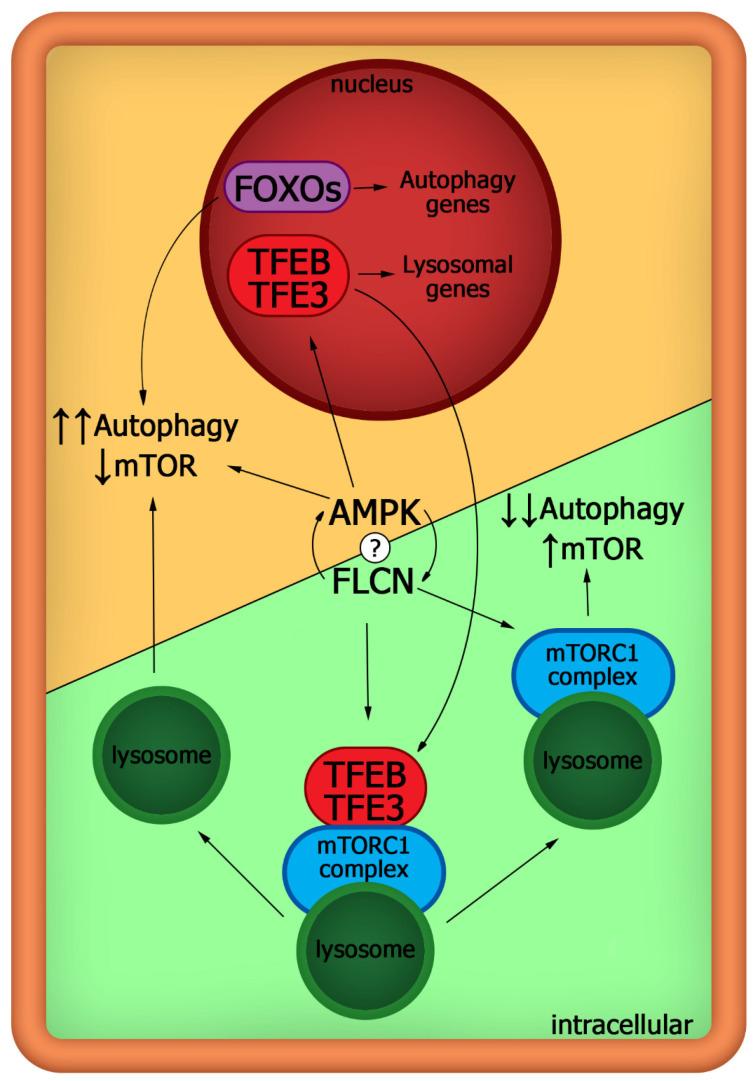
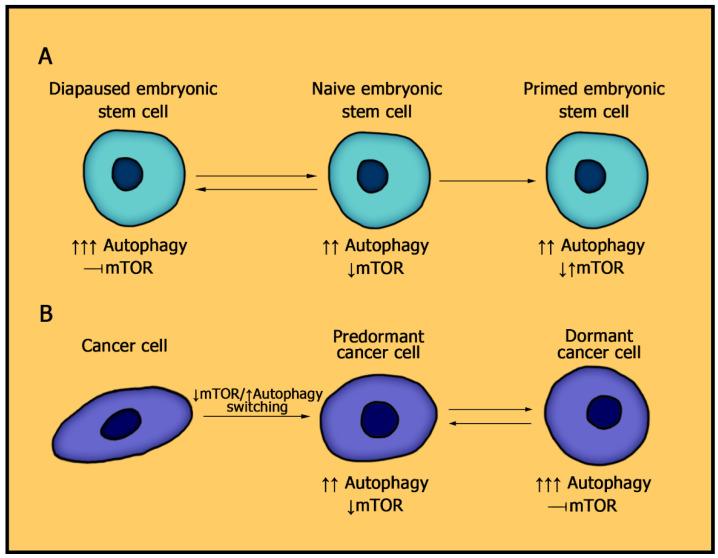
Currently, the success of targeted anticancer therapies largely depends on the correct understanding of the dormant state of cancer cells, since it is increasingly regarded to fuel tumor recurrence. The concept of cancer cell dormancy is often considered as an adaptive response of cancer cells to stress, and, therefore, is limited. It is possible that the cancer dormant state is not a privilege of cancer cells but the same reproductive survival strategy as diapause used by embryonic stem cells (ESCs). Recent advances reveal that high autophagy and mTOR pathway reduction are key mechanisms contributing to dormancy and diapause. ESCs, sharing their main features with cancer stem cells, have a delicate balance between the mTOR pathway and autophagy activity permissive for diapause induction. In this review, we discuss the functioning of the mTOR signaling and autophagy in ESCs in detail that allows us to deepen our understanding of the biology of cancer cell dormancy.
目前,靶向抗癌疗法的成功很大程度上取决于对癌细胞休眠状态的正确理解,因为越来越多的人认为它是肿瘤复发的根源。癌细胞休眠的概念通常被认为是癌细胞对应激的一种适应性反应,因此是有限的。癌细胞的休眠状态可能并非癌细胞所特有,而是与胚胎干细胞(ESC)所采用的滞育相同的生殖生存策略。最近的进展表明,高自噬和mTOR通路的降低是导致休眠和滞育的关键机制。ESC与癌症干细胞具有共同的主要特征,在mTOR通路和允许诱导滞育的自噬活性之间保持着微妙的平衡。在这篇综述中,我们详细讨论了mTOR信号和自噬在ESC中的作用,这使我们能够加深对癌细胞休眠生物学的理解。

 Zotero 插件