
人口对抗生素使用和抗微生物药物耐药性的知识和认识:来自 2019 年全国家庭调查的结果以及与 2017 年相比的变化。
Population knowledge and awareness of antibiotic use and antimicrobial resistance: results from national household survey 2019 and changes from 2017.
机构信息
International Health Policy Program, Ministry of Public Health, Nonthaburi, Thailand.
National Statistical Office, Ministry of Digital Economy and Society, Bangkok, Thailand.
出版信息
BMC Public Health. 2021 Nov 29;21(1):2188. doi: 10.1186/s12889-021-12237-y.
BACKGROUND
Lack of knowledge and awareness on antimicrobial resistance (AMR) can result in irrational use of antibiotics, which is one of the major drivers of AMR. One goal of the Thailand National Strategic Plan on AMR (2017-2021) is a 20% increase in public knowledge and awareness of antibiotic use and AMR by 2021. This study assesses antibiotic use, level of knowledge and awareness of antibiotic use and AMR and the factors associated with their knowledge and awareness in the Thai population in 2019. It compares findings with a similar national survey in 2017.
METHODS
An AMR module was integrated into the Health and Welfare Survey, a biennial national household survey conducted by the National Statistical Office since 2017. The 2019 survey took place in March, through face-to-face interviews with 27,900 Thai adults aged 15 years or above who participated in the survey and compares 2019 findings with those from 2017.
RESULTS
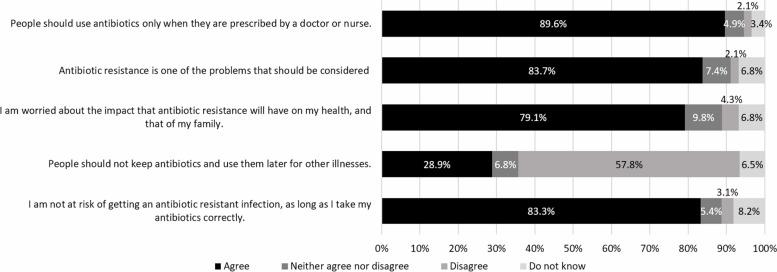
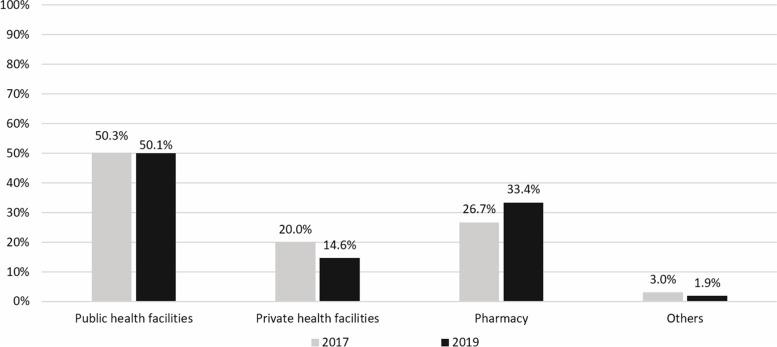
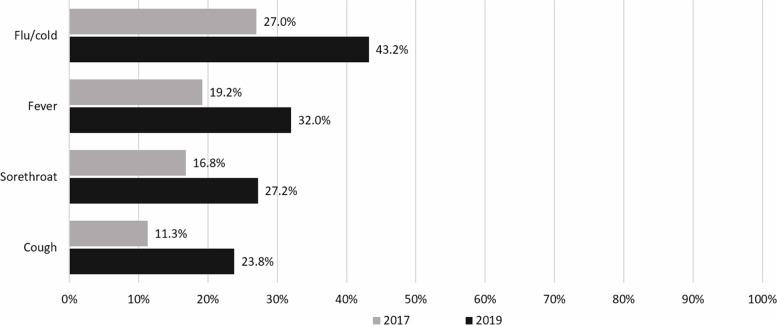
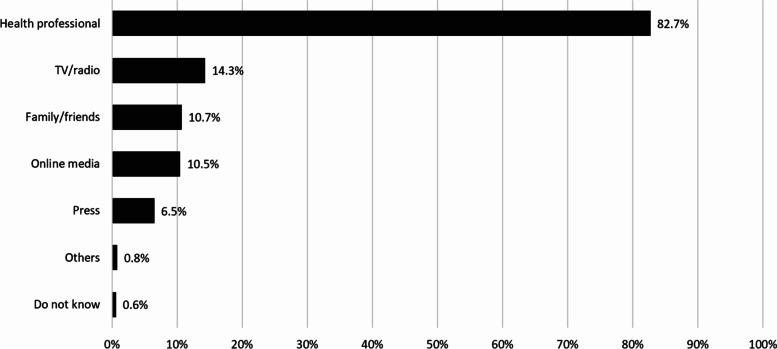
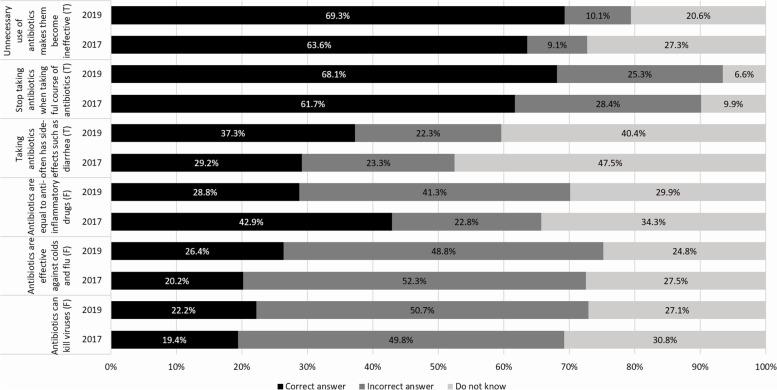
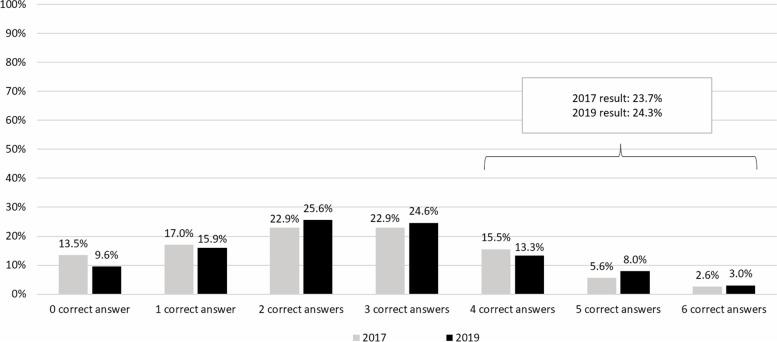
One month prior to the survey, 6.3% of population reported use of antibiotics (reduced from 7.9% to 2017), of which 98.1% received antibiotics through healthcare professionals and almost half (43.2%) for flu symptoms. During the last 12 months, 21.5% of Thai adults received information on the appropriate use of antibiotics and AMR (increased from 17.8% to 2017); mostly through health professionals (82.7%). On knowledge, 24.3% of adults gave correct answers to more than three out of six statements (three true and three false statements) (increased from 23.7% to 2017). The overall mean score of awareness of appropriate antibiotic use and AMR is 3.3 out of total score of 5.
CONCLUSIONS
Although progress was made on knowledge and awareness between 2017 and 2019, certain practices, such as use of antibiotics for flu symptoms and receiving information about antibiotic use and AMR, are inappropriate and inadequate. These findings require significant action, notably strengthening health professionals' ability to prescribe and dispense antibiotics appropriately and effective communication with patients. The government should promote specific information on rational use of antibiotics and AMR to specific target groups.
背景
缺乏对抗生素耐药性(AMR)的知识和认识可能导致抗生素的不合理使用,这是 AMR 的主要驱动因素之一。泰国 AMR 国家战略计划(2017-2021 年)的目标之一是到 2021 年,公众对抗生素使用和 AMR 的知识和认识提高 20%。本研究评估了 2019 年泰国人口对抗生素的使用、对抗生素使用和 AMR 的知识和认识水平以及与其知识和认识相关的因素,并将研究结果与 2017 年的类似全国性调查进行了比较。
方法
AMR 模块被整合到健康和福利调查中,这是国家统计局自 2017 年以来每两年进行一次的全国性家庭调查。2019 年的调查于 3 月进行,通过面对面访谈了 27900 名年龄在 15 岁及以上的泰国成年人,他们参加了调查,并将 2019 年的调查结果与 2017 年的调查结果进行了比较。
结果
在调查前一个月,有 6.3%的人口报告使用了抗生素(从 7.9%降至 2017 年),其中 98.1%是通过医疗保健专业人员获得的,近一半(43.2%)是为了治疗流感症状。在过去的 12 个月里,有 21.5%的泰国成年人获得了关于抗生素和 AMR 合理使用的信息(从 17.8%增加到 2017 年);主要是通过卫生专业人员(82.7%)。在知识方面,有 24.3%的成年人对六个陈述中的三个以上给出了正确答案(三个正确陈述和三个错误陈述)(从 23.7%增加到 2017 年)。对抗生素和 AMR 合理使用的意识的总平均得分为 3.3 分(满分 5 分)。
结论
尽管 2017 年至 2019 年在知识和认识方面取得了进展,但某些做法,如使用抗生素治疗流感症状以及获得有关抗生素使用和 AMR 的信息,是不恰当和不足的。这些发现需要采取重大行动,特别是加强卫生专业人员适当开具和配给抗生素的能力,并与患者进行有效的沟通。政府应向特定目标群体宣传有关合理使用抗生素和 AMR 的具体信息。
 Zotero 插件