
免疫检查点抑制剂联合或不联合骨靶向治疗在伴有骨转移的 NSCLC 患者中的应用及其与中性粒细胞与淋巴细胞比值的相关性和预后意义。
Immune Checkpoint Inhibitors With or Without Bone-Targeted Therapy in NSCLC Patients With Bone Metastases and Prognostic Significance of Neutrophil-to-Lymphocyte Ratio.
机构信息
Osteoncology and Rare Tumors Center (CDO-TR), IRCCS Istituto Romagnolo per lo Studio dei Tumori (IRST) "Dino Amadori", Meldola, Italy.
Unit of Biostatistics and Clinical Trials, IRCCS Istituto Romagnolo per lo Studio dei Tumori (IRST) "Dino Amadori", Meldola, Italy.
出版信息
Front Immunol. 2021 Nov 10;12:697298. doi: 10.3389/fimmu.2021.697298. eCollection 2021.
INTRODUCTION
Bone metastases (BMs) are a negative prognostic factor in patients with non-small cell lung cancer (NSCLC). Although immune-checkpoint inhibitors (ICIs) have dramatically changed the therapeutic landscape of NSCLC, little information is available on BMs from NSCLC treated with ICIs alone or in association with bone-targeted therapy (BTT) such as zoledronate or denosumab.
METHODS
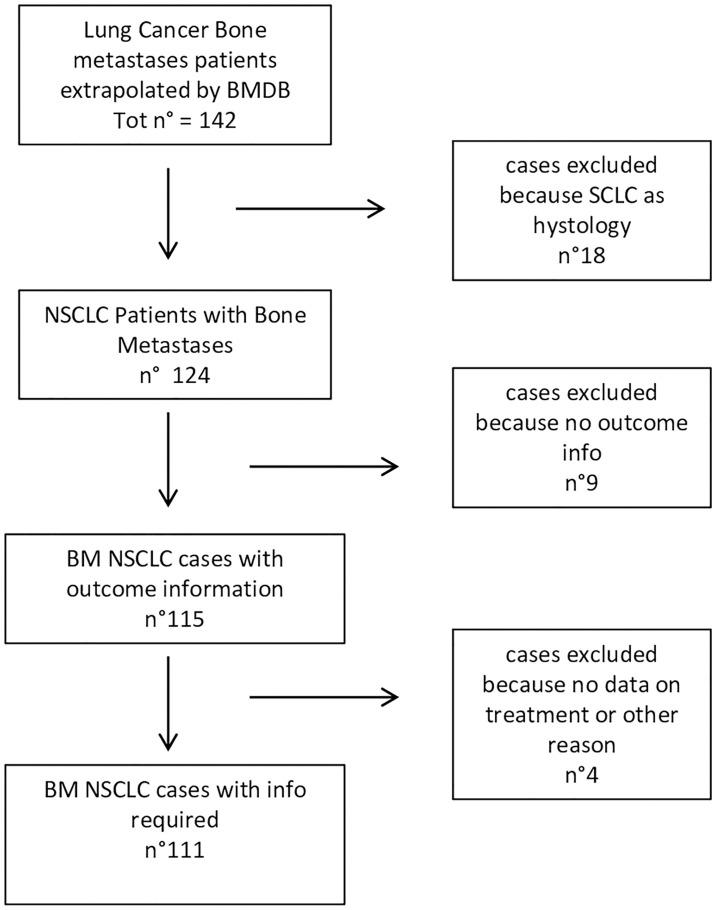
From 2014 to 2020, 111 of the 142 patients with BMs secondary to NSCLC extrapolated from the prospective multicenter Italian BM Database were eligible for analysis. Information on blood count, comorbidities, and toxicity was retrospectively collected. The neutrophil-to-lymphocyte ratio (NLR) pre- and post-treatment was calculated. Survival was analyzed using the Kaplan-Meier method, with statistical significance of survival differences assessed using the log-rank test.
RESULTS
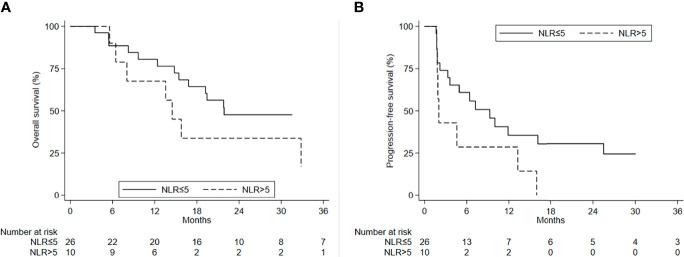
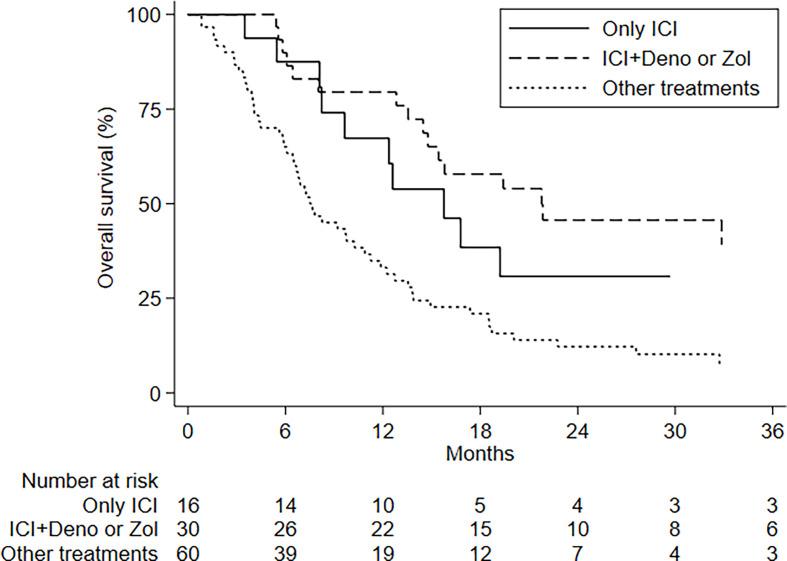
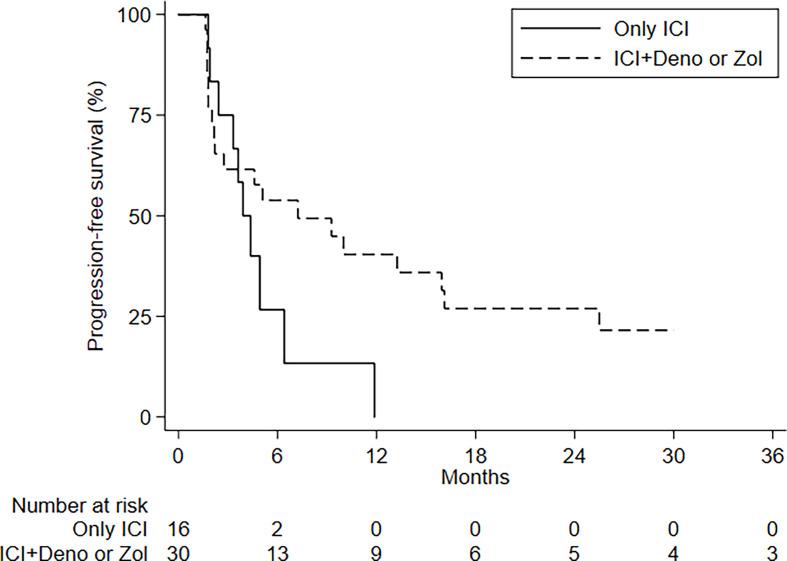
Median age was 66 (range, 42-84) years. Performance status (PS) Eastern Cooperative Oncology Group (ECOG) was 0-1 in 79/111 patients. The majority of patients (89.2%) had adenocarcinoma histology. At a median follow-up of 47.4 months, median progression-free (mPFS) and overall survival (mOS) was 4.9 (95%CI, 2.8-10.0) and 11.9 (95%CI, 8.2-14.4) months, respectively. Forty-six (43.4%) patients with BM NSCLC underwent first- or further-line therapy with ICIs: 28 (60.8%) received nivolumab, 9 (19.6%) pembrolizumab, and 9 (19.6%) atezolizumab. Of the 46 patients treated with ICIs, 30 (65.2%) underwent BTT: 24 (80.0%) with zoledronate and 6 (20.0%) with denosumab. The ICI-alone group had an mOS of 15.8 months [95%CI, 8.2-not evaluable (NE)] . 21.8 months (95%CI, 14.5-not evaluable) for the ICI plus BTT group and 7.5 (95%CI, 6.1-10.9) months for the group receiving other treatments (p < 0.001). NLR ≤5 had a positive impact on OS.
CONCLUSION
BTT appears to have a synergistic effect when used in combination with ICIs, improving patient survival.
简介
骨转移(BMs)是非小细胞肺癌(NSCLC)患者的一个负面预后因素。尽管免疫检查点抑制剂(ICIs)极大地改变了 NSCLC 的治疗格局,但对于单独使用 ICI 或联合使用唑来膦酸或地舒单抗等骨靶向治疗(BTT)治疗的 NSCLC 患者的 BMs 相关信息知之甚少。
方法
从 2014 年到 2020 年,从前瞻性多中心意大利 BM 数据库中提取的 142 名 BMs 继发于 NSCLC 的患者中,有 111 名符合分析条件。回顾性收集了血液计数、合并症和毒性的信息。计算了治疗前后的中性粒细胞与淋巴细胞比值(NLR)。使用 Kaplan-Meier 法分析生存情况,使用对数秩检验评估生存差异的统计学意义。
结果
中位年龄为 66 岁(范围 42-84 岁)。79/111 名患者的体力状况(PS)东部合作肿瘤学组(ECOG)为 0-1。大多数患者(89.2%)为腺癌组织学类型。中位随访 47.4 个月时,中位无进展生存期(mPFS)和总生存期(mOS)分别为 4.9 个月(95%CI,2.8-10.0)和 11.9 个月(95%CI,8.2-14.4)。46 名(43.4%)BMs NSCLC 患者接受了 ICI 的一线或进一步治疗:28 名(60.8%)接受了纳武利尤单抗治疗,9 名(19.6%)接受了帕博利珠单抗治疗,9 名(19.6%)接受了阿替利珠单抗治疗。在接受 ICI 治疗的 46 名患者中,30 名(65.2%)接受了 BTT:24 名(80.0%)接受了唑来膦酸治疗,6 名(20.0%)接受了地舒单抗治疗。ICI 单药组的 mOS 为 15.8 个月[95%CI,8.2-NE]。ICI 联合 BTT 组为 21.8 个月(95%CI,14.5-NE),其他治疗组为 7.5 个月(95%CI,6.1-10.9)(p<0.001)。NLR≤5 对 OS 有积极影响。
结论
BTT 似乎与 ICI 联合使用具有协同作用,可提高患者的生存率。

 Zotero 插件