
B 细胞特征可区分红斑狼疮各亚型及系统性疾病活动度。
B Cell Signatures Distinguish Cutaneous Lupus Erythematosus Subtypes and the Presence of Systemic Disease Activity.
机构信息
Division of Rheumatology, Department of Internal Medicine, University of Michigan, Ann Arbor, MI, United States.
Department of Pediatrics, University of Michigan, Ann Arbor, MI, United States.
出版信息
Front Immunol. 2021 Nov 19;12:775353. doi: 10.3389/fimmu.2021.775353. eCollection 2021.
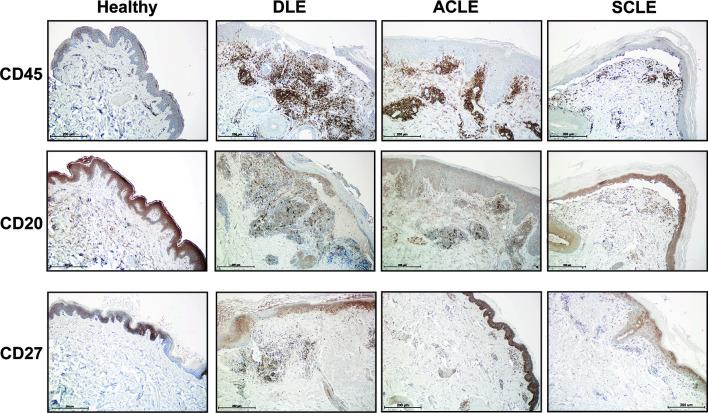
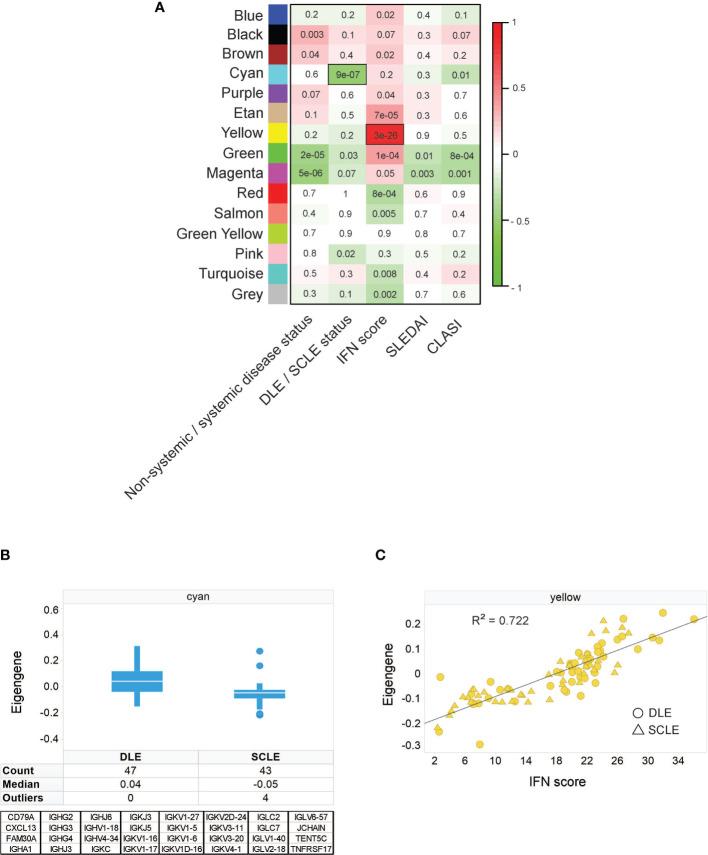
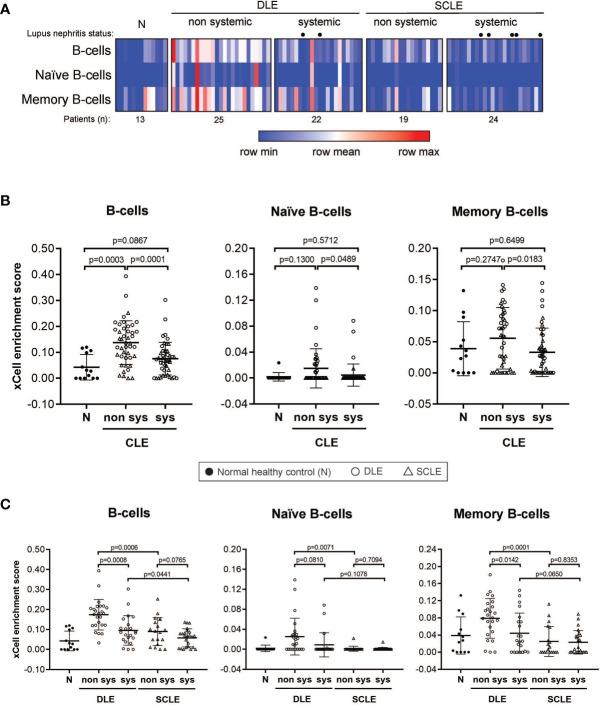
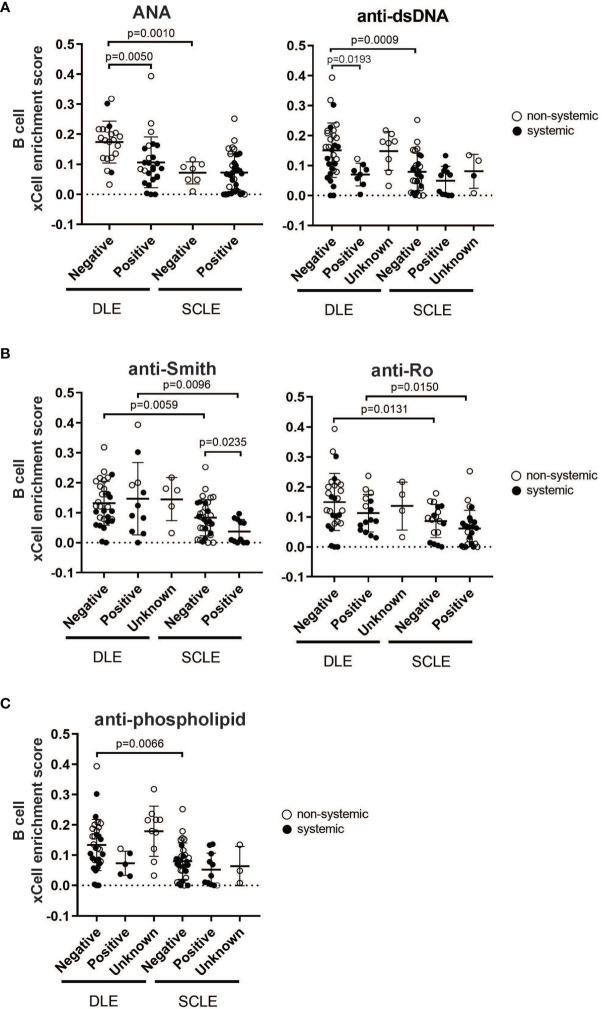
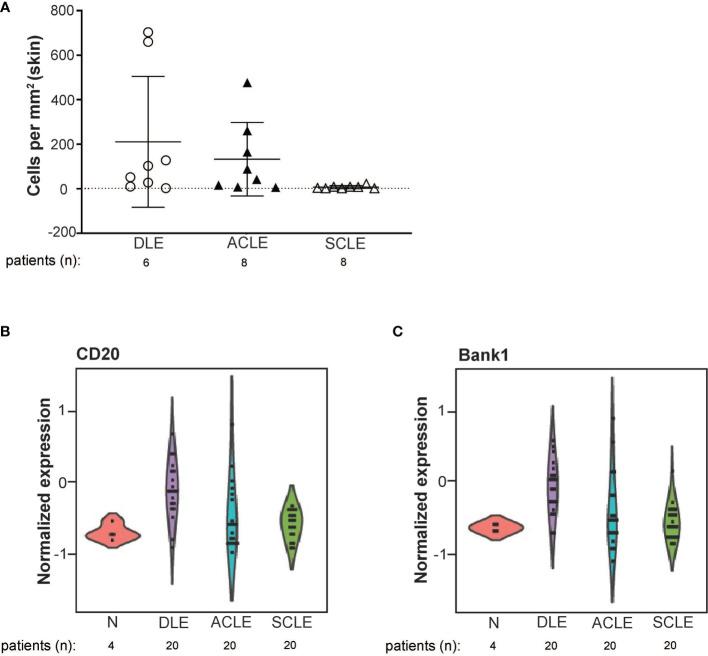
Cutaneous lupus erythematosus (CLE) is a chronic inflammatory skin disease characterized by a diverse cadre of clinical presentations. CLE commonly occurs in patients with systemic lupus erythematosus (SLE), and CLE can also develop in the absence of systemic disease. Although CLE is a complex and heterogeneous disease, several studies have identified common signaling pathways, including those of type I interferons (IFNs), that play a key role in driving cutaneous inflammation across all CLE subsets. However, discriminating factors that drive different phenotypes of skin lesions remain to be determined. Thus, we sought to understand the skin-associated cellular and transcriptional differences in CLE subsets and how the different types of cutaneous inflammation relate to the presence of systemic lupus disease. In this study, we utilized two distinct cohorts comprising a total of 150 CLE lesional biopsies to compare discoid lupus erythematosus (DLE), subacute cutaneous lupus erythematosus (SCLE), and acute cutaneous lupus erythematosus (ACLE) in patients with and without associated SLE. Using an unbiased approach, we demonstrated a CLE subtype-dependent gradient of B cell enrichment in the skin, with DLE lesions harboring a more dominant skin B cell transcriptional signature and enrichment of B cells on immunostaining compared to ACLE and SCLE. Additionally, we observed a significant increase in B cell signatures in the lesional skin from patients with isolated CLE compared with similar lesions from patients with systemic lupus. This trend was driven primarily by differences in the DLE subgroup. Our work thus shows that skin-associated B cell responses distinguish CLE subtypes in patients with and without associated SLE, suggesting that B cell function in skin may be an important link between cutaneous lupus and systemic disease activity.
皮肤红斑狼疮(CLE)是一种慢性炎症性皮肤病,其特征是临床表现多样。CLE 常发生于系统性红斑狼疮(SLE)患者,也可在无系统性疾病的情况下发生。虽然 CLE 是一种复杂且异质性的疾病,但多项研究已确定了一些共同的信号通路,包括 I 型干扰素(IFN),这些通路在驱动所有 CLE 亚型的皮肤炎症中起着关键作用。然而,导致不同皮肤损伤表型的鉴别因素仍有待确定。因此,我们试图了解 CLE 亚型的皮肤相关细胞和转录差异,以及不同类型的皮肤炎症与系统性狼疮疾病的存在有何关系。在这项研究中,我们利用两个不同的队列,共包括 150 例 CLE 皮损活检,比较了有和无相关 SLE 的盘状红斑狼疮(DLE)、亚急性皮肤型红斑狼疮(SCLE)和急性皮肤型红斑狼疮(ACLE)。采用无偏倚方法,我们证明了 CLE 亚型依赖的皮肤 B 细胞富集梯度,DLE 病变中皮肤 B 细胞转录特征更为突出,免疫染色显示 B 细胞富集程度高于 ACLE 和 SCLE。此外,我们观察到,与系统性狼疮患者的相似病变相比,孤立性 CLE 患者皮损中的 B 细胞特征明显增加。这一趋势主要是由 DLE 亚组的差异驱动的。我们的工作表明,皮肤相关的 B 细胞反应可以区分有和无相关 SLE 的 CLE 亚型,这表明皮肤中的 B 细胞功能可能是皮肤狼疮和系统性疾病活动之间的重要联系。

 Zotero 插件