
纳米尺度可视化观察到从内体再循环小管中递送的 mRNA 的内体逃逸。
Endosomal escape of delivered mRNA from endosomal recycling tubules visualized at the nanoscale.
机构信息
Max Planck Institute of Molecular Cell Biology and Genetics, Dresden, Germany.
Advanced Drug Delivery, Pharmaceutical Science Research and Development, AstraZeneca, Gothenburg, Sweden.
出版信息
J Cell Biol. 2022 Feb 7;221(2). doi: 10.1083/jcb.202110137. Epub 2021 Dec 9.
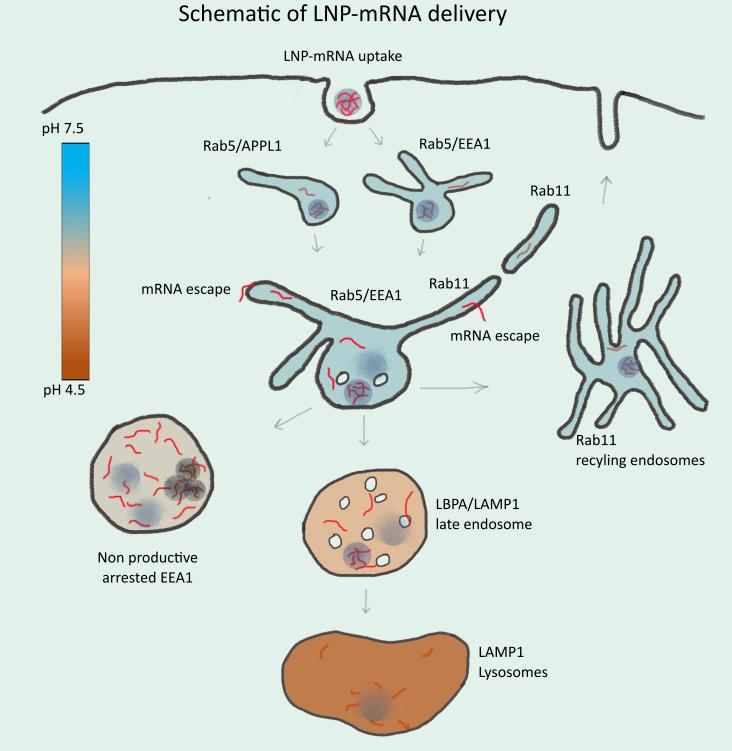
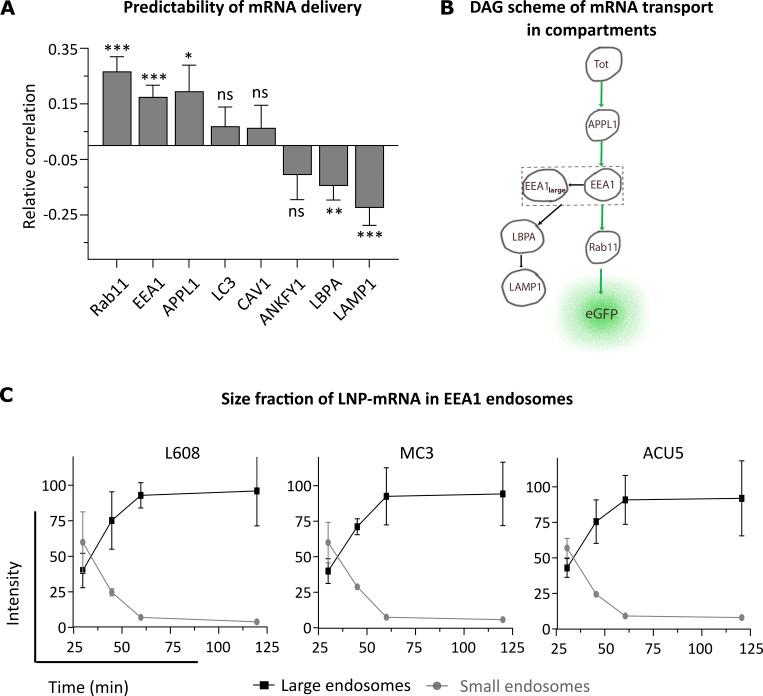
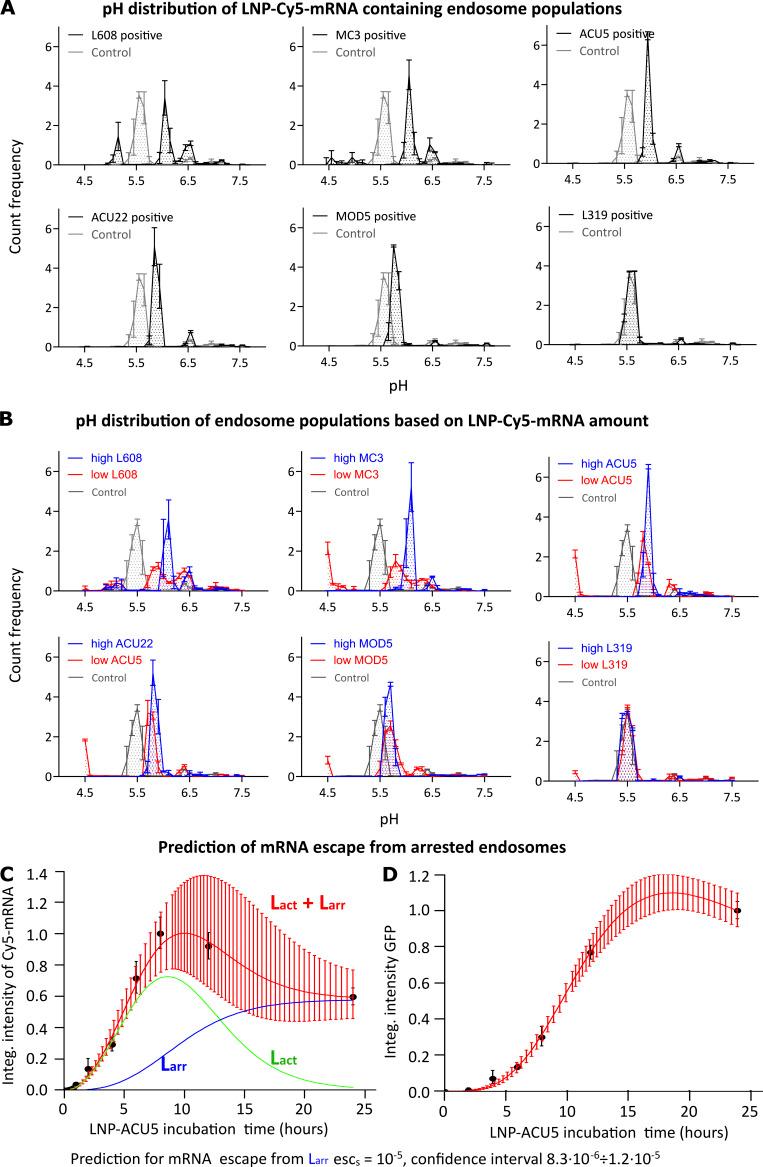
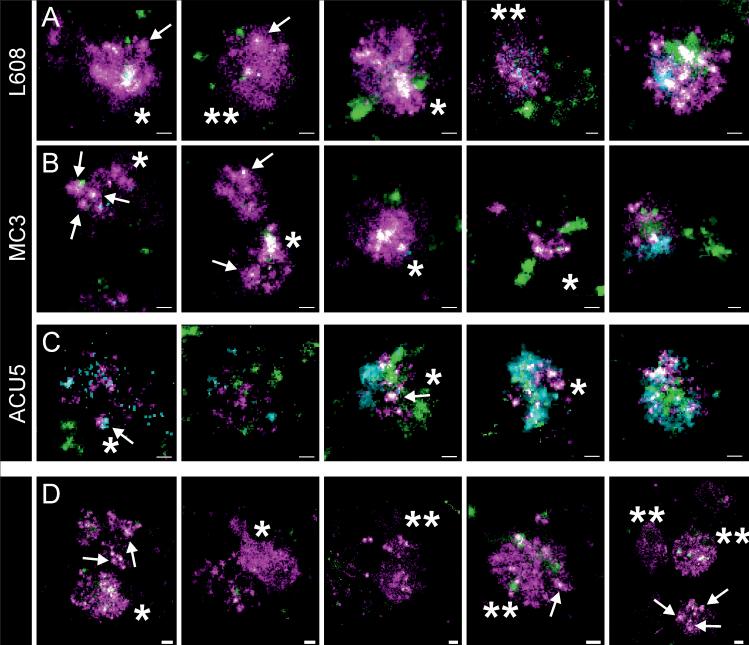
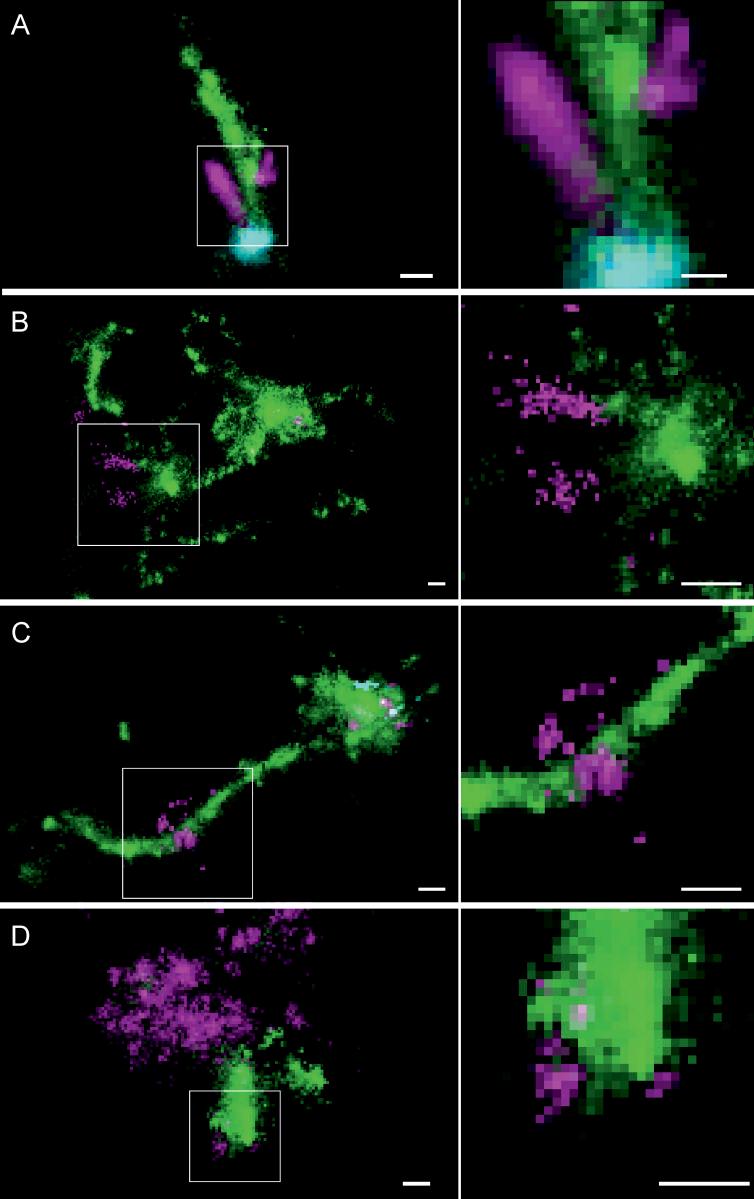
Delivery of exogenous mRNA using lipid nanoparticles (LNPs) is a promising strategy for therapeutics. However, a bottleneck remains in the poor understanding of the parameters that correlate with endosomal escape versus cytotoxicity. To address this problem, we compared the endosomal distribution of six LNP-mRNA formulations of diverse chemical composition and efficacy, similar to those used in mRNA-based vaccines, in primary human adipocytes, fibroblasts, and HeLa cells. Surprisingly, we found that total uptake is not a sufficient predictor of delivery, and different LNPs vary considerably in endosomal distributions. Prolonged uptake impaired endosomal acidification, a sign of cytotoxicity, and caused mRNA to accumulate in compartments defective in cargo transport and unproductive for delivery. In contrast, early endocytic/recycling compartments have the highest probability for mRNA escape. By using super-resolution microscopy, we could resolve a single LNP-mRNA within subendosomal compartments and capture events of mRNA escape from endosomal recycling tubules. Our results change the view of the mechanisms of endosomal escape and define quantitative parameters to guide the development of mRNA formulations toward higher efficacy and lower cytotoxicity.
使用脂质纳米颗粒(LNPs)传递外源性 mRNA 是一种很有前途的治疗策略。然而,对于与内涵体逃逸和细胞毒性相关的参数,我们的了解仍然有限,这仍是一个瓶颈。为了解决这个问题,我们比较了六种具有不同化学组成和功效的 LNP-mRNA 制剂在原代人脂肪细胞、成纤维细胞和 HeLa 细胞中的内涵体分布。令人惊讶的是,我们发现总摄取量不能充分预测递送,不同的 LNPs 在内涵体分布上差异很大。摄取的延长会损害内涵体酸化,这是细胞毒性的一个标志,并导致 mRNA 积累在货物运输缺陷和无效的递送上。相比之下,早期内吞/再循环隔室最有可能使 mRNA 逃逸。通过使用超分辨率显微镜,我们可以在亚内涵体隔室中解析单个 LNP-mRNA,并捕获 mRNA 从内涵体再循环小管逃逸的事件。我们的结果改变了对内涵体逃逸机制的看法,并定义了定量参数,以指导 mRNA 制剂的开发,使其具有更高的功效和更低的细胞毒性。


 Zotero 插件