
内涵体逃逸:LNP 介导治疗的瓶颈。
Endosomal escape: A bottleneck for LNP-mediated therapeutics.
机构信息
Laboratory of Precision Nanomedicine, Shmunis School of Biomedicine and Cancer Research, George S. Wise Faculty of Life Sciences, Tel Aviv University, Tel Aviv 69978, Israel.
Department of Materials Sciences and Engineering, Iby and Aladar Fleischman Faculty of Engineering, Tel Aviv University, Tel Aviv 69978, Israel.
出版信息
Proc Natl Acad Sci U S A. 2024 Mar 12;121(11):e2307800120. doi: 10.1073/pnas.2307800120. Epub 2024 Mar 4.
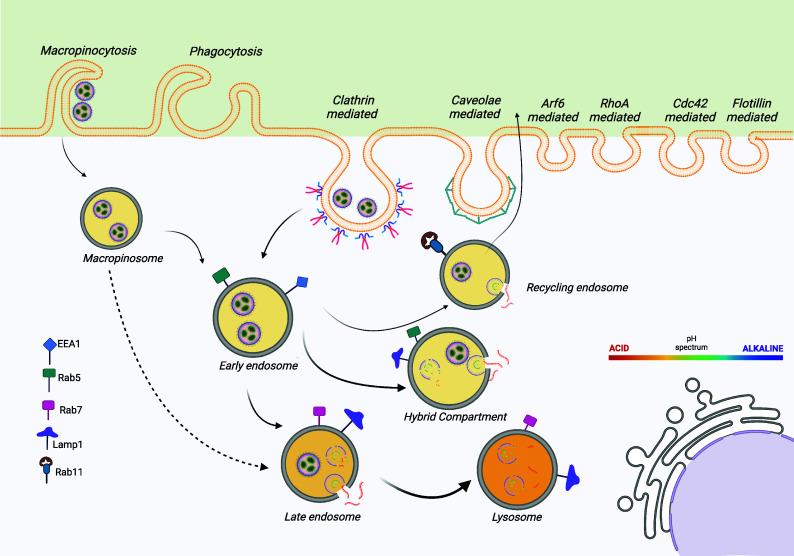
Lipid nanoparticles (LNPs) have recently emerged as a powerful and versatile clinically approved platform for nucleic acid delivery, specifically for mRNA vaccines. A major bottleneck in the field is the release of mRNA-LNPs from the endosomal pathways into the cytosol of cells where they can execute their encoded functions. The data regarding the mechanism of these endosomal escape processes are limited and contradicting. Despite extensive research, there is no consensus regarding the compartment of escape, the cause of the inefficient escape and are currently lacking a robust method to detect the escape. Here, we review the currently known mechanisms of endosomal escape and the available methods to study this process. We critically discuss the limitations and challenges of these methods and the possibilities to overcome these challenges. We propose that the development of currently lacking robust, quantitative high-throughput techniques to study endosomal escape is timely and essential. A better understanding of this process will enable better RNA-LNP designs with improved efficiency to unlock new therapeutic modalities.
脂质纳米颗粒(LNPs)最近作为一种强大且多功能的临床批准的核酸传递平台而出现,特别是用于 mRNA 疫苗。该领域的一个主要瓶颈是将 mRNA-LNP 从内涵体途径释放到细胞质中,在那里它们可以执行其编码功能。关于这些内涵体逃逸过程的机制的数据有限且相互矛盾。尽管进行了广泛的研究,但对于逃逸的隔室、逃逸效率低下的原因以及目前缺乏检测逃逸的有效方法仍没有达成共识。在这里,我们回顾了目前已知的内涵体逃逸机制以及研究该过程的可用方法。我们批判性地讨论了这些方法的局限性和挑战,以及克服这些挑战的可能性。我们提出,开发目前缺乏的稳健、定量高通量技术来研究内涵体逃逸是及时且必要的。更好地了解这一过程将使具有更高效率的新型 RNA-LNP 设计成为可能,从而解锁新的治疗模式。


 Zotero 插件