
一种携带乙型肝炎病毒共价闭合环状 DNA 的新型小鼠模型。
A Novel Mouse Model Harboring Hepatitis B Virus Covalently Closed Circular DNA.
机构信息
State Key Laboratory of Virology and Hubei Province Key Laboratory of Allergy and Immunology, Institute of Medical Virology, School of Basic Medical Sciences, Wuhan University, Wuhan, China.
Department of Clinical Laboratory, Renmin Hospital of Wuhan University, Wuhan, China.
出版信息
Cell Mol Gastroenterol Hepatol. 2022;13(4):1001-1017. doi: 10.1016/j.jcmgh.2021.11.011. Epub 2021 Dec 9.
BACKGROUND AND AIMS
The persistence of viral covalently closed circular DNA (cccDNA) is the major obstacle for antiviral treatment against hepatitis B virus (HBV). Basic and translational studies are largely hampered due to the lack of feasible small animal models to support HBV cccDNA formation. The aim of this study is to establish a novel mouse model harboring cccDNA.
METHODS
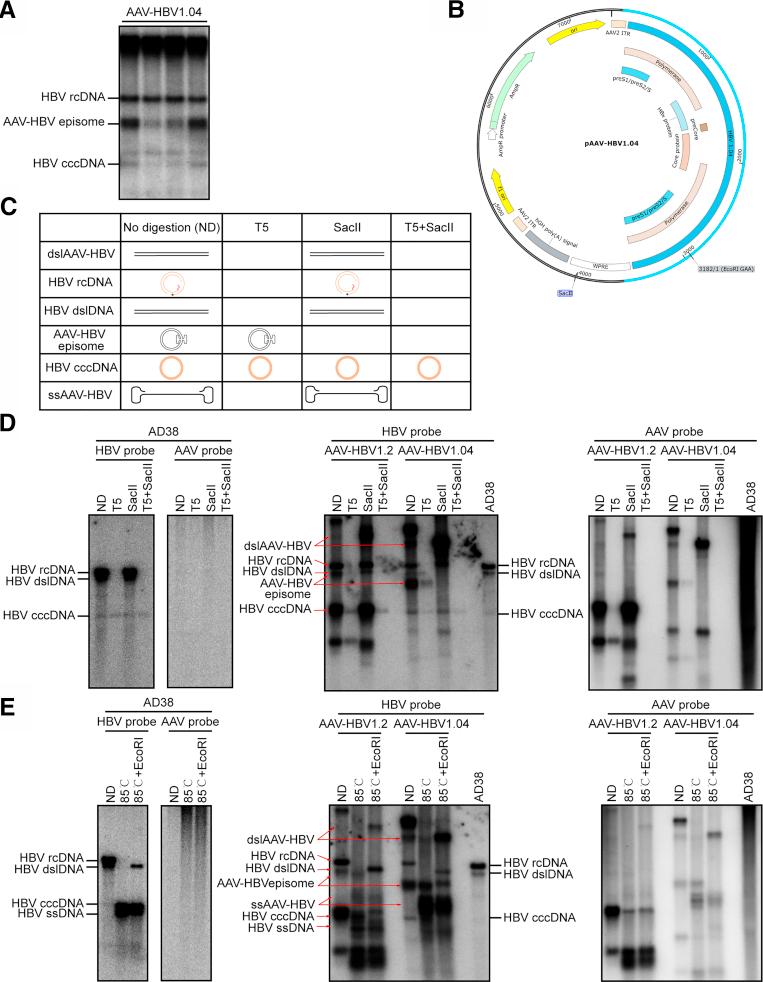
An adeno-associated virus (AAV) vector carrying a replication-deficient HBV1.04-fold genome (AAV-HBV1.04) was constructed. The linear HBV genome starts from nucleotide 403 and ends at 538, which results in the splitting of HBV surface and polymerase genes. Different HBV replication markers were evaluated for AAV-HBV1.04 plasmid-transfected cells, the AAV-HBV1.04 viral vector-transduced cells, and mice injected with the AAV-HBV1.04 viral vector.
RESULTS
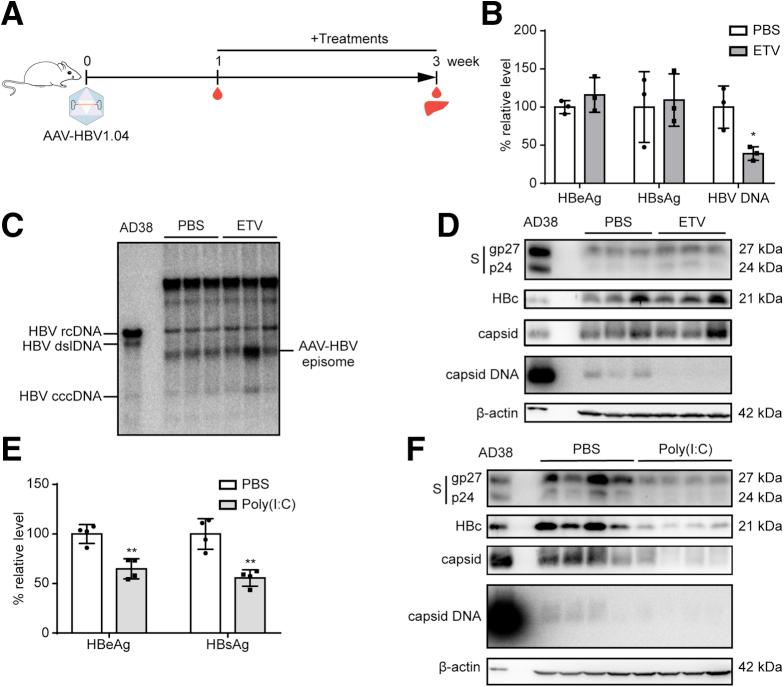
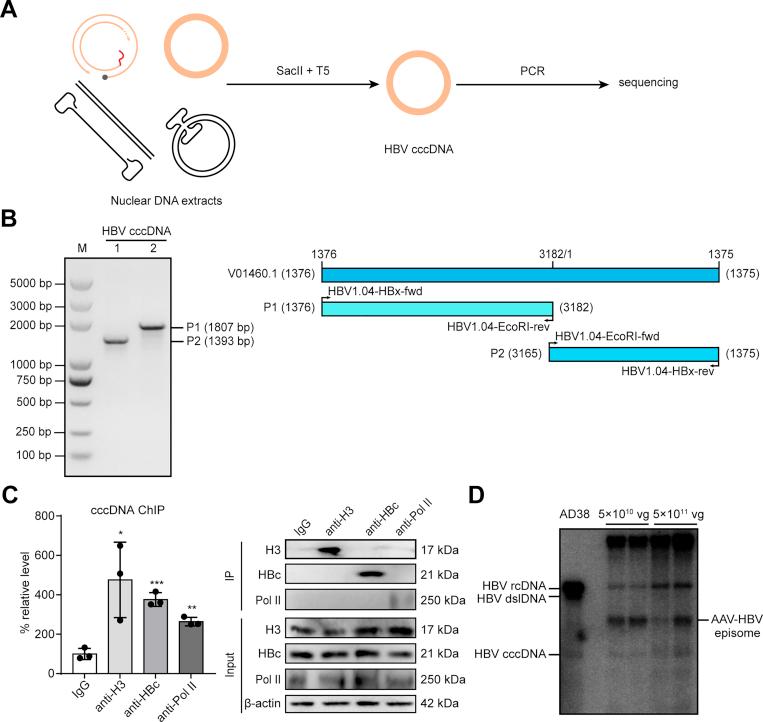
Compared with the previously reported AAV-HBV1.2 construct, direct transfection of AAV-HBV1.04 plasmid failed to produce hepatitis B surface antigen and progeny virus. Interestingly, AAV-HBV1.04 viral vector transduction could result in the formation of cccDNA and the production of all HBV replication markers in vitro and in vivo. The formation of cccDNA could be blocked by ATR (ataxia-telangiectasia and Rad3-related protein) inhibitors but not HBV reverse transcription inhibitor or capsid inhibitors. The AAV-HBV1.04 mouse supported long-term HBV replication and responded to antiviral treatments.
CONCLUSIONS
This AAV-HBV1.04 mouse model can support HBV cccDNA formation through ATR-mediated DNA damage response. The de novo formed cccDNA but not the parental AAV vector can lead to the production of hepatitis B surface antigen and HBV progeny. This model will provide a unique platform for studying HBV cccDNA and developing novel antivirals against HBV infection.
背景和目的
乙型肝炎病毒(HBV)共价闭合环状 DNA(cccDNA)的持续存在是抗病毒治疗的主要障碍。由于缺乏可行的小动物模型来支持 HBV cccDNA 的形成,基础和转化研究受到了很大的阻碍。本研究旨在建立一种新的携带 cccDNA 的小鼠模型。
方法
构建了携带复制缺陷型 HBV1.04 倍基因组的腺相关病毒(AAV)载体(AAV-HBV1.04)。线性 HBV 基因组从核苷酸 403 开始,止于 538,导致 HBV 表面和聚合酶基因的分裂。评估了不同的 HBV 复制标记,用于 AAV-HBV1.04 质粒转染细胞、AAV-HBV1.04 病毒载体转导细胞和注射 AAV-HBV1.04 病毒载体的小鼠。
结果
与之前报道的 AAV-HBV1.2 构建体相比,AAV-HBV1.04 质粒的直接转染未能产生乙型肝炎表面抗原和子代病毒。有趣的是,AAV-HBV1.04 病毒载体转导可在体外和体内形成 cccDNA,并产生所有 HBV 复制标记。ATR(共济失调毛细血管扩张症和 Rad3 相关蛋白)抑制剂可阻断 cccDNA 的形成,但 HBV 逆转录抑制剂或衣壳抑制剂不能阻断。AAV-HBV1.04 小鼠支持长期 HBV 复制,并对抗病毒治疗有反应。
结论
这种 AAV-HBV1.04 小鼠模型可通过 ATR 介导的 DNA 损伤反应支持 HBV cccDNA 的形成。新形成的 cccDNA 而不是亲本 AAV 载体可导致乙型肝炎表面抗原和 HBV 子代的产生。该模型将为研究 HBV cccDNA 和开发新型抗 HBV 感染药物提供独特的平台。



 Zotero 插件