
中国与慢性阻塞性肺疾病相关危险因素的流行病学证据:系统评价和荟萃分析。
Epidemiological evidence relating risk factors to chronic obstructive pulmonary disease in China: A systematic review and meta-analysis.
机构信息
School of Public Health, Shanghai Jiao Tong University School of Medicine, Shanghai, China.
Department of Respiratory Disease, The 903rd Hospital of PLA, Hangzhou, Zhejiang, China.
出版信息
PLoS One. 2021 Dec 28;16(12):e0261692. doi: 10.1371/journal.pone.0261692. eCollection 2021.
BACKGROUND
Chronic obstructive pulmonary disease (COPD), the most common chronic respiratory disease worldwide, not only leads to the decline of pulmonary function and quality of life consecutively, but also has become a major economic burden on individuals, families, and society in China. The purpose of this meta-analysis was to explore the risk factors for developing COPD in the Chinese population that resides in China and to provide a theoretical basis for the early prevention of COPD.
METHODS
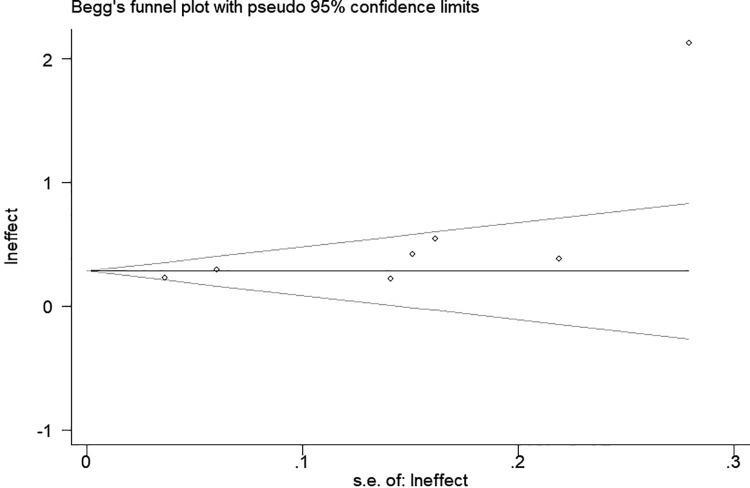
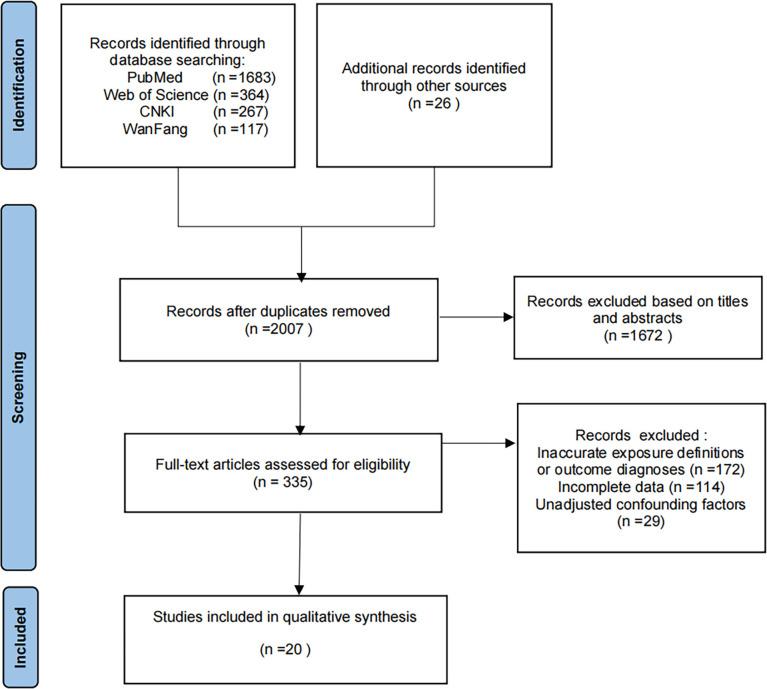
A total of 2457 cross-sectional, case-control, and cohort studies published related to risk factors for COPD in China were searched. Based on the inclusion and exclusion criteria, 20 articles were selected. Stata 11.0 was used for meta-analysis. After merging the data, the pooled effect and 95% confidence intervals (CIs) were calculated to assess the association between risk factors and COPD. Heterogeneity between studies was assessed using I2 and Cochran's Q tests. Begg's test was used to assess publication bias.
RESULTS
Exposure to particulate matter less than 2.5 μm in diameter (PM2.5) (pooled effect = 1.73; 95%CI: 1.162.58; P <0.01), smoking history (pooled effect = 2.58; 95%CI: 2.003.32; P <0.01), passive smoking history (pooled effect = 1.39; 95%CI: 1.031.87; P = 0.03), male sex(pooled effect = 1.70; 95%CI: 1.312.22; P <0.01), body mass index (BMI) <18.5 kg/m2 (pooled effect = 1.73; 95%CI: 1.322.25; P <0.01), exposure to biomass burning emissions (pooled effect = 1.65; 95%CI: 1.322.06; P <0.01), childhood respiratory infections (pooled effect = 3.44; 95%CI: 1.338.90; P = 0.01), residence (pooled effect = 1.24; 95%CI: 1.091.42; P <0.01), and a family history of respiratory diseases (pooled effect = 2.04; 95%CI: 1.53~2.71; P <0.01) were risk factors for COPD in the Chinese population.
CONCLUSION
Early prevention of COPD could be accomplished by quitting smoking, reducing exposure to air pollutants and biomass burning emissions, maintaining body mass index between 18.5 kg/m2 and 28 kg/m2, protecting children from respiratory infections, adopting active treatments to children with respiratory diseases, and conducting regular screening for those with family history of respiratory diseases.
背景
慢性阻塞性肺疾病(COPD)是全球最常见的慢性呼吸道疾病,不仅导致肺功能和生活质量逐渐下降,而且在中国也成为个人、家庭和社会的主要经济负担。本荟萃分析的目的是探讨中国人群中 COPD 的发病危险因素,为 COPD 的早期预防提供理论依据。
方法
共检索到 2457 篇与中国 COPD 发病危险因素相关的横断面、病例对照和队列研究。基于纳入和排除标准,选择了 20 篇文章。使用 Stata 11.0 进行荟萃分析。在合并数据后,计算合并效应和 95%置信区间(CI),以评估危险因素与 COPD 之间的关联。使用 I2 和 Cochran's Q 检验评估研究间的异质性。使用 Begg 检验评估发表偏倚。
结果
暴露于直径小于 2.5μm 的颗粒物(PM2.5)(合并效应=1.73;95%CI:1.162.58;P<0.01)、吸烟史(合并效应=2.58;95%CI:2.003.32;P<0.01)、被动吸烟史(合并效应=1.39;95%CI:1.031.87;P=0.03)、男性(合并效应=1.70;95%CI:1.312.22;P<0.01)、BMI<18.5kg/m2(合并效应=1.73;95%CI:1.322.25;P<0.01)、生物质燃烧排放物暴露(合并效应=1.65;95%CI:1.322.06;P<0.01)、儿童期呼吸道感染(合并效应=3.44;95%CI:1.338.90;P=0.01)、居住地(合并效应=1.24;95%CI:1.091.42;P<0.01)和呼吸道疾病家族史(合并效应=2.04;95%CI:1.53~2.71;P<0.01)是中国人群 COPD 的发病危险因素。
结论
通过戒烟、减少空气污染物和生物质燃烧排放物的暴露、保持 18.5kg/m2 至 28kg/m2 之间的 BMI、保护儿童免受呼吸道感染、对患有呼吸道疾病的儿童进行积极治疗以及对有呼吸道疾病家族史的人群进行定期筛查,可以实现 COPD 的早期预防。

 Zotero 插件