
肥胖犬只体重减轻会促使粪便微生物群特征发生重要转变,程度可达类似于瘦犬的微生物群。
Weight-loss in obese dogs promotes important shifts in fecal microbiota profile to the extent of resembling microbiota of lean dogs.
作者信息
Macedo Henrique Tobaro, Rentas Mariana Fragoso, Vendramini Thiago Henrique Annibale, Macegoza Matheus Vinicius, Amaral Andressa Rodrigues, Jeremias Juliana Toloi, de Carvalho Balieiro Júlio César, Pfrimer Karina, Ferriolli Eduardo, Pontieri Cristiana Ferreira Fonseca, Brunetto Marcio Antonio
机构信息
Department of Animal Nutrition and Production, Pet Nutrology Research Center (CEPEN Pet), School of Veterinary Medicine and Animal Science (FMVZ), University of São Paulo (USP), Duque de Caxias Norte Ave, 255, Pirassununga, São Paulo, 13635-900, Brazil.
Nutritional Development Center (CDN), Grandfood Indústria E Comércio LTDA (Premier Pet), Luiz Augusto de Oliveira Hwy, Km 204, Dourado, São Paulo, 13590-000, Brazil.
出版信息
Anim Microbiome. 2022 Jan 6;4(1):6. doi: 10.1186/s42523-021-00160-x.
BACKGROUND
Among the undesirable changes associated with obesity, one possibility recently raised is dysbiosis of the intestinal microbiota. Studies have shown changes in microbiota in obese rats and humans, but there are still few studies that characterize and compare the fecal microbiota of lean, obese and dogs after weight loss. Thus, this study aimed to evaluate the effects of a weight loss program (WLP) in fecal microbiota of dogs in addition to comparing them with those of lean dogs. Twenty female dogs of different breeds, aged between 1 and 9 years were selected. They were equally divided into two groups: Obese group (OG), with body condition score (BCS) 8 or 9/9, and body fat percentage greater than 30%, determined by the deuterium isotope dilution method, and lean group (LG) with BCS 5/9, and maximum body fat of 15%. Weight loss group (WLG) was composed by OG after loss of 20% of their current body weight. Fecal samples were collected from the three experimental groups. Total DNA was extracted from the feces and these were sequenced by the Illumina methodology. The observed abundances were evaluated using a generalized linear model, considering binomial distribution and using the logit link function in SAS (p < 0.05).
RESULTS
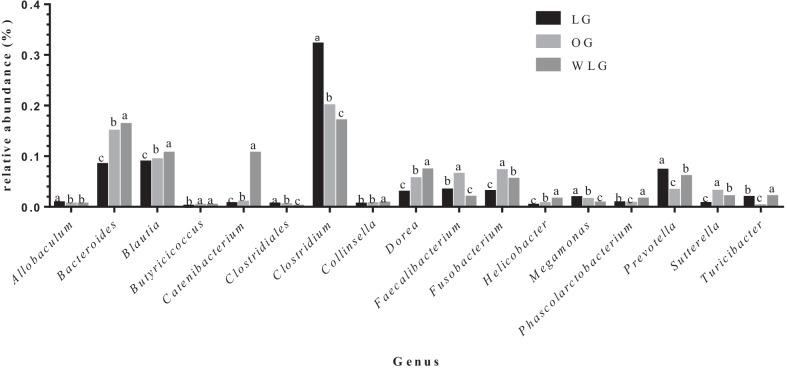
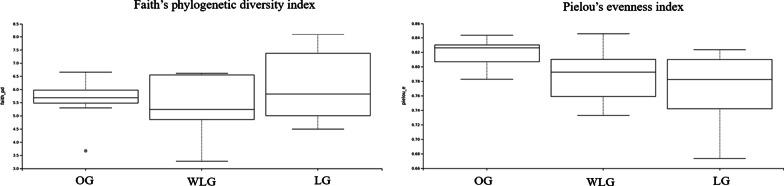
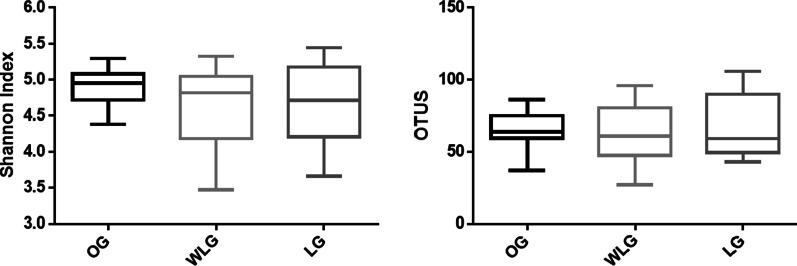
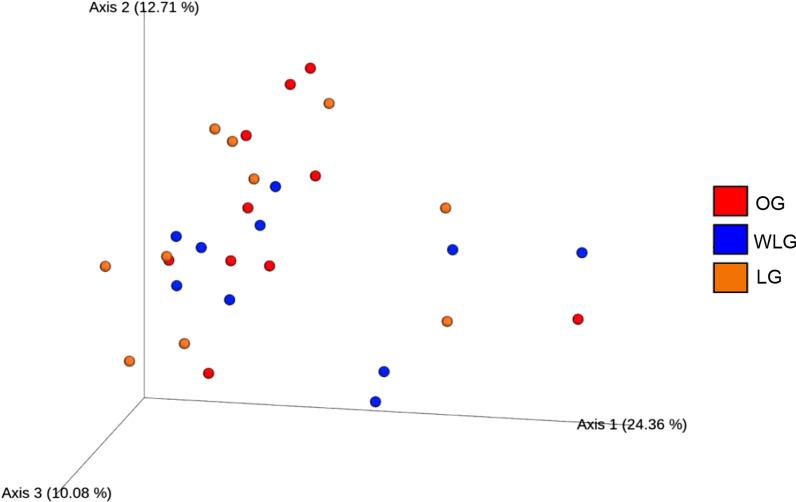
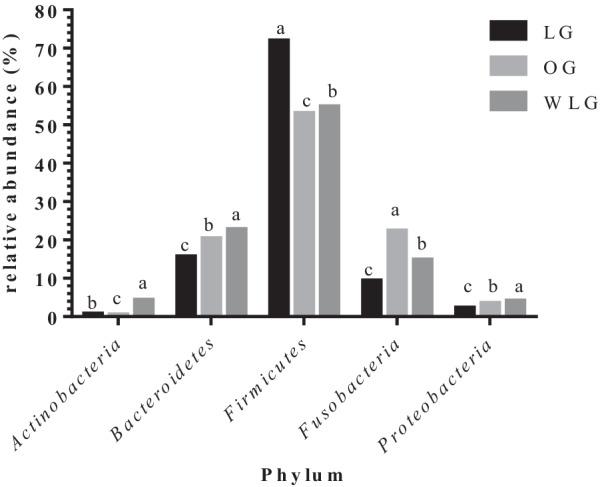
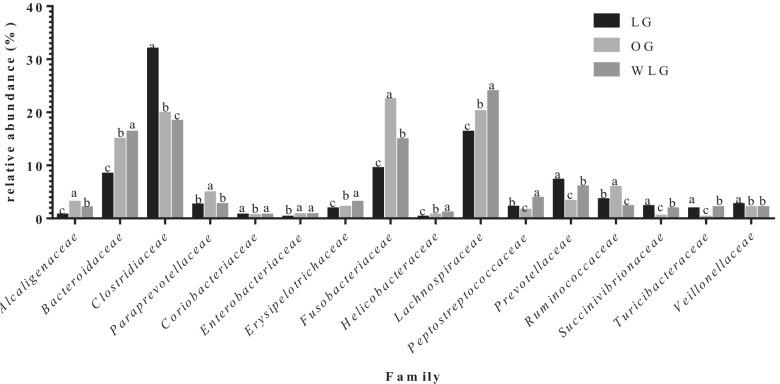
The WLP modulated the microorganisms of the gastrointestinal tract, so that, WLG and LG had microbial composition with greater biodiversity than OG, and intestinal uniformity of the microbiota (Pielou's evenness index) was higher in OG than WLG dogs (P = 0.0493) and LG (P = 0.0101). In addition, WLG had values of relative frequency more similar to LG than to OG.
CONCLUSION
The fecal microbiota of the studied groups differs from each other. The weight loss program can help to reverse the changes observed in obese dogs.
背景
在与肥胖相关的不良变化中,最近提出的一种可能性是肠道微生物群失调。研究已表明肥胖大鼠和人类的微生物群存在变化,但仍很少有研究对瘦狗、肥胖狗及减肥后的狗的粪便微生物群进行特征描述和比较。因此,本研究旨在评估减肥计划(WLP)对狗粪便微生物群的影响,并将其与瘦狗的粪便微生物群进行比较。选取了20只年龄在1至9岁之间的不同品种雌性犬。它们被平均分为两组:肥胖组(OG),身体状况评分(BCS)为8或9/9,通过氘同位素稀释法测定体脂百分比大于30%;瘦狗组(LG),BCS为5/9,最大体脂为15%。减肥组(WLG)由OG组减重20%后组成。从三个实验组收集粪便样本。从粪便中提取总DNA,并采用Illumina方法进行测序。使用广义线性模型评估观察到的丰度,考虑二项分布并在SAS中使用logit链接函数(p < 0.05)。
结果
WLP调节了胃肠道微生物,因此,WLG组和LG组的微生物组成具有比OG组更高的生物多样性,并且OG组微生物群的肠道均匀度(皮洛均匀度指数)高于WLG组(P = 0.0493)和LG组(P = 0.0101)。此外,WLG组的相对频率值与LG组比与OG组更相似。
结论
研究组的粪便微生物群彼此不同。减肥计划有助于逆转肥胖犬中观察到的变化。
 Zotero 插件