
拉科酰胺对Na1.7通道的抑制作用取决于其与电压感受器结构域和通道孔的相互作用。
Lacosamide Inhibition of Na1.7 Channels Depends on its Interaction With the Voltage Sensor Domain and the Channel Pore.
作者信息
Labau Julie I R, Alsaloum Matthew, Estacion Mark, Tanaka Brian, Dib-Hajj Fadia B, Lauria Giuseppe, Smeets Hubert J M, Faber Catharina G, Dib-Hajj Sulayman, Waxman Stephen G
机构信息
Department of Neurology, Yale University School of Medicine, New Haven, CT, United States.
Center for Neuroscience and Regeneration Research, Yale University, West Haven, CT, United States.
出版信息
Front Pharmacol. 2021 Dec 21;12:791740. doi: 10.3389/fphar.2021.791740. eCollection 2021.
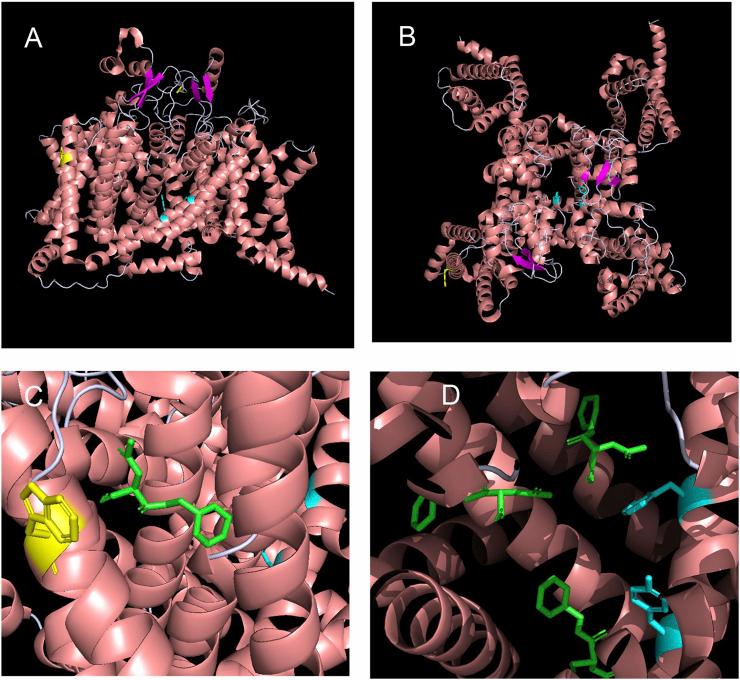
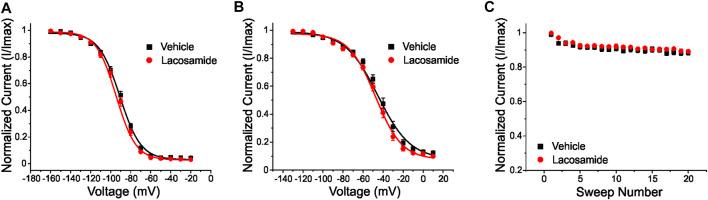
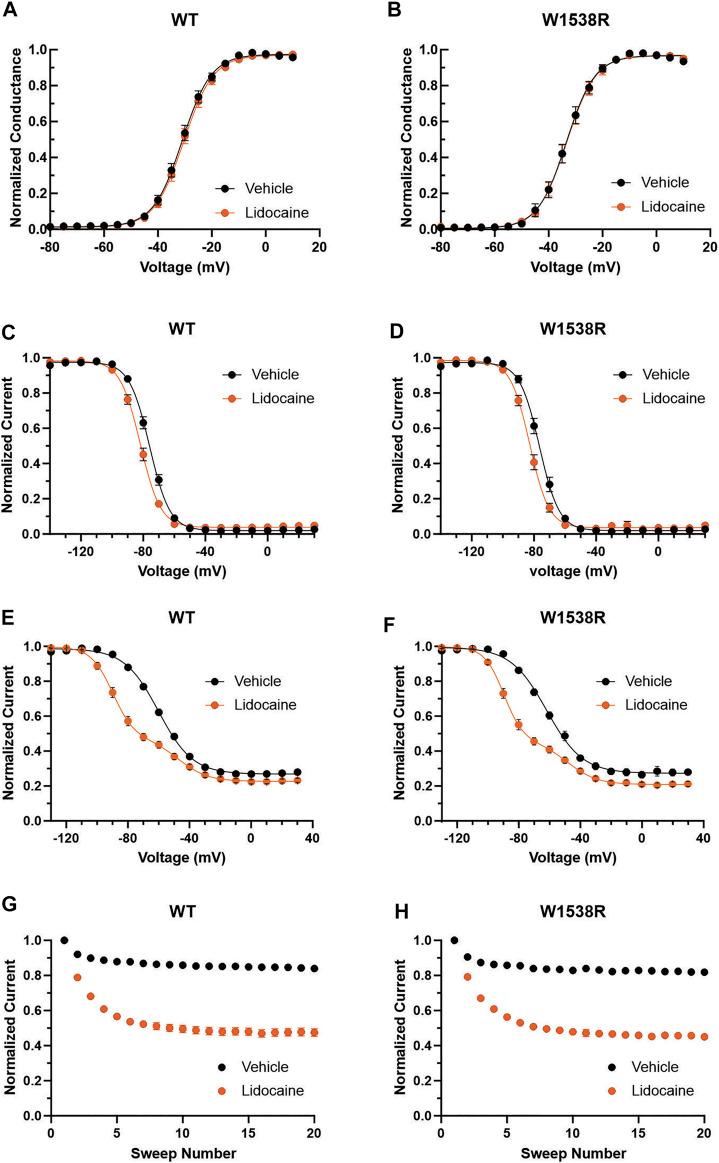
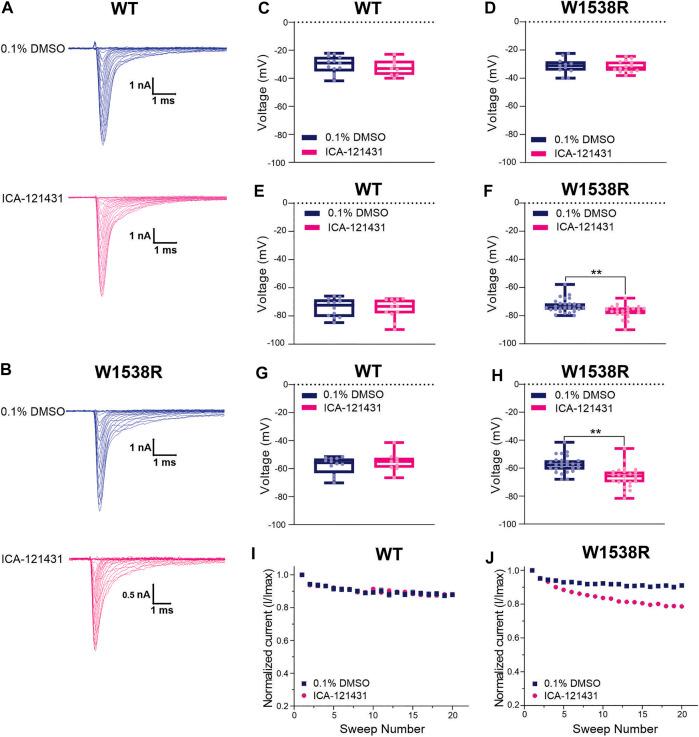
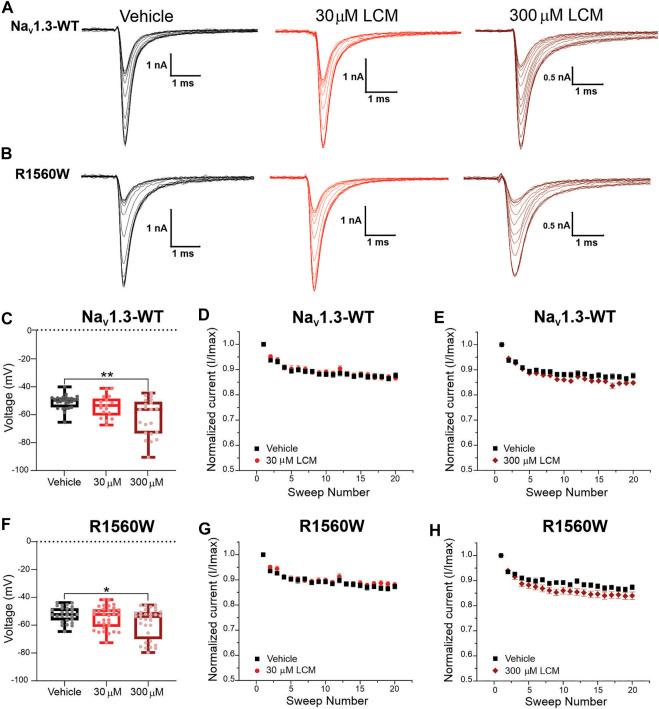
Lacosamide, developed as an anti-epileptic drug, has been used for the treatment of pain. Unlike typical anticonvulsants and local anesthetics which enhance fast-inactivation and bind within the pore of sodium channels, lacosamide enhances slow-inactivation of these channels, suggesting different binding mechanisms and mode of action. It has been reported that lacosamide's effect on Na1.5 is sensitive to a mutation in the local anesthetic binding site, and that it binds with slow kinetics to the fast-inactivated state of Na1.7. We recently showed that the Na1.7-W1538R mutation in the voltage-sensing domain 4 completely abolishes Na1.7 inhibition by clinically-achievable concentration of lacosamide. Our molecular docking analysis suggests a role for W1538 and pore residues as high affinity binding sites for lacosamide. Aryl sulfonamide sodium channel blockers are also sensitive to substitutions of the W1538 residue but not of pore residues. To elucidate the mechanism by which lacosamide exerts its effects, we used voltage-clamp recordings and show that lacosamide requires an intact local anesthetic binding site to inhibit Na1.7 channels. Additionally, the W1538R mutation does not abrogate local anesthetic lidocaine-induced blockade. We also show that the naturally occurring arginine in Na1.3 (Na1.3-R1560), which corresponds to Na1.7-W1538R, is not sufficient to explain the resistance of Na1.3 to clinically-relevant concentrations of lacosamide. However, the Na1.7-W1538R mutation conferred sensitivity to the Na1.3-selective aryl-sulfonamide blocker ICA-121431. Together, the W1538 residue and an intact local anesthetic site are required for lacosamide's block of Na1.7 at a clinically-achievable concentration. Moreover, the contribution of W1538 to lacosamide inhibitory effects appears to be isoform-specific.
拉科酰胺最初作为一种抗癫痫药物开发,现已用于治疗疼痛。与典型的抗惊厥药和局部麻醉药不同,后者增强快速失活并结合于钠通道孔内,而拉科酰胺增强这些通道的缓慢失活,这表明其结合机制和作用方式不同。据报道,拉科酰胺对Na1.5的作用对局部麻醉药结合位点的突变敏感,并且它以缓慢动力学结合到Na1.7的快速失活状态。我们最近表明,电压传感结构域4中的Na1.7-W1538R突变完全消除了临床可达到浓度的拉科酰胺对Na1.7的抑制作用。我们的分子对接分析表明,W1538和孔残基作为拉科酰胺的高亲和力结合位点发挥作用。芳基磺酰胺钠通道阻滞剂对W1538残基的取代也敏感,但对孔残基的取代不敏感。为了阐明拉科酰胺发挥其作用的机制,我们使用电压钳记录并表明拉科酰胺需要完整的局部麻醉药结合位点来抑制Na1.7通道。此外,W1538R突变不会消除局部麻醉药利多卡因诱导的阻滞作用。我们还表明,Na1.3中天然存在的精氨酸(Na1.3-R1560),它与Na1.7-W1538R相对应,不足以解释Na1.3对临床相关浓度拉科酰胺的耐药性。然而,Na1.7-W1538R突变赋予了对Na1.3选择性芳基磺酰胺阻滞剂ICA-121431的敏感性。总之,在临床可达到的浓度下,拉科酰胺阻断Na1.7需要W1538残基和完整的局部麻醉药位点。此外,W1538对拉科酰胺抑制作用的贡献似乎具有亚型特异性。


 Zotero 插件