
严重急性呼吸道感染儿童呼吸道病原体的流行病学及多重PCR薄膜阵列呼吸道检测板的影响:一项为期2年的研究
Epidemiology of Respiratory Pathogens in Children with Severe Acute Respiratory Infection and Impact of the Multiplex PCR Film Array Respiratory Panel: A 2-Year Study.
作者信息
Lamrani Hanchi Asmae, Guennouni Morad, Rachidi Meriem, Benhoumich Toufik, Bennani Hind, Bourrous Mounir, Maoulainine Fadl Mrabih Rabou, Younous Said, Bouskraoui Mohamed, Soraa Nabila
机构信息
Faculty of Medicine and Pharmacy, Cadi Ayyad University, Laboratory of Microbiology, University Hospital Mohamed VI, Marrakech, Morocco.
Hassan First University of Settat, Higher Institute of Health Sciences of Settat, Laboratory of Health Sciences and Technologies, Settat, Morocco.
出版信息
Int J Microbiol. 2021 Dec 31;2021:2276261. doi: 10.1155/2021/2276261. eCollection 2021.
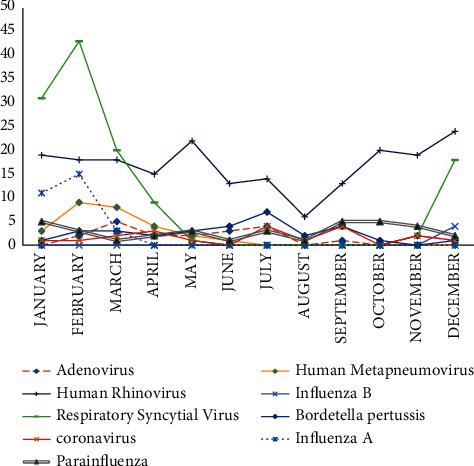
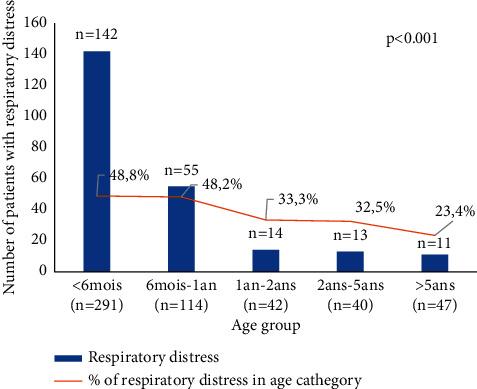
Sever acute respiratory infections (SARIs) are a public health issue that are common in children and are associated with an important morbidity and mortality rate worldwide. Although SARI are mainly caused by viruses, they are still a cause of antibiotic overuse. The use of molecular methods especially real-time multiplex PCR allowed to detect a wide range of respiratory viruses and their subtype as well as some atypical bacteria. The aim of this study was to investigate the epidemiology of respiratory pathogens detected in children admitted with SARI and to highlight the role of real-time multiplex PCR in the rapid diagnosis of viral and bacterial SARI. This work is a descriptive observational study from January 2018 to December 2019 including nasopharyngeal secretions collected from 534 children hospitalised in paediatric department. The detection of respiratory viruses and bacteria was performed by the FilmArray® Respiratory Panel. A total of 387 (72.5%) children were tested positive for at least one respiratory pathogen, and 23.3% of them were coinfected with more than one pathogen. Viral aetiology was found in 91.2% ( = 340). The most common viruses detected were HRV ( = 201) and RSV ( = 124), followed by PIV ( = 35) influenza A ( = 29) and human metapneumovirus ( = 27). Bacteria was found in 8.8% ( = 47), and Bordetella pertussis was the most detected. Respiratory syncytial virus and Bordetella pertussis were significantly higher in infants less than 6 months old. The detection of RSV and influenza A presented a pic in winter, and HMPV was statistically significant in spring ( < 0.01). This study described the epidemiology of respiratory pathogens involved in severe respiratory infections in children that were affected by several factors such as season and age group. It also highlighted the importance of multiplex PCR in confirming viral origin, thus avoiding irrational prescription of antibiotics in paediatric settings.
严重急性呼吸道感染(SARIs)是一个公共卫生问题,在儿童中很常见,且在全球范围内与较高的发病率和死亡率相关。尽管SARIs主要由病毒引起,但它们仍是抗生素过度使用的一个原因。分子方法尤其是实时多重PCR的应用能够检测多种呼吸道病毒及其亚型以及一些非典型细菌。本研究的目的是调查因SARIs入院儿童中检测到的呼吸道病原体的流行病学情况,并强调实时多重PCR在快速诊断病毒性和细菌性SARIs中的作用。这项工作是一项描述性观察性研究,时间跨度为2018年1月至2019年12月,纳入了从儿科住院的534名儿童中采集的鼻咽分泌物。通过FilmArray®呼吸道检测板对呼吸道病毒和细菌进行检测。共有387名(72.5%)儿童至少检测出一种呼吸道病原体呈阳性,其中23.3%的儿童感染了不止一种病原体。发现病毒病因的占91.2%(n = 340)。检测到的最常见病毒是鼻病毒(n = 201)和呼吸道合胞病毒(RSV,n = 124),其次是副流感病毒(n = 35)、甲型流感病毒(n = 29)和人偏肺病毒(n = 27)。发现细菌感染的占8.8%(n = 47),其中百日咳博德特氏菌检测得最多。呼吸道合胞病毒和百日咳博德特氏菌在6个月以下婴儿中显著更高。呼吸道合胞病毒和甲型流感病毒的检测在冬季出现高峰,人偏肺病毒在春季具有统计学意义(P < 0.01)。本研究描述了受季节和年龄组等多种因素影响的儿童严重呼吸道感染中涉及的呼吸道病原体的流行病学情况。它还强调了多重PCR在确认病毒起源方面的重要性,从而避免在儿科环境中不合理地使用抗生素。

 Zotero 插件