
6-姜酚通过调节细胞因子平衡和减少淋巴细胞凋亡改善脓毒症诱导的免疫功能障碍。
Pretreatment with 6-Gingerol Ameliorates Sepsis-Induced Immune Dysfunction by Regulating the Cytokine Balance and Reducing Lymphocyte Apoptosis.
机构信息
School of Biological Sciences, University of Ulsan, Ulsan 44610, Republic of Korea.
Department of Pathology, Ulsan University Hospital, University of Ulsan College of Medicine, Ulsan, Republic of Korea.
出版信息
Oxid Med Cell Longev. 2021 Dec 29;2021:5427153. doi: 10.1155/2021/5427153. eCollection 2021.
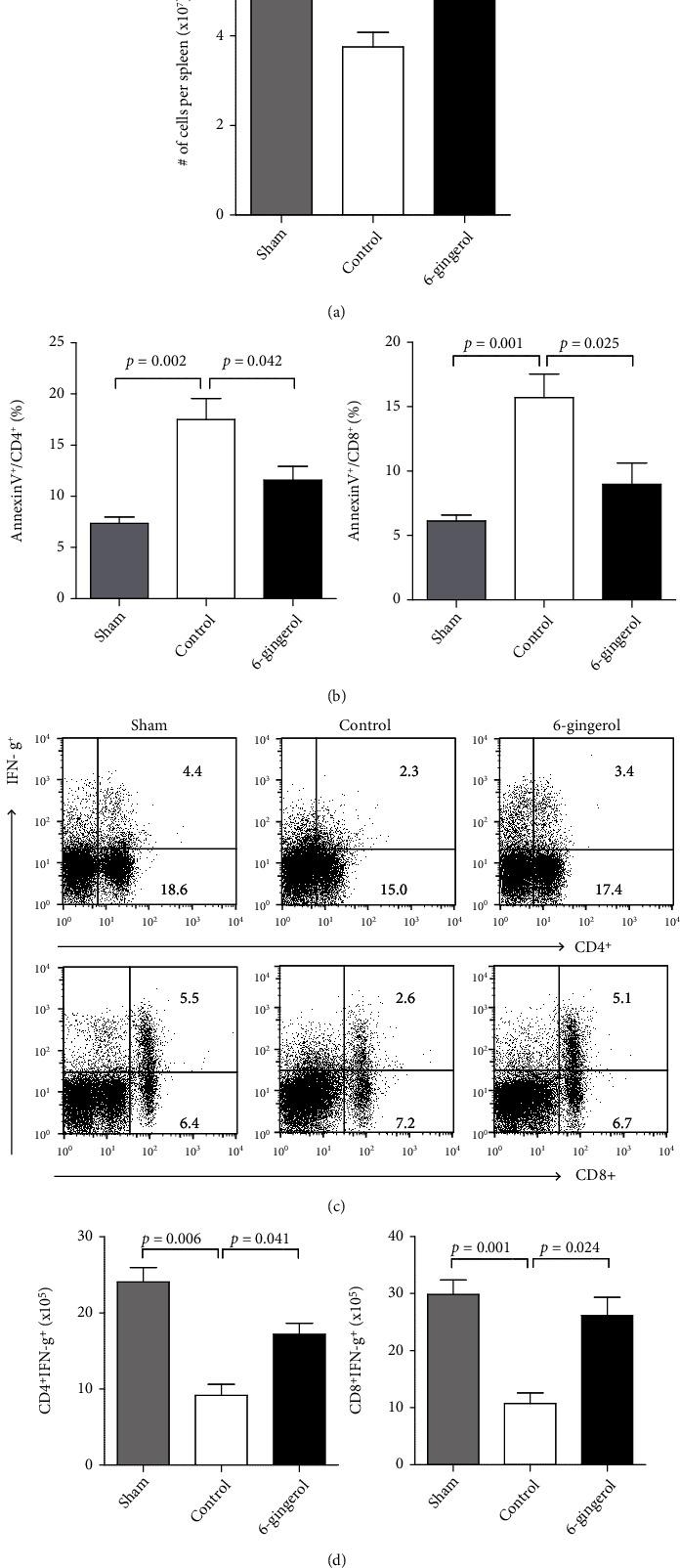
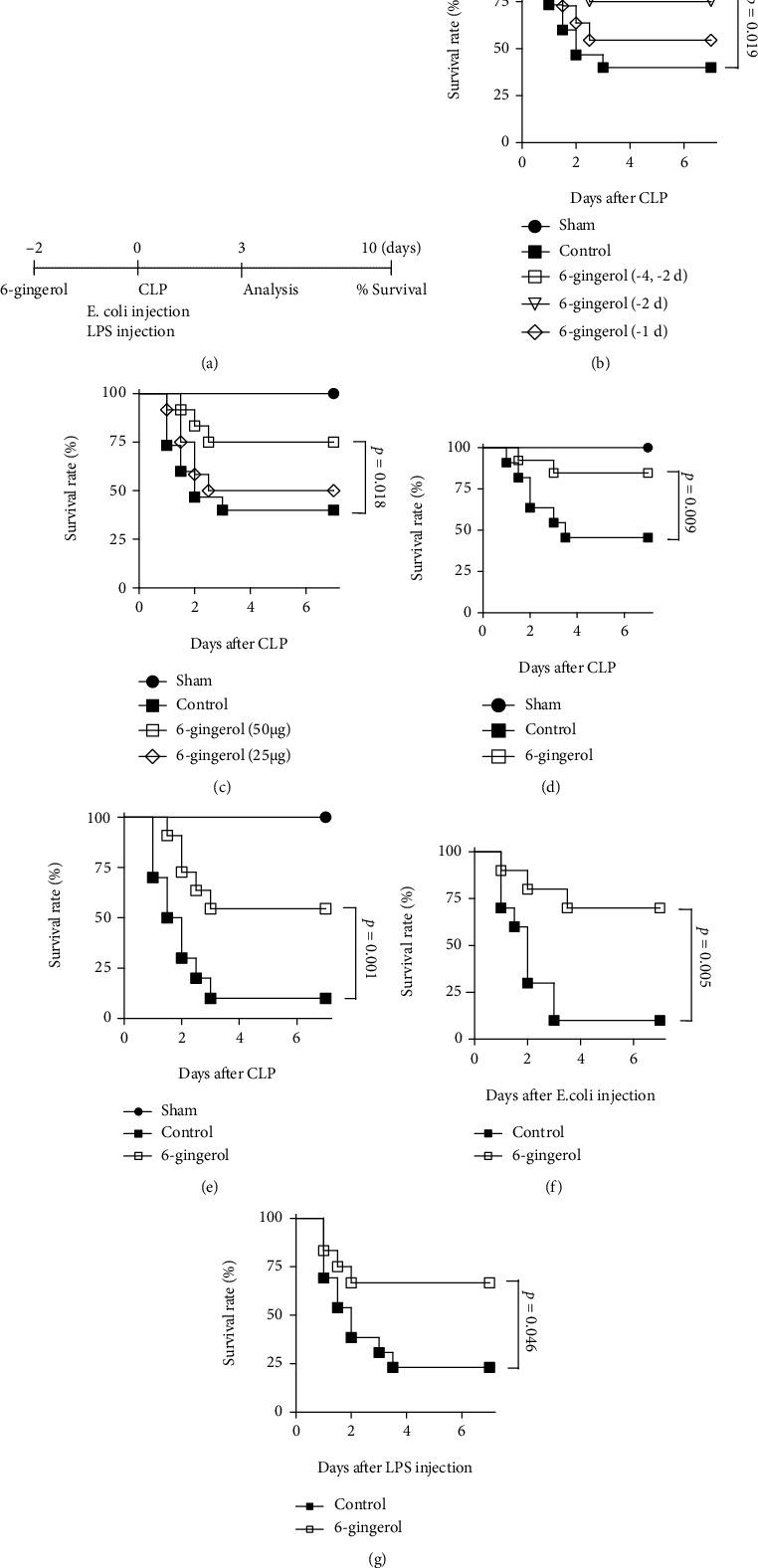
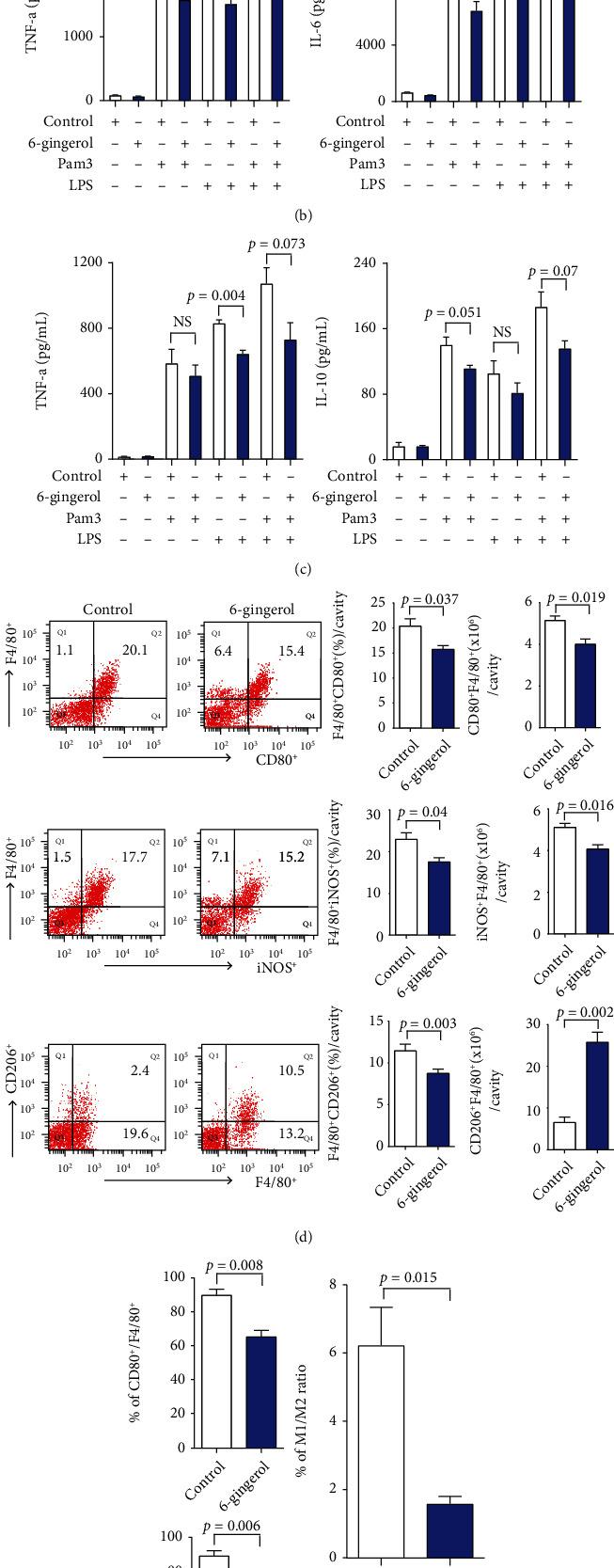
Sepsis is characterized by an initial net hyperinflammatory response, followed by a period of immunosuppression, termed immunoparalysis. During this immunosuppressive phase, patients may have difficulty eradicating invading pathogens and are susceptible to life-threatening secondary hospital-acquired infections. Due to progress in antimicrobial treatment and supportive care, most patients survive early sepsis. Mortality is more frequently attributed to subsequent secondary nosocomial infections and multiorgan system failure. 6-Gingerol is the major pharmacologically active component of ginger. Although it is known to exhibit a variety of biological activities, including anti-inflammation and antioxidation, the role of 6-gingerol in sepsis-induced immune dysfunction remains elusive. Thus, we investigated whether 6-gingerol improves septic host response to infections during sepsis. 6-Gingerol-treated mice showed significantly lower mortality in polymicrobial sepsis induced by cecal ligation and puncture LPS via enhanced bacterial clearance in the peritoneum, blood, and organs (liver, spleen, and kidney) and inhibited the production of TNF- and IL-6 in TLR2 and/or TLR4-stimulated macrophages. In addition, we demonstrated that survival improvement of secondary infection following septic insult was associated with an initial response of enhanced neutrophil numbers and function at the infection site, reduced apoptosis of immune cells, and a shift from a T helper cell type 2 (Th2) to a T helper cell type 1 (Th1) cytokine balance in the hypoinflammation phase. Our overall findings suggest that 6-gingerol potentially restores sepsis-induced immune dysfunction by shifting the balance of Th1/Th2 and by regulating apoptosis of immune cells.
脓毒症的特征是最初的净过度炎症反应,随后是一段免疫抑制期,称为免疫麻痹。在这个免疫抑制阶段,患者可能难以消除入侵的病原体,容易发生危及生命的医院获得性二次感染。由于抗菌治疗和支持性护理的进展,大多数早期脓毒症患者得以存活。死亡率更多地归因于随后的医院获得性二次感染和多器官系统衰竭。6-姜酚是生姜的主要药理活性成分。尽管已知其具有多种生物学活性,包括抗炎和抗氧化作用,但 6-姜酚在脓毒症引起的免疫功能障碍中的作用仍不清楚。因此,我们研究了 6-姜酚是否改善脓毒症宿主对脓毒症感染的反应。通过腹腔内注射脂多糖诱导的盲肠结扎和穿孔脓毒症,6-姜酚治疗的小鼠死亡率显著降低,腹膜、血液和器官(肝、脾和肾)中的细菌清除率提高,并且抑制 TLR2 和/或 TLR4 刺激的巨噬细胞中 TNF-α和 IL-6 的产生。此外,我们表明,脓毒症损伤后二次感染的生存改善与感染部位中性粒细胞数量和功能的初始反应增强、免疫细胞凋亡减少以及在低炎症期从辅助性 T 细胞 2(Th2)向辅助性 T 细胞 1(Th1)细胞因子平衡的转变有关。我们的总体研究结果表明,6-姜酚通过改变 Th1/Th2 的平衡并调节免疫细胞的凋亡,可能恢复脓毒症引起的免疫功能障碍。



 Zotero 插件