
冷冻电子显微镜揭示了乙酰植物碱如何抑制线粒体呼吸复合物 I。
Cryo-electron microscopy reveals how acetogenins inhibit mitochondrial respiratory complex I.
机构信息
MRC Mitochondrial Biology Unit, University of Cambridge, Cambridge, UK.
Division of Applied Life Sciences, Graduate School of Agriculture, Kyoto University, Kyoto, Japan.
出版信息
J Biol Chem. 2022 Mar;298(3):101602. doi: 10.1016/j.jbc.2022.101602. Epub 2022 Jan 19.
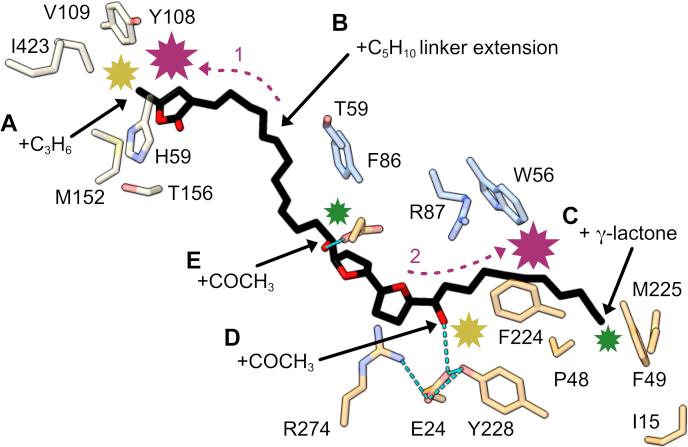
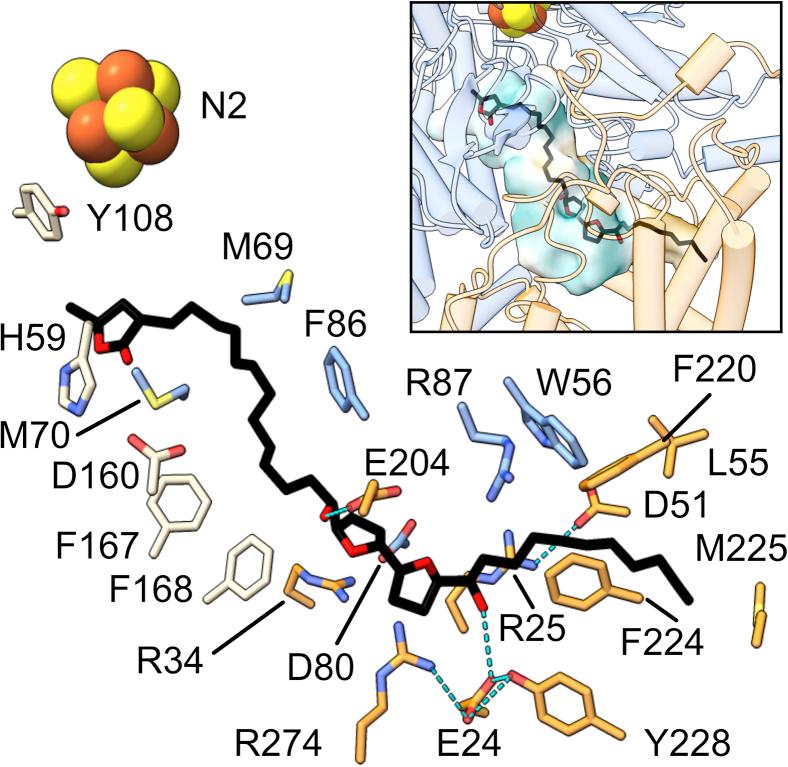
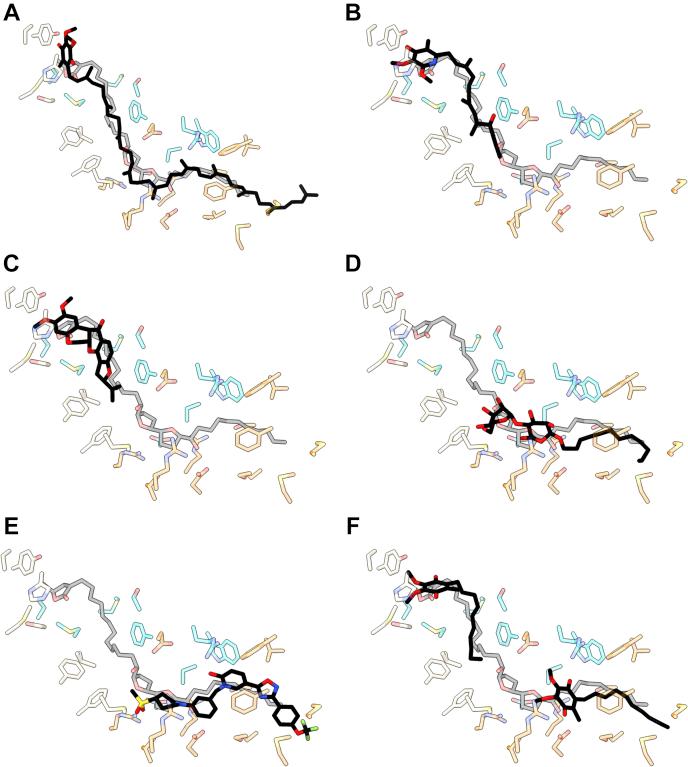
Mitochondrial complex I (NADH:ubiquinone oxidoreductase), a crucial enzyme in energy metabolism, captures the redox potential energy from NADH oxidation/ubiquinone reduction to create the proton motive force used to drive ATP synthesis in oxidative phosphorylation. High-resolution single-particle electron cryo-EM analyses have provided detailed structural knowledge of the catalytic machinery of complex I, but not of the molecular principles of its energy transduction mechanism. Although ubiquinone is considered to bind in a long channel at the interface of the membrane-embedded and hydrophilic domains, with channel residues likely involved in coupling substrate reduction to proton translocation, no structures with the channel fully occupied have yet been described. Here, we report the structure (determined by cryo-EM) of mouse complex I with a tight-binding natural product acetogenin inhibitor, which resembles the native substrate, bound along the full length of the expected ubiquinone-binding channel. Our structure reveals the mode of acetogenin binding and the molecular basis for structure-activity relationships within the acetogenin family. It also shows that acetogenins are such potent inhibitors because they are highly hydrophobic molecules that contain two specific hydrophilic moieties spaced to lock into two hydrophilic regions of the otherwise hydrophobic channel. The central hydrophilic section of the channel does not favor binding of the isoprenoid chain when the native substrate is fully bound but stabilizes the ubiquinone/ubiquinol headgroup as it transits to/from the active site. Therefore, the amphipathic nature of the channel supports both tight binding of the amphipathic inhibitor and rapid exchange of the ubiquinone/ubiquinol substrate and product.
线粒体复合物 I(NADH:泛醌氧化还原酶)是能量代谢中的关键酶,它从 NADH 氧化/泛醌还原中捕获氧化还原势能,以产生质子动力用于驱动氧化磷酸化中的 ATP 合成。高分辨率单颗粒电子冷冻电镜分析为复合物 I 的催化机制提供了详细的结构知识,但没有提供其能量转导机制的分子原理。尽管泛醌被认为结合在膜嵌入和亲水区界面的长通道中,通道残基可能参与将底物还原与质子转运偶联,但尚未描述通道完全占据的结构。在这里,我们报告了与紧密结合的天然产物乙酰辅酶 A 抑制剂结合的小鼠复合物 I 的结构(通过冷冻电镜确定),该抑制剂类似于天然底物,沿着预期的泛醌结合通道的全长结合。我们的结构揭示了乙酰辅酶 A 结合的模式以及乙酰辅酶 A 家族中结构-活性关系的分子基础。它还表明,乙酰辅酶 A 抑制剂如此有效,是因为它们是高度疏水的分子,包含两个特定的亲水部分,间隔开以锁定到疏水通道的两个亲水区域。当天然底物完全结合时,通道的中央亲水部分不有利于异戊二烯链的结合,但稳定了醌/氢醌头基团,因为它在活性位点之间转移。因此,通道的两亲性支持亲脂性抑制剂的紧密结合以及醌/氢醌底物和产物的快速交换。


 Zotero 插件