
癌症化学预防:一种使用植物化学物质的策略性方法。
Cancer Chemoprevention: A Strategic Approach Using Phytochemicals.
作者信息
G Mohan Shankar, Swetha Mundanattu, Keerthana C K, Rayginia Tennyson P, Anto Ruby John
机构信息
Division of Cancer Research, Rajiv Gandhi Centre for Biotechnology, Thiruvananthapuram, India.
Department of Surgery, Cedars-Sinai Medical Center, Los Angeles, CA, United States.
出版信息
Front Pharmacol. 2022 Jan 13;12:809308. doi: 10.3389/fphar.2021.809308. eCollection 2021.
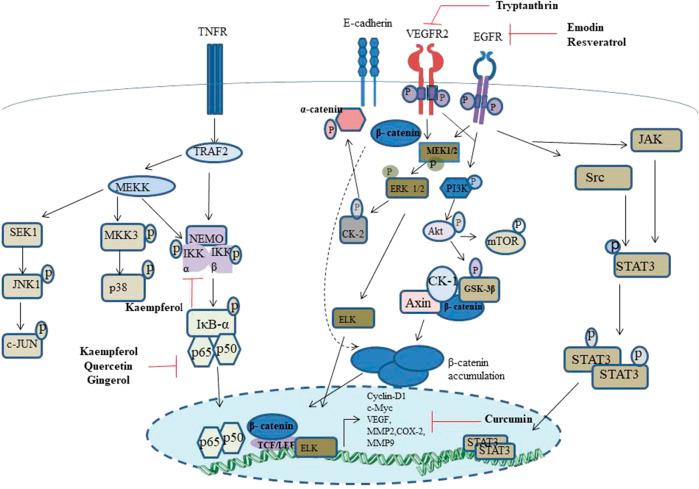
Cancer chemoprevention approaches are aimed at preventing, delaying, or suppressing tumor incidence using synthetic or natural bioactive agents. Mechanistically, chemopreventive agents also aid in mitigating cancer development, either by impeding DNA damage or by blocking the division of premalignant cells with DNA damage. Several pre-clinical studies have substantiated the benefits of using various dietary components as chemopreventives in cancer therapy. The incessant rise in the number of cancer cases globally is an issue of major concern. The excessive toxicity and chemoresistance associated with conventional chemotherapies decrease the success rates of the existent chemotherapeutic regimen, which warrants the need for an efficient and safer alternative therapeutic approach. In this scenario, chemopreventive agents have been proven to be successful in protecting the high-risk populations from cancer, which further validates chemoprevention strategy as rational and promising. Clinical studies have shown the effectiveness of this approach in managing cancers of different origins. Phytochemicals, which constitute an appreciable proportion of currently used chemotherapeutic drugs, have been tested for their chemopreventive efficacy. This review primarily aims to highlight the efficacy of phytochemicals, currently being investigated globally as chemopreventives. The clinical relevance of chemoprevention, with special emphasis on the phytochemicals, curcumin, resveratrol, tryptanthrin, kaempferol, gingerol, emodin, quercetin genistein and epigallocatechingallate, which are potential candidates due to their ability to regulate multiple survival pathways without inducing toxicity, forms the crux of this review. The majority of these phytochemicals are polyphenols and flavanoids. We have analyzed how the key molecular targets of these chemopreventives potentially counteract the key drivers of chemoresistance, causing minimum toxicity to the body. An overview of the underlying mechanism of action of these phytochemicals in regulating the key players of cancer progression and tumor suppression is discussed in this review. A summary of the clinical trials on the important phytochemicals that emerge as chemopreventives is also incorporated. We elaborate on the pre-clinical and clinical observations, pharmacokinetics, mechanism of action, and molecular targets of some of these natural products. To summarize, the scope of this review comprises of the current status, limitations, and future directions of cancer chemoprevention, emphasizing the potency of phytochemicals as effective chemopreventives.
癌症化学预防方法旨在使用合成或天然生物活性剂预防、延缓或抑制肿瘤的发生。从机制上讲,化学预防剂还通过阻止DNA损伤或通过阻断具有DNA损伤的癌前细胞的分裂来帮助减轻癌症的发展。多项临床前研究证实了使用各种膳食成分作为癌症治疗中的化学预防剂的益处。全球癌症病例数量的持续上升是一个主要关注的问题。与传统化疗相关的过度毒性和化疗耐药性降低了现有化疗方案的成功率,这就需要一种高效且更安全的替代治疗方法。在这种情况下,化学预防剂已被证明能够成功地保护高危人群免受癌症侵害,这进一步证明了化学预防策略的合理性和前景。临床研究表明这种方法在治疗不同起源的癌症方面是有效的。植物化学物质占目前使用的化疗药物的相当比例,已经对它们的化学预防功效进行了测试。这篇综述主要旨在突出目前正在全球范围内作为化学预防剂进行研究的植物化学物质的功效。化学预防的临床相关性,特别强调植物化学物质、姜黄素、白藜芦醇、色胺酮、山奈酚、姜辣素、大黄素、槲皮素、染料木黄酮和表没食子儿茶素没食子酸酯,由于它们能够调节多种生存途径而不诱导毒性,是潜在的候选物质,这构成了本综述的核心。这些植物化学物质大多数是多酚和黄酮类化合物。我们分析了这些化学预防剂的关键分子靶点如何潜在地对抗化疗耐药性的关键驱动因素,同时对身体造成最小的毒性。本综述讨论了这些植物化学物质在调节癌症进展和肿瘤抑制的关键因素方面的潜在作用机制概述。还纳入了作为化学预防剂出现的重要植物化学物质的临床试验总结。我们详细阐述了其中一些天然产物的临床前和临床观察、药代动力学、作用机制和分子靶点。总之,本综述的范围包括癌症化学预防的现状、局限性和未来方向,强调植物化学物质作为有效化学预防剂的潜力。


 Zotero 插件