
通过分析人类结肠腺癌中的ceRNA网络揭示潜在的免疫治疗靶点。
Revealing potential immunotherapy targets through analysis of a ceRNA network in human colon adenocarcinoma.
作者信息
Li Changhao, Zhu Zhenyu, Hou Qingsheng, Wang Bishi, Zou Lei, Liu Luguang, Gong Weipeng, Guo Hongliang
机构信息
Department of Gastrointestinal Surgery, Shandong Cancer Hospital and Institute, Shandong First Medical University and Shandong Academy of Medical Sciences, Jinan, China.
出版信息
Transl Cancer Res. 2021 Dec;10(12):5319-5336. doi: 10.21037/tcr-21-2380.
BACKGROUND
Microsatellite instability-high (MSI-H) is a special type of human colon adenocarcinoma (COAD) that responds well to immunotherapy. MicroRNAs (miRNAs) and long non-coding RNAs (lncRNAs), which are important members of competing endogenous RNAs (ceRNAs) networks, are involved in the tumorigenesis and development of MSI-H COAD. This study aimed to establish a ceRNA network for MSI in COAD to identify targets and prognostic markers that may explain the effects of immunotherapy.
METHODS
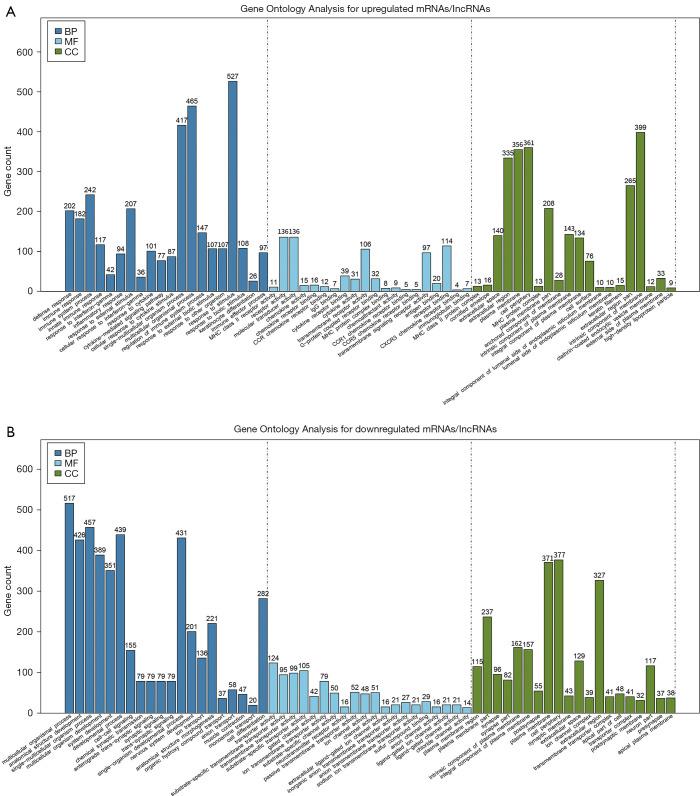
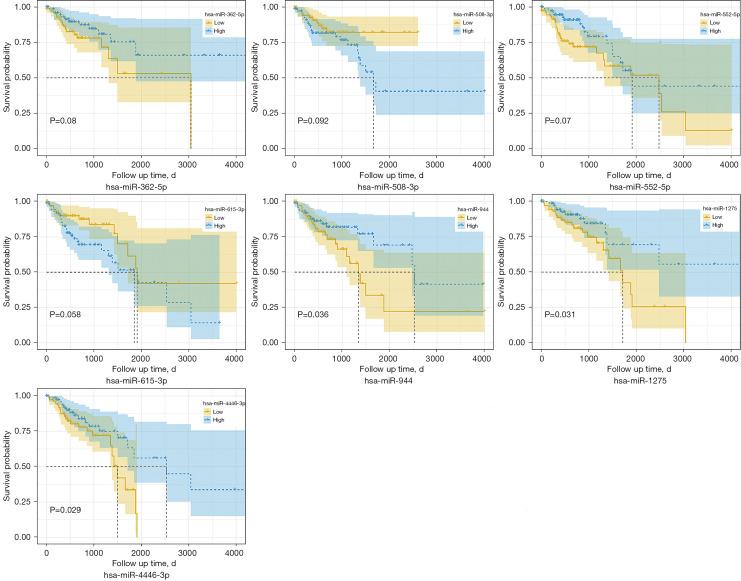
COAD sequencing data were extracted from The Cancer Genome Atlas (TCGA), after which differentially expressed miRNAs, lncRNAs, and mRNAs were determined according to microsatellite status. After building a network based on the ceRNA hypothesis, the relationships between microsatellite status and clinical features were explored. Biological processes in the Gene Ontology (GO) and the Kyoto Encyclopedia of Genes and Genomes (KEGG) databases were analyzed for specific miRNAs, lncRNAs, and mRNAs. Survival analysis was used to identify potential biomarkers.
RESULTS
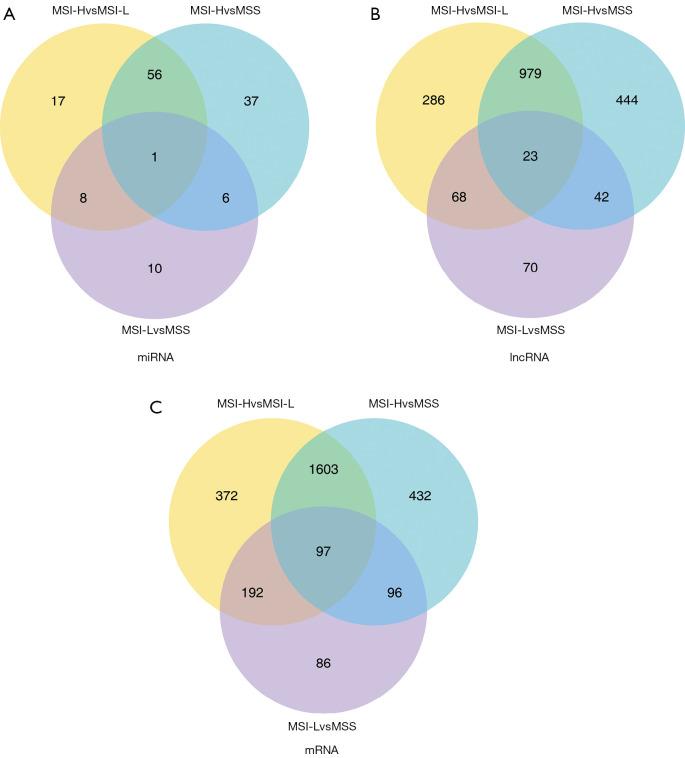
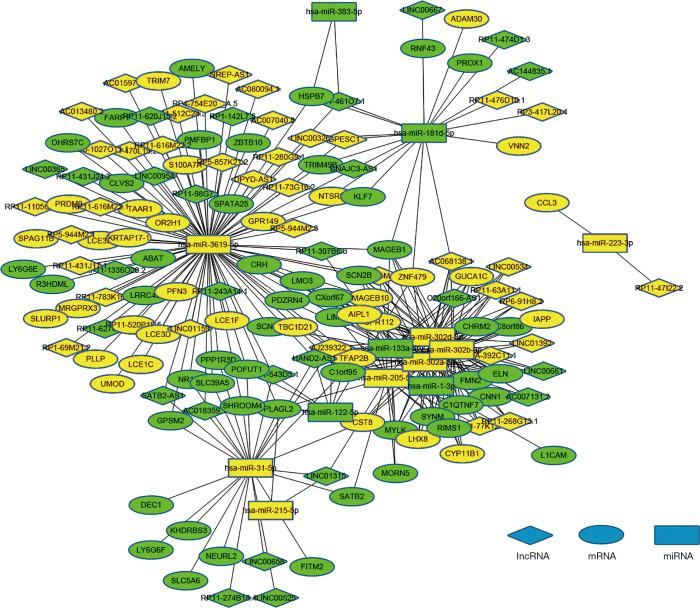
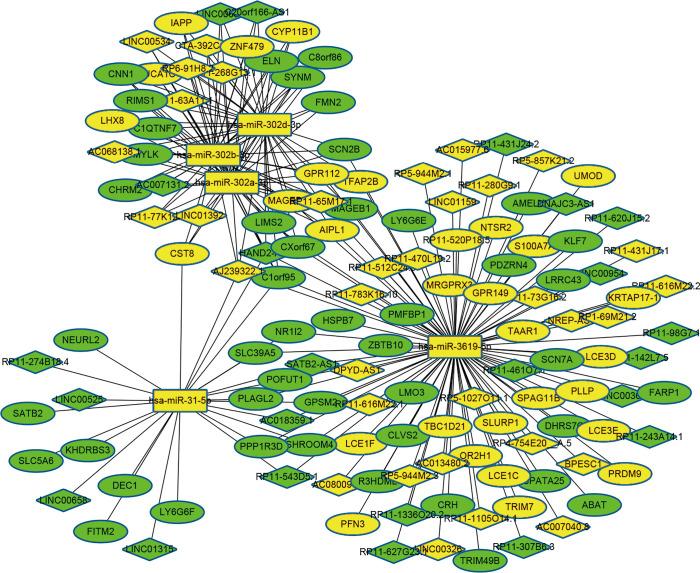
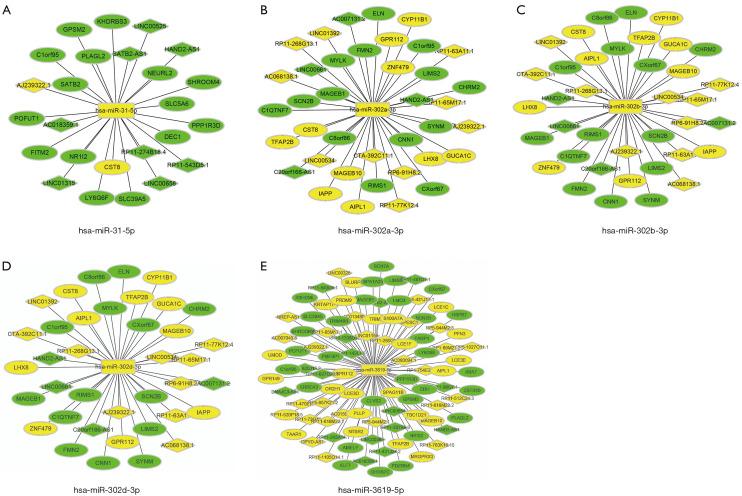
Based on the inclusion criteria, a total of 363 COAD samples were obtained from TCGA. Strict screening criteria were used to identify differentially expressed RNAs in the MSI-H and microsatellite-stable groups, with 82 miRNAs, 1,280 lncRNAs, and 2121 mRNAs obtained (fold change >2, false discovery rate <0.01). Based on the RNA interaction mechanism, a miRNA-lncRNA-mRNA network was constructed, through which a subnetwork composed of 5 miRNAs was discovered. hsa-miR-31-5p, hsa-miR-302a-3p, hsa-miR-302b-3p, hsa-miR-302d-3p, hsa-miR-3619-5p and the RNAs interaction with them have the potential to become novel targets to change the effect of existing immunotherapy. GO and KEGG analyses showed that these differentially expressed miRNAs, lncRNAs, and mRNAs may play key roles in tumorigenesis, tumor development, and drug efficacy, with natural killer cells potentially becoming the next emerging targets for immunotherapy enhancement. Moreover, survival analysis identified 10 lncRNAs as potential survival markers.
CONCLUSIONS
This study identified novel immunotherapy targets and revealed potential biomarkers for COAD according to microsatellite status.
背景
微卫星高度不稳定(MSI-H)是一种对免疫疗法反应良好的特殊类型的人类结肠腺癌(COAD)。微小RNA(miRNA)和长链非编码RNA(lncRNA)作为竞争性内源RNA(ceRNA)网络的重要成员,参与了MSI-H COAD的肿瘤发生和发展过程。本研究旨在构建COAD中MSI的ceRNA网络,以识别可能解释免疫疗法效果的靶点和预后标志物。
方法
从癌症基因组图谱(TCGA)中提取COAD测序数据,然后根据微卫星状态确定差异表达的miRNA、lncRNA和mRNA。基于ceRNA假说构建网络后,探索微卫星状态与临床特征之间的关系。对基因本体论(GO)和京都基因与基因组百科全书(KEGG)数据库中的特定miRNA、lncRNA和mRNA进行生物学过程分析。采用生存分析来识别潜在的生物标志物。
结果
根据纳入标准,从TCGA中获得了总共363个COAD样本。使用严格的筛选标准来识别MSI-H组和微卫星稳定组中差异表达的RNA,共获得82个miRNA、1280个lncRNA和2121个mRNA(折叠变化>2,错误发现率<0.01)。基于RNA相互作用机制构建了一个miRNA-lncRNA-mRNA网络,从中发现了一个由5个miRNA组成的子网。hsa-miR-31-5p、hsa-miR-302a-3p、hsa-miR-302b-3p、hsa-miR-302d-3p、hsa-miR-3619-5p以及与它们相互作用的RNA有可能成为改变现有免疫疗法效果的新靶点。GO和KEGG分析表明,这些差异表达的miRNA、lncRNA和mRNA可能在肿瘤发生、肿瘤发展和药物疗效中发挥关键作用,自然杀伤细胞可能成为增强免疫疗法的下一个新兴靶点。此外,生存分析确定了10个lncRNA作为潜在的生存标志物。
结论
本研究根据微卫星状态识别了新的免疫疗法靶点,并揭示了COAD的潜在生物标志物。




 Zotero 插件