
通过加权基因共表达网络分析鉴定阻塞性睡眠呼吸暂停综合征相关基因和途径。
Identifying Obstructive Sleep Apnea Syndrome-Associated Genes and Pathways through Weighted Gene Coexpression Network Analysis.
机构信息
Department of Respiratory, Minhang Hospital, Fudan University, 170 Xinsong Road, Minhang District, Shanghai, China 201199.
Department of Pulmonary Medicine, Minhang Branch, Zhongshan Hospital, Fudan University, 180 Fenglin Rd, Shanghai, China 200032.
出版信息
Comput Math Methods Med. 2022 Jan 29;2022:3993509. doi: 10.1155/2022/3993509. eCollection 2022.
BACKGROUND
Obstructive sleep apnea syndrome (OSAS) is the most common type of sleep apnea disorder. The disease seriously affects the patient's respiratory system. At present, the prognosis of the disease is poor and there is a lack of effective treatments. Therefore, it is urgent to explore its pathogenesis and treatment methods.
METHOD
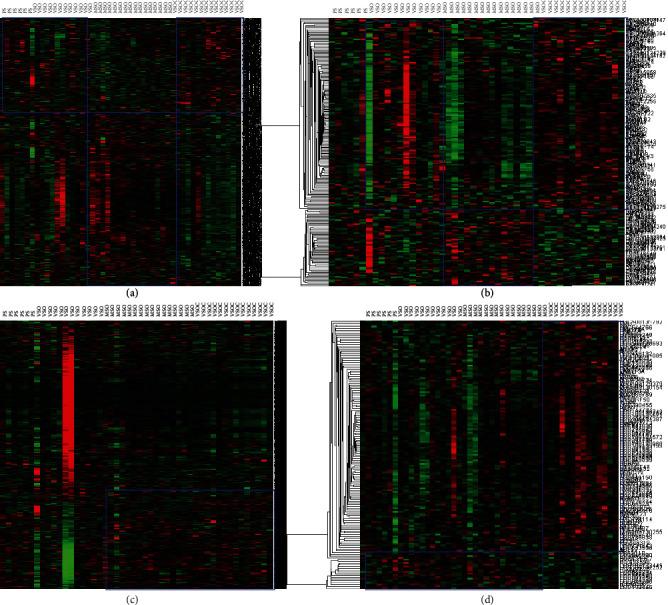
We downloaded a set of expression profile data from GSE75097 related to OSAS based on the Gene Expression Omnibus (GEO) database and selected the representative differentially expressed genes (DEGs) from the sample of the GSE75097 dataset. WGCNA was used to find genes related to OSAS and obtain coexpression modules. The Gene Ontology (GO) function and the Kyoto Encyclopedia of Genes and Genomes (KEGG) pathway were used to analyze genes from key modules. Finally, Cytoscape software was used to construct a protein-protein interaction (PPI) network and analyze the hub genes.
RESULT
We obtained a total of 7565 DEGs. Through WGCNA, we got four coexpression modules and the modules most related to OSAS were green-yellow, magenta, purple, and turquoise, and we screened out eight hub genes (DDX46, RNF115, COPA, FBXO4, PA2G4, NHP2L1, CDC20, and PCNA). GO and KEGG analyses indicated that the key modules were mainly enriched in tRNA modification, nucleobase metabolic process, DNA ligation, regulation of cellular component movement, basal transcription factors, Huntington disease, and vitamin digestion and absorption.
CONCLUSION
These pathways and hub genes can facilitate understanding the molecular mechanism of OSAS and provide a meaningful reference for finding biological targets of OSAS treatment.
背景
阻塞性睡眠呼吸暂停综合征(OSAS)是最常见的睡眠呼吸暂停类型。该疾病严重影响患者的呼吸系统。目前,该疾病的预后较差,且缺乏有效的治疗方法。因此,迫切需要探索其发病机制和治疗方法。
方法
我们从 GEO 数据库中下载了与 OSAS 相关的一套表达谱数据 GSE75097,并从 GSE75097 数据集的样本中选择了有代表性的差异表达基因(DEGs)。使用 WGCNA 寻找与 OSAS 相关的基因,并获得共表达模块。使用基因本体论(GO)功能和京都基因与基因组百科全书(KEGG)途径对关键模块中的基因进行分析。最后,使用 Cytoscape 软件构建蛋白质-蛋白质相互作用(PPI)网络并分析枢纽基因。
结果
我们共获得了 7565 个 DEGs。通过 WGCNA,我们得到了四个共表达模块,与 OSAS 最相关的模块是绿色-黄色、品红色、紫色和绿松石色,我们筛选出了八个枢纽基因(DDX46、RNF115、COPA、FBXO4、PA2G4、NHP2L1、CDC20 和 PCNA)。GO 和 KEGG 分析表明,关键模块主要富集于 tRNA 修饰、核苷酸碱基代谢过程、DNA 连接、细胞成分运动调节、基础转录因子、亨廷顿病和维生素消化吸收。
结论
这些通路和枢纽基因有助于理解 OSAS 的分子机制,并为寻找 OSAS 治疗的生物靶点提供有意义的参考。


 Zotero 插件