
利用英国家庭数据推断 SARS-CoV-2 的代际时间。
Inference of the SARS-CoV-2 generation time using UK household data.
机构信息
Mathematical Institute, University of Oxford, Oxford, United Kingdom.
Centre for the Mathematical Modelling of Infectious Diseases, London School of Hygiene and Tropical Medicine, London, United Kingdom.
出版信息
Elife. 2022 Feb 9;11:e70767. doi: 10.7554/eLife.70767.
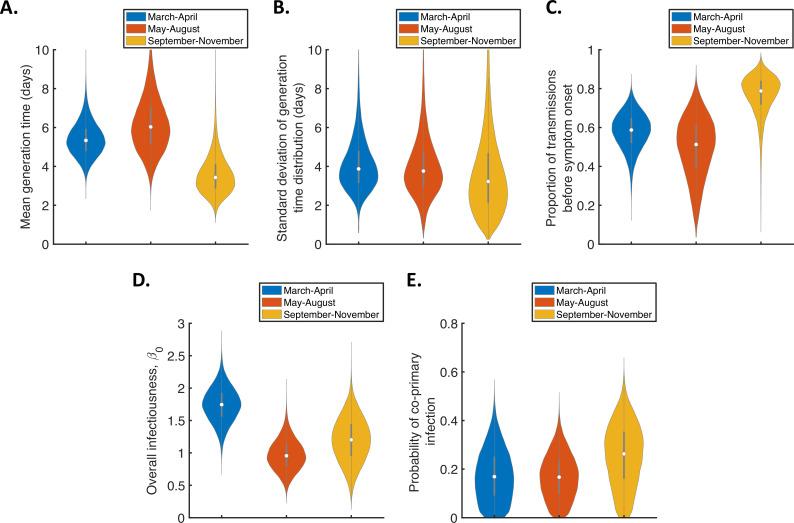
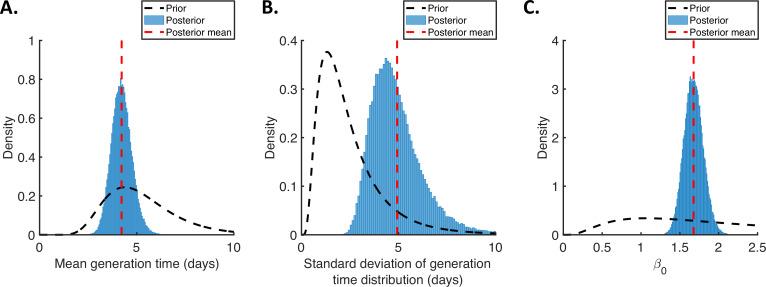
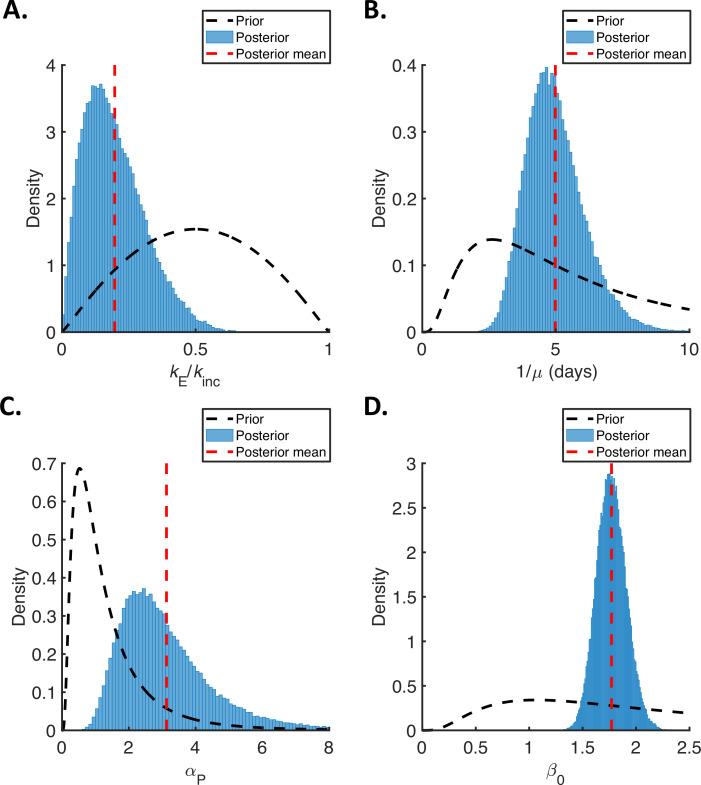
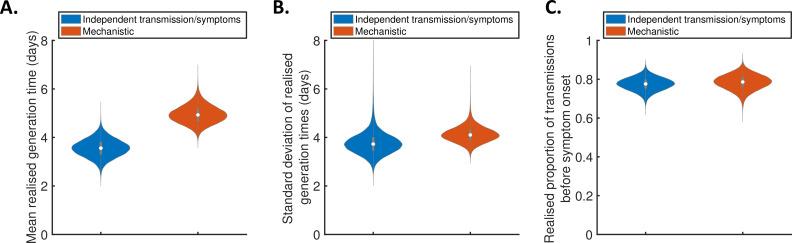
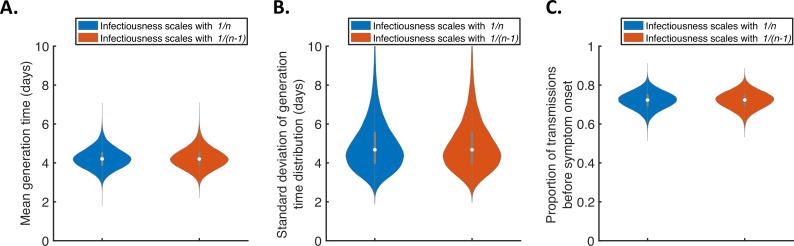
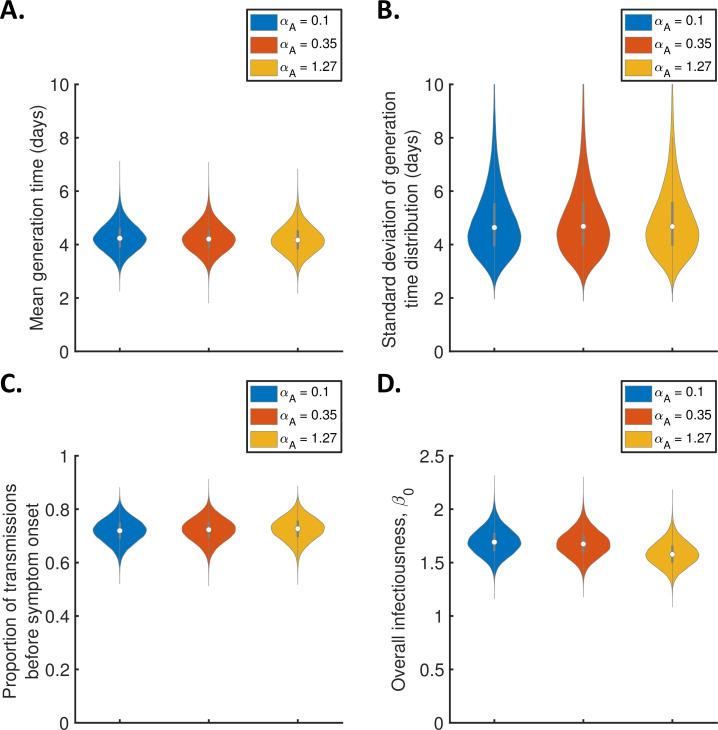
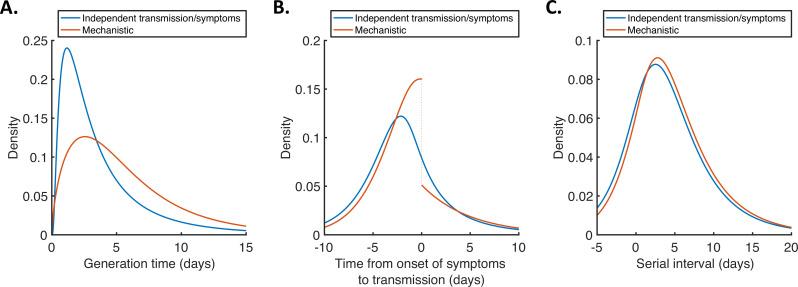
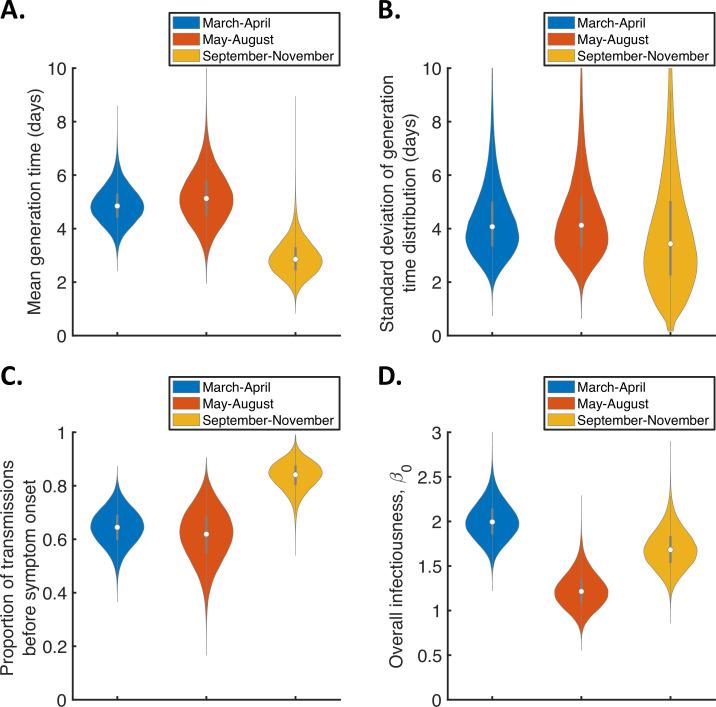
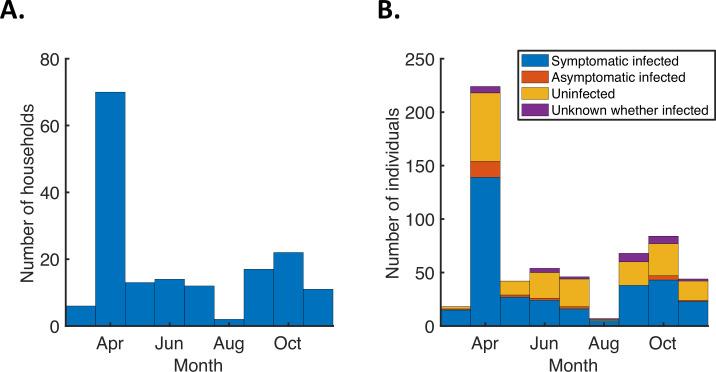
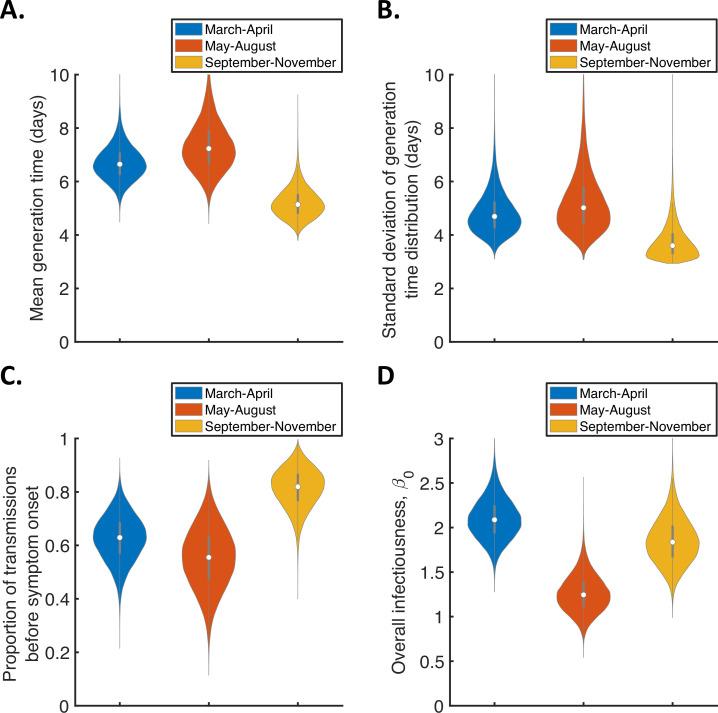
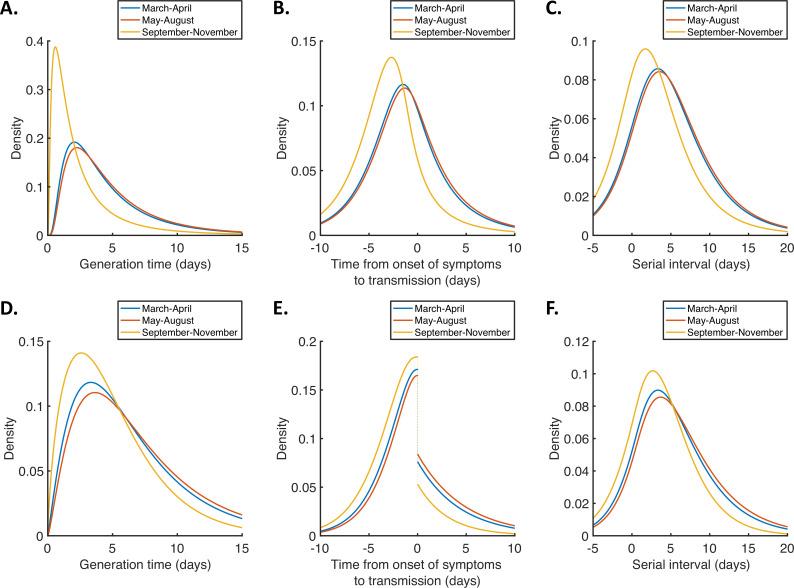
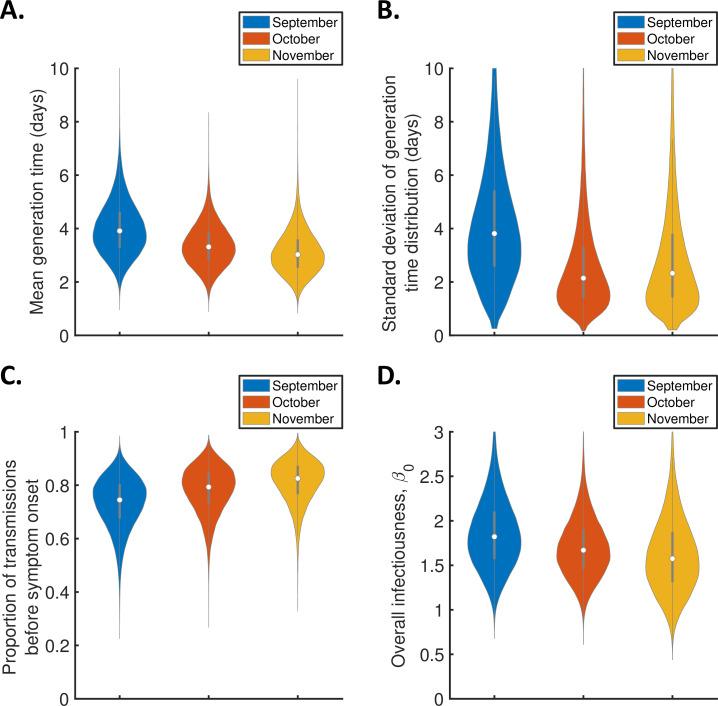
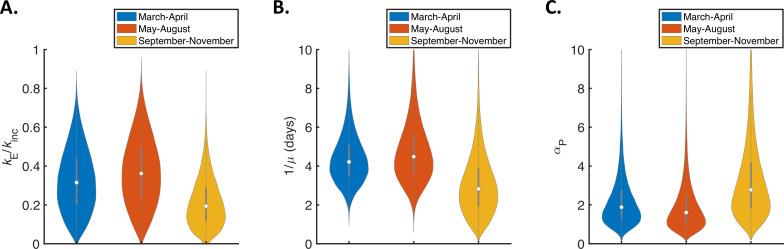
The distribution of the generation time (the interval between individuals becoming infected and transmitting the virus) characterises changes in the transmission risk during SARS-CoV-2 infections. Inferring the generation time distribution is essential to plan and assess public health measures. We previously developed a mechanistic approach for estimating the generation time, which provided an improved fit to data from the early months of the COVID-19 pandemic (December 2019-March 2020) compared to existing models (Hart et al., 2021). However, few estimates of the generation time exist based on data from later in the pandemic. Here, using data from a household study conducted from March to November 2020 in the UK, we provide updated estimates of the generation time. We considered both a commonly used approach in which the transmission risk is assumed to be independent of when symptoms develop, and our mechanistic model in which transmission and symptoms are linked explicitly. Assuming independent transmission and symptoms, we estimated a mean generation time (4.2 days, 95% credible interval 3.3-5.3 days) similar to previous estimates from other countries, but with a higher standard deviation (4.9 days, 3.0-8.3 days). Using our mechanistic approach, we estimated a longer mean generation time (5.9 days, 5.2-7.0 days) and a similar standard deviation (4.8 days, 4.0-6.3 days). As well as estimating the generation time using data from the entire study period, we also considered whether the generation time varied temporally. Both models suggest a shorter mean generation time in September-November 2020 compared to earlier months. Since the SARS-CoV-2 generation time appears to be changing, further data collection and analysis is necessary to continue to monitor ongoing transmission and inform future public health policy decisions.
代际时间(个体感染到传播病毒之间的间隔)的分布特征描述了 SARS-CoV-2 感染期间传播风险的变化。推断代际时间分布对于规划和评估公共卫生措施至关重要。我们之前开发了一种用于估计代际时间的机制方法,与现有模型(Hart 等人,2021)相比,该方法对 COVID-19 大流行早期(2019 年 12 月至 2020 年 3 月)的数据提供了更好的拟合。然而,基于大流行后期的数据,代际时间的估计值很少。在这里,我们使用 2020 年 3 月至 11 月在英国进行的家庭研究的数据,提供了代际时间的最新估计值。我们同时考虑了一种常用方法,即假设传播风险与症状出现的时间无关,以及我们明确关联传播和症状的机制模型。假设独立的传播和症状,我们估计出的平均代际时间(4.2 天,95%可信区间 3.3-5.3 天)与其他国家的先前估计值相似,但标准差更高(4.9 天,3.0-8.3 天)。使用我们的机制方法,我们估计出较长的平均代际时间(5.9 天,5.2-7.0 天)和相似的标准差(4.8 天,4.0-6.3 天)。除了使用整个研究期间的数据来估计代际时间外,我们还考虑了代际时间是否随时间变化。这两种模型都表明,2020 年 9 月至 11 月的平均代际时间较短。由于 SARS-CoV-2 的代际时间似乎在发生变化,因此需要进一步收集和分析数据,以继续监测正在进行的传播并为未来的公共卫生政策决策提供信息。




 Zotero 插件