
基于混合 CNN-LSTM 网络和焦点损失函数的肺部声音自动分类。
Automated Lung Sound Classification Using a Hybrid CNN-LSTM Network and Focal Loss Function.
机构信息
Laboratory of Computing, Medical Informatics and Biomedical-Imaging Technologies, Medical School, Aristotle University of Thessaloniki, GR 54124 Thessaloniki, Greece.
Centre for Informatics and Systems, Department of Informatics Engineering, University of Coimbra, 3030-290 Coimbra, Portugal.
出版信息
Sensors (Basel). 2022 Feb 6;22(3):1232. doi: 10.3390/s22031232.
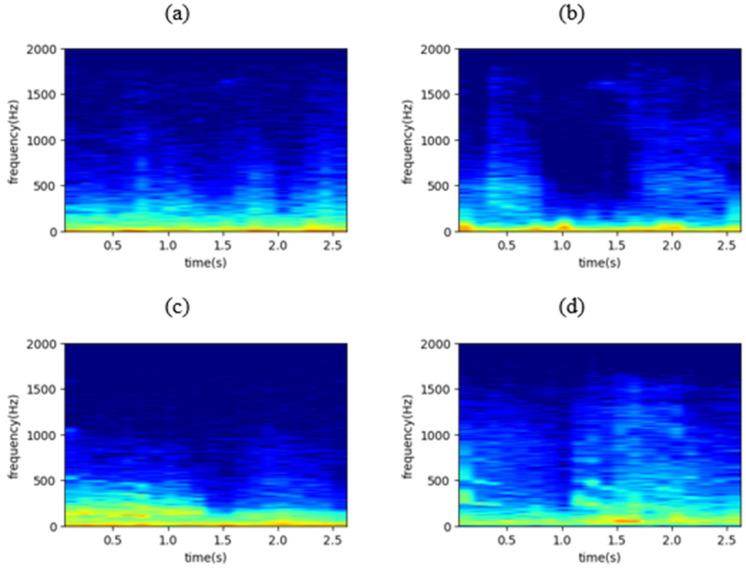
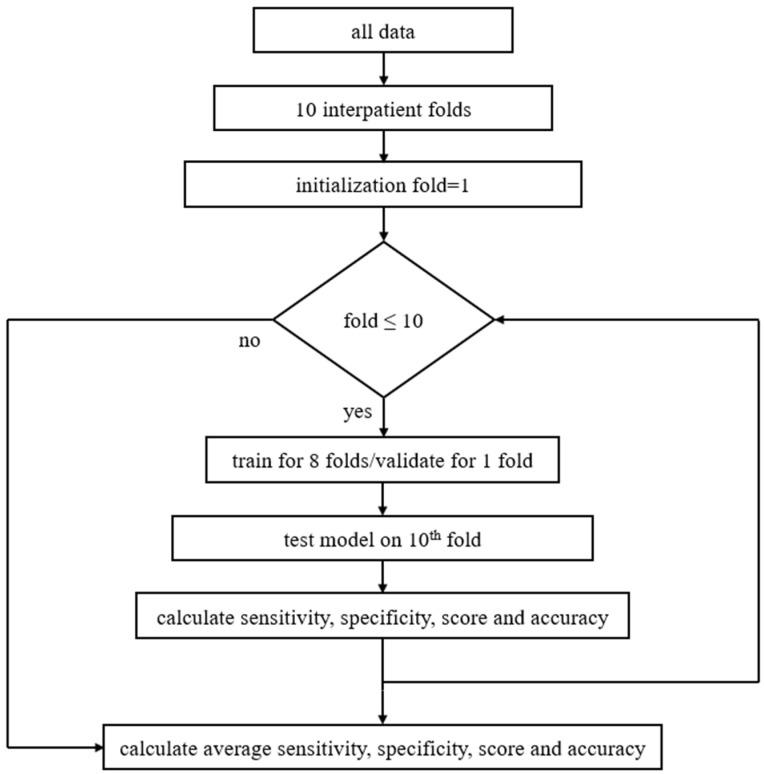
Respiratory diseases constitute one of the leading causes of death worldwide and directly affect the patient's quality of life. Early diagnosis and patient monitoring, which conventionally include lung auscultation, are essential for the efficient management of respiratory diseases. Manual lung sound interpretation is a subjective and time-consuming process that requires high medical expertise. The capabilities that deep learning offers could be exploited in order that robust lung sound classification models can be designed. In this paper, we propose a novel hybrid neural model that implements the focal loss (FL) function to deal with training data imbalance. Features initially extracted from short-time Fourier transform (STFT) spectrograms via a convolutional neural network (CNN) are given as input to a long short-term memory (LSTM) network that memorizes the temporal dependencies between data and classifies four types of lung sounds, including normal, crackles, wheezes, and both crackles and wheezes. The model was trained and tested on the ICBHI 2017 Respiratory Sound Database and achieved state-of-the-art results using three different data splitting strategies-namely, sensitivity 47.37%, specificity 82.46%, score 64.92% and accuracy 73.69% for the official 60/40 split, sensitivity 52.78%, specificity 84.26%, score 68.52% and accuracy 76.39% using interpatient 10-fold cross validation, and sensitivity 60.29% and accuracy 74.57% using leave-one-out cross validation.
呼吸系统疾病是全球主要死因之一,直接影响患者的生活质量。传统上,包括肺部听诊在内的早期诊断和患者监测对于呼吸系统疾病的有效管理至关重要。手动肺部声音解释是一个主观且耗时的过程,需要高度的医疗专业知识。深度学习的能力可以被利用,以便设计出稳健的肺部声音分类模型。在本文中,我们提出了一种新的混合神经模型,该模型实现了焦点损失(FL)函数,以解决训练数据不平衡的问题。通过卷积神经网络(CNN)从短时傅里叶变换(STFT)频谱中提取的特征作为输入传递给长短期记忆(LSTM)网络,该网络可以记忆数据之间的时间依赖性,并对四种类型的肺部声音进行分类,包括正常、爆裂声、哮鸣音和爆裂声与哮鸣音的混合。该模型在 ICBHI 2017 呼吸声音数据库上进行了训练和测试,并在三种不同的数据分割策略下达到了最先进的结果——即官方 60/40 分割下的敏感性为 47.37%,特异性为 82.46%,评分 64.92%,准确性为 73.69%;使用患者间 10 倍交叉验证的敏感性为 52.78%,特异性为 84.26%,评分 68.52%,准确性为 76.39%;使用留一交叉验证的敏感性为 60.29%,准确性为 74.57%。



 Zotero 插件