
2015 - 2017年期间巴勒斯坦约旦河西岸戊型肝炎病毒血清流行率及危险因素评估的首次报告
First Report of the HEV Seroprevalence and the Risk Factor Assessment in the West Bank, Palestine, during the Period of 2015-2017.
作者信息
Dumaidi Kamal, Abudamous Alaa M, Abu-Helu Rasmi, Al-Jawabreh Hanan, Dumaidi Yazan, Al-Jawabreh Amer
机构信息
Department of Medical Laboratory Sciences, Faculty of Allied Health Sciences, Arab American University Palestine, Jenin, State of Palestine.
Al-Quds Primary Health Care, Palestinian Ministry of Health, Ramallah, State of Palestine.
出版信息
Can J Infect Dis Med Microbiol. 2022 Feb 8;2022:4935811. doi: 10.1155/2022/4935811. eCollection 2022.
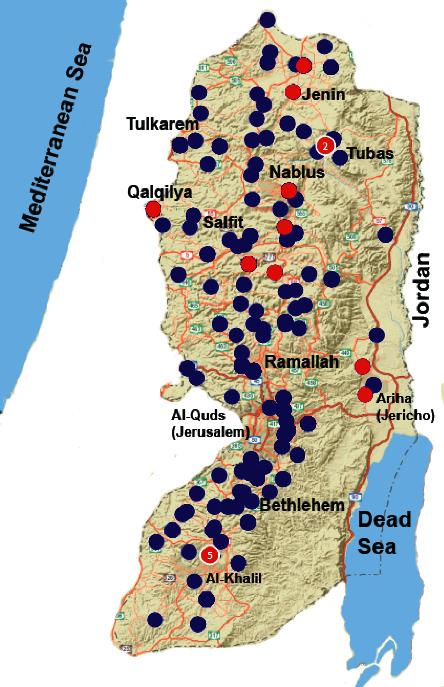
Hepatitis E virus is emerging viral hepatitis with hyperendemicity in many countries. Data on the burden of disease is not available in Palestine. This study aims to determine the seroprevalence and the risk factors of the HEV among the general population of the West Bank, Palestine. In this cross-sectional study, a total of 432 sera samples from 40 localities in the eleven districts of the West Bank and Jerusalem, Palestine, during the period of March 2015 to March 2017, were tested for HEV-IgG. A structured questionnaire was used to collect data of the participants' demographics and disease risk factors. The overall seroprevalence was 3.7%. Level of education was significantly inversely associated with HEV seropositivity (=0.04). Purely spatial analysis did not detect any significant cluster related to the distribution of HEV-IgG cases; however, living in the southern West Bank is shown to be significantly associated with HEV. Age was also associated with HEV seropositivity. The young (<19 years) and adults (>40 years) had the highest prevalence, compared to those between 20 to 39 years old (=0.12). Furthermore, males and those in contact with animals were associated with HEV seropositivity (=0.1 and 0.3, respectively). In conclusion, the seroprevalence of HEV IgG in the West Bank, Palestine is low. Several well-investigated risk factors cannot be supported by our results due to the small number of the positive HEV-IgG samples. Finally, this study is useful for providing a first look into the seroepidemiology of HEV in Palestine.
戊型肝炎病毒是一种在许多国家呈高度地方性流行的新发病毒性肝炎。巴勒斯坦尚无关于该疾病负担的数据。本研究旨在确定巴勒斯坦约旦河西岸普通人群中戊型肝炎病毒的血清流行率及其危险因素。在这项横断面研究中,于2015年3月至2017年3月期间,对来自巴勒斯坦约旦河西岸和耶路撒冷11个区40个地点的432份血清样本进行了戊型肝炎病毒IgG检测。使用结构化问卷收集参与者的人口统计学数据和疾病危险因素。总体血清流行率为3.7%。教育程度与戊型肝炎病毒血清阳性呈显著负相关(P = 0.04)。单纯的空间分析未检测到与戊型肝炎病毒IgG病例分布相关的任何显著聚集情况;然而,居住在约旦河西岸南部与戊型肝炎病毒感染显著相关。年龄也与戊型肝炎病毒血清阳性有关。与20至39岁的人群相比,年轻人(<19岁)和成年人(>40岁)的患病率最高(P = 0.12)。此外,男性以及与动物有接触的人也与戊型肝炎病毒血清阳性有关(P分别为0.1和0.3)。总之,巴勒斯坦约旦河西岸戊型肝炎病毒IgG的血清流行率较低。由于戊型肝炎病毒IgG阳性样本数量较少,我们的结果无法支持几个经过充分研究的危险因素。最后,本研究有助于初步了解巴勒斯坦戊型肝炎病毒的血清流行病学情况。
 Zotero 插件