
葡萄膜黑色素瘤基于血液的生物标志物的未来展望。
Future perspectives of uveal melanoma blood based biomarkers.
机构信息
School of Medical and Health Sciences, Edith Cowan University, Joondalup, WA, Australia.
Centre for Precision Health, Edith Cowan University, Joondalup, WA, Australia.
出版信息
Br J Cancer. 2022 Jun;126(11):1511-1528. doi: 10.1038/s41416-022-01723-8. Epub 2022 Feb 21.
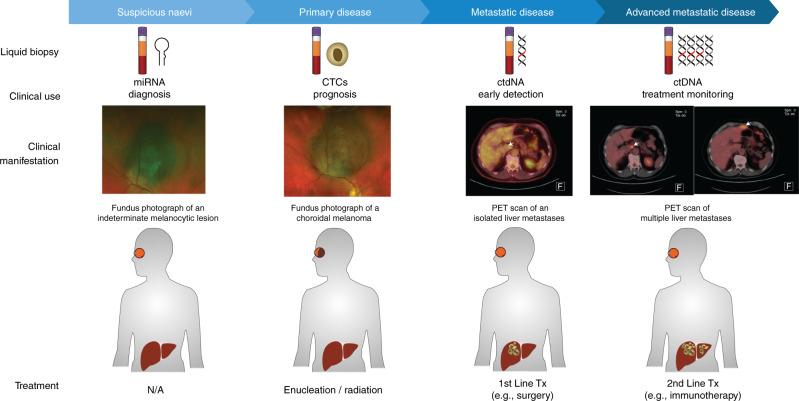
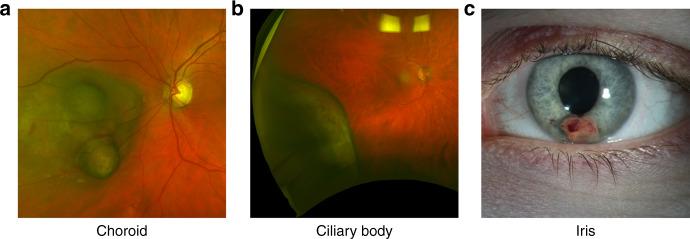
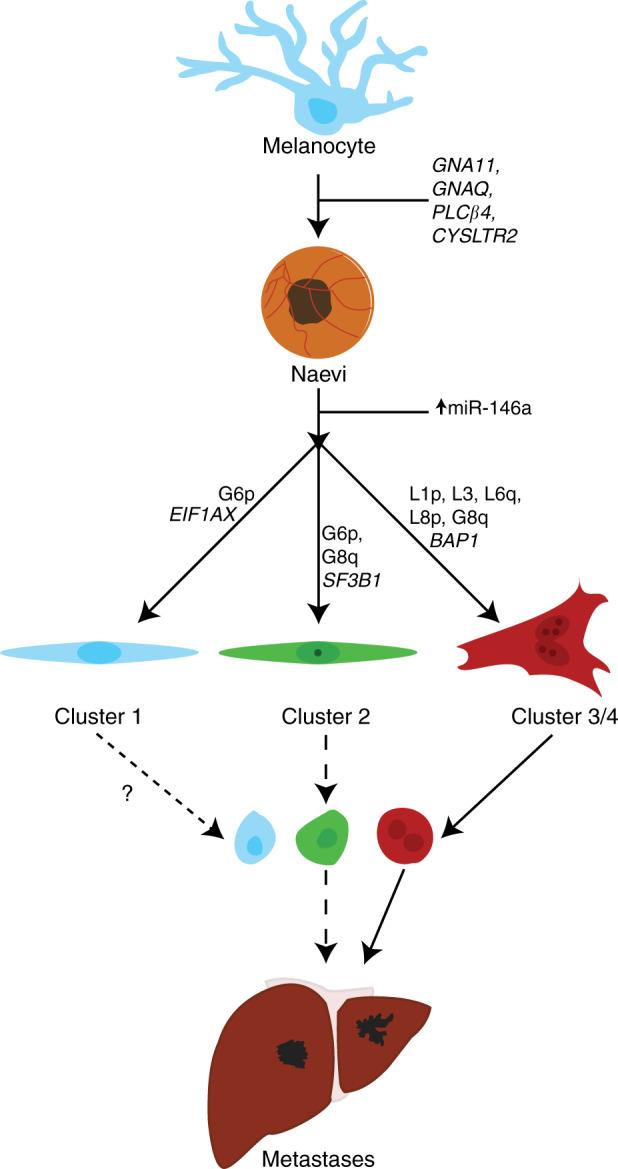
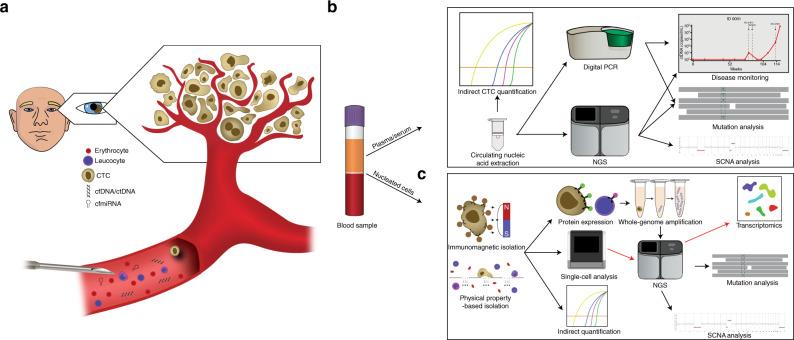
Uveal melanoma (UM) is the most common primary intraocular malignancy affecting adults. Despite successful local treatment of the primary tumour, metastatic disease develops in up to 50% of patients. Metastatic UM carries a particularly poor prognosis, with no effective therapeutic option available to date. Genetic studies of UM have demonstrated that cytogenetic features, including gene expression, somatic copy number alterations and specific gene mutations can allow more accurate assessment of metastatic risk. Pre-emptive therapies to avert metastasis are being tested in clinical trials in patients with high-risk UM. However, current prognostic methods require an intraocular tumour biopsy, which is a highly invasive procedure carrying a risk of vision-threatening complications and is limited by sampling variability. Recently, a new diagnostic concept known as "liquid biopsy" has emerged, heralding a substantial potential for minimally invasive genetic characterisation of tumours. Here, we examine the current evidence supporting the potential of blood circulating tumour cells (CTCs), circulating tumour DNA (ctDNA), microRNA (miRNA) and exosomes as biomarkers for UM. In particular, we discuss the potential of these biomarkers to aid clinical decision making throughout the management of UM patients.
葡萄膜黑色素瘤(UM)是影响成年人的最常见原发性眼内恶性肿瘤。尽管对原发性肿瘤进行了成功的局部治疗,但多达 50%的患者会发生转移性疾病。转移性 UM 的预后特别差,迄今为止尚无有效的治疗选择。UM 的遗传研究表明,细胞遗传学特征,包括基因表达、体细胞拷贝数改变和特定基因突变,可以更准确地评估转移风险。在具有高危 UM 的患者中,正在临床试验中测试预防性治疗以避免转移。然而,目前的预后方法需要进行眼内肿瘤活检,这是一种高度侵入性的程序,有威胁视力的并发症风险,并且受到采样变异性的限制。最近,出现了一种称为“液体活检”的新诊断概念,为肿瘤的微创基因特征提供了巨大的潜力。在这里,我们检查了支持血液循环肿瘤细胞(CTC)、循环肿瘤 DNA(ctDNA)、微小 RNA(miRNA)和外泌体作为 UM 标志物的潜在证据。特别是,我们讨论了这些生物标志物在 UM 患者管理过程中辅助临床决策的潜力。
 Zotero 插件