
膜联蛋白在人骨骼肌细胞的膜修复过程中的转运
Trafficking of Annexins during Membrane Repair in Human Skeletal Muscle Cells.
作者信息
Croissant Coralie, Gounou Céline, Bouvet Flora, Tan Sisareuth, Bouter Anthony
机构信息
Institute of Chemistry and Biology of Membranes and Nano-Objects, UMR 5248, CNRS, University of Bordeaux, IPB, F-33600 Pessac, France.
出版信息
Membranes (Basel). 2022 Jan 26;12(2):153. doi: 10.3390/membranes12020153.
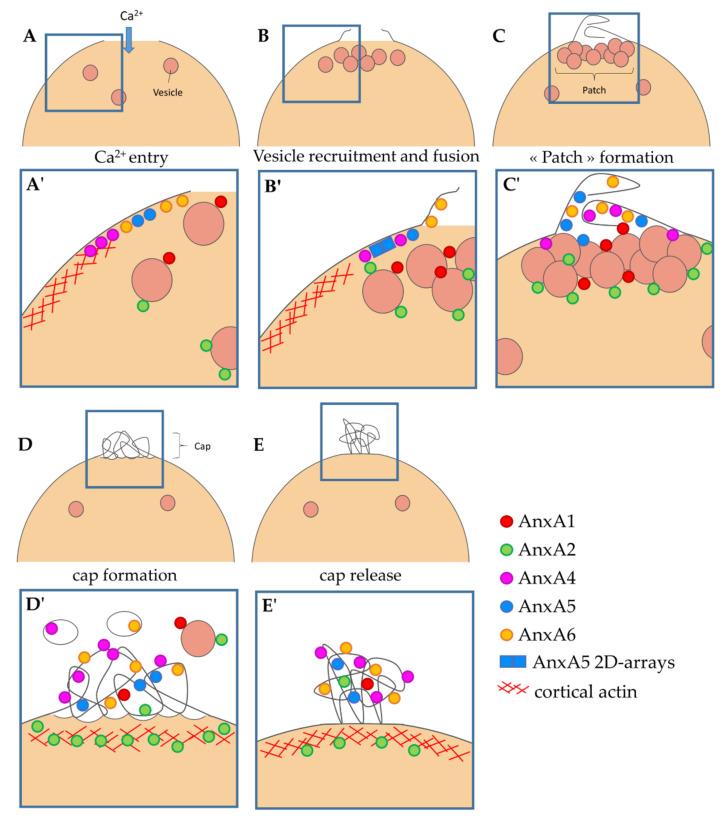
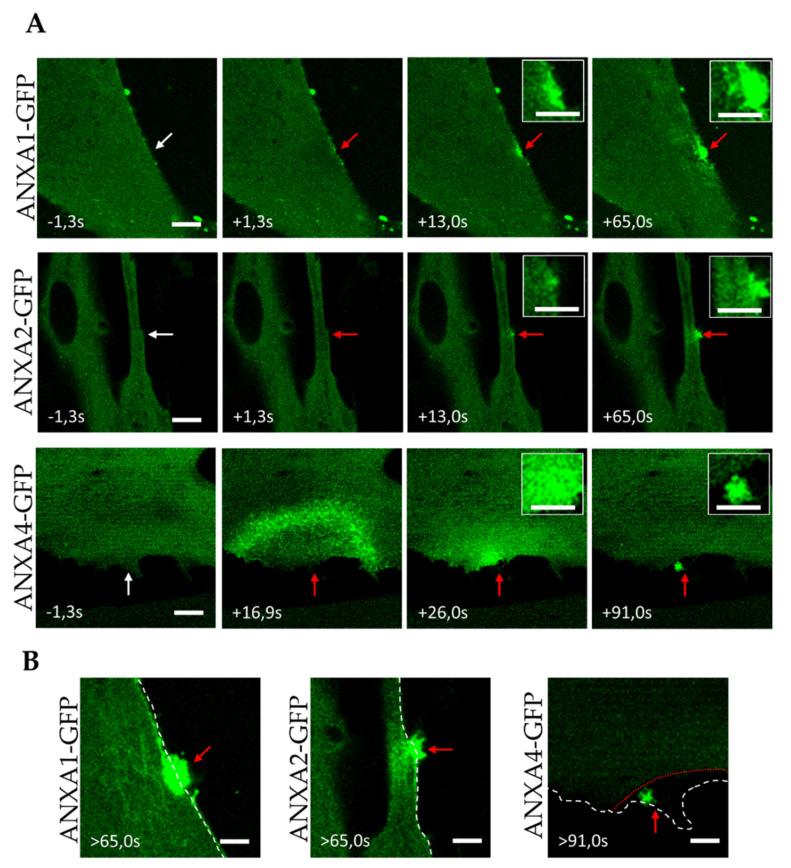
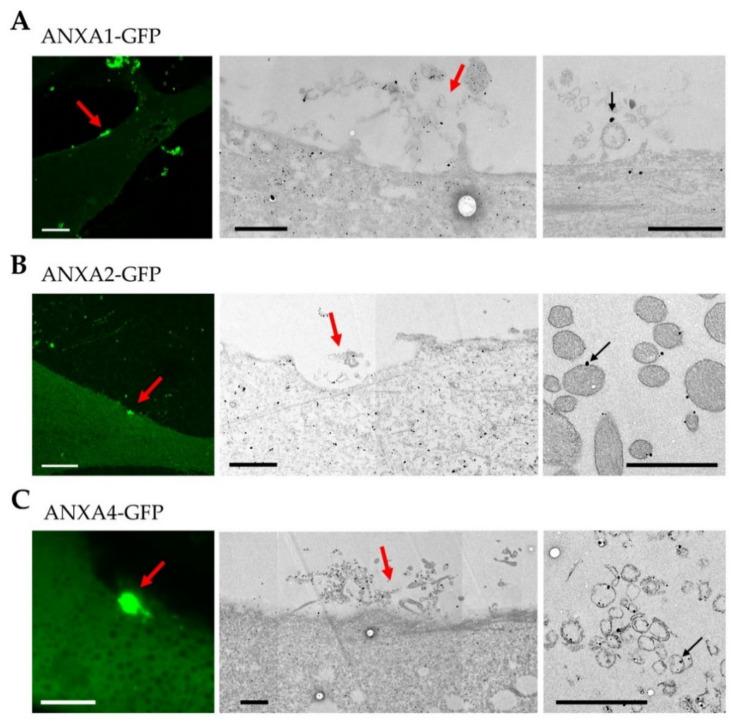
Defects in membrane repair contribute to the development of muscular dystrophies, such as Miyoshi muscular dystrophy 1, limb girdle muscular dystrophy (LGMD), type R2 or R12. Deciphering membrane repair dysfunctions in the development of muscular dystrophies requires precise and detailed knowledge of the membrane repair machinery in healthy human skeletal muscle cells. Using correlative light and electron microscopy (CLEM), we studied the trafficking of four members of the annexin (ANX) family, in myotubes damaged by laser ablation. Our data support a model in which ANXA4 and ANXA6 are recruited to the disruption site by propagating as a wave-like motion along the sarcolemma. They may act in membrane resealing by proceeding to sarcolemma remodeling. On the other hand, ANXA1 and A2 exhibit a progressive cytoplasmic recruitment, likely by interacting with intracellular vesicles, in order to form the lipid patch required for membrane resealing. Once the sarcolemma has been resealed, ANXA1 is released from the site of the membrane injury and returns to the cytosol, while ANXA2 remains accumulated close to the wounding site on the cytoplasmic side. On the other side of the repaired sarcolemma are ANXA4 and ANXA6 that face the extracellular milieu, where they are concentrated in a dense structure, the cap subdomain. The proposed model provides a basis for the identification of cellular dysregulations in the membrane repair of dystrophic human muscle cells.
膜修复缺陷会导致肌肉萎缩症的发展,如宫下型肌营养不良症1型、肢带型肌营养不良症(LGMD)R2型或R12型。要弄清楚肌肉萎缩症发展过程中的膜修复功能障碍,需要精确且详细地了解健康人类骨骼肌细胞中的膜修复机制。利用相关光电子显微镜技术(CLEM),我们研究了膜联蛋白(ANX)家族四个成员在激光消融损伤的肌管中的运输情况。我们的数据支持这样一个模型:ANXA4和ANXA6通过沿肌膜呈波浪状运动被招募到破坏部位。它们可能通过进行肌膜重塑来参与膜修复。另一方面,ANXA1和A2表现出逐渐向细胞质募集的过程,可能是通过与细胞内囊泡相互作用,以形成膜修复所需的脂质斑块。一旦肌膜被修复,ANXA1从膜损伤部位释放并返回细胞质,而ANXA2仍聚集在细胞质侧靠近伤口的部位。在修复后的肌膜另一侧是ANXA4和ANXA6,它们面向细胞外环境,在那里它们集中在一个致密结构——帽状亚结构域中。所提出的模型为识别营养不良人类肌肉细胞膜修复中的细胞调节异常提供了基础。



 Zotero 插件