
静脉注射免疫球蛋白治疗可恢复川崎病患儿循环树突状细胞和 CD4 T 细胞的数量和表型。
Intravenous Immunoglobulin Therapy Restores the Quantity and Phenotype of Circulating Dendritic Cells and CD4 T Cells in Children With Acute Kawasaki Disease.
机构信息
Department of Cardiology, Children's Hospital of Soochow University, Suzhou, China.
Department of Hematology, Children's Hospital of Soochow University, Suzhou, China.
出版信息
Front Immunol. 2022 Feb 10;13:802690. doi: 10.3389/fimmu.2022.802690. eCollection 2022.
BACKGROUND
Intravenous immunoglobulin (IVIG) showed its therapeutic efficacy on Kawasaki disease (KD). However, the mechanisms by which it reduces systemic inflammation are not completely understood. Dendritic cells (DCs) and T cells play critical roles in the pathogenic processes of immune disorders. Assessing the quantity of DC subsets and T cells and identifying functional molecules present on these cells, which provide information about KD, in the peripheral blood may provide new insights into the mechanisms of immunoglobulin therapy.
METHODS
In total, 54 patients with KD and 27 age-matched healthy controls (HCs) were included in this study. The number, percentage, and phenotype of DC subsets and CD4 T cells in peripheral blood were analyzed through flow cytometry.
RESULTS
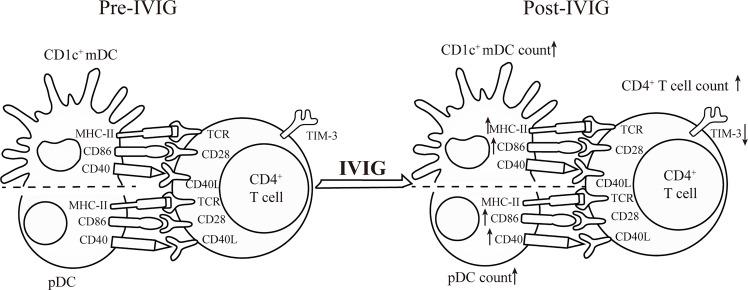
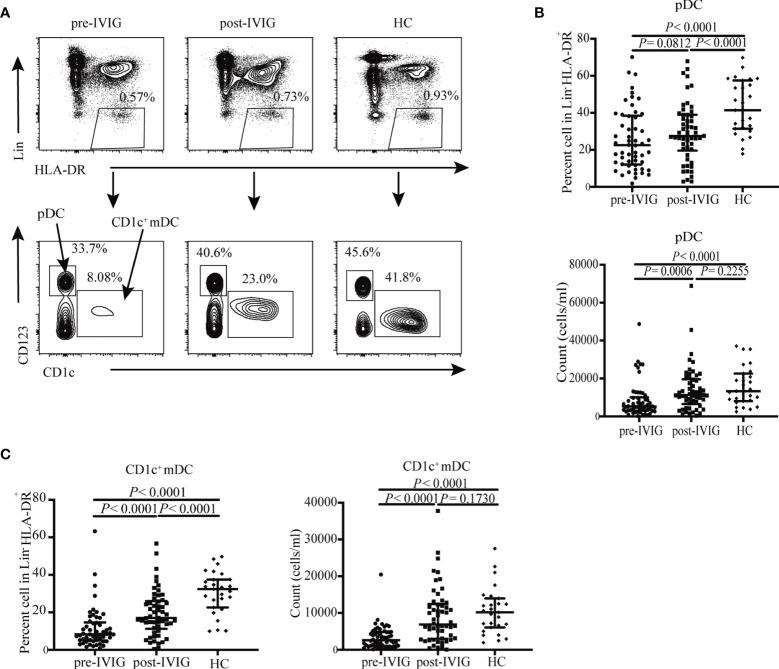
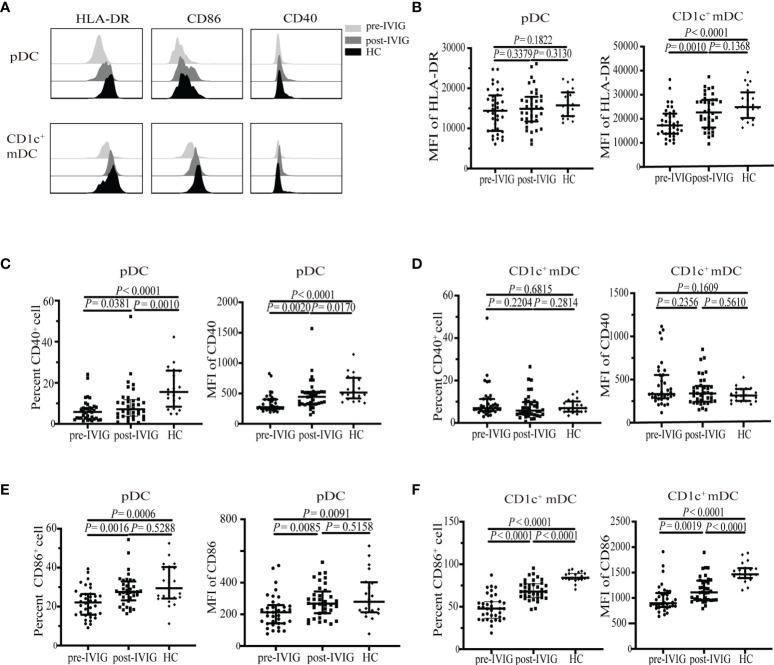
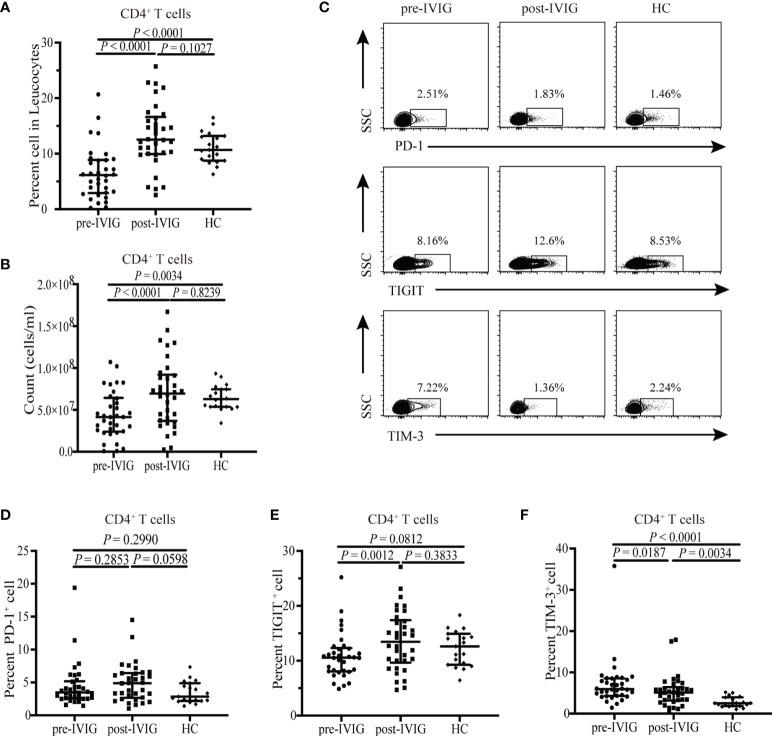
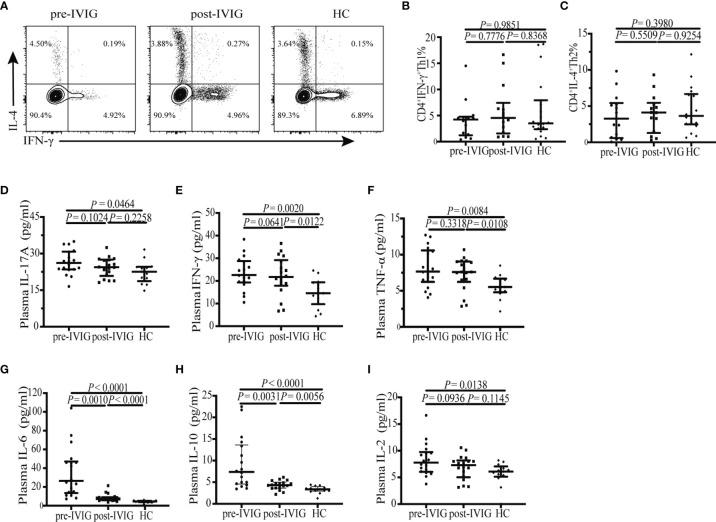
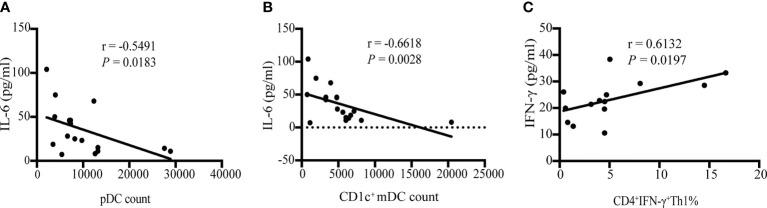
Patients with KD exhibited fewer peripheral DC subsets and CD4 T cells than HCs. Human leucocyte antigen-DR (HLA-DR) expression was reduced on CD1c myeloid DCs (CD1c mDCs), whereas that on plasmacytoid DCs (pDCs) did not change significantly. Both pDCs and CD1c mDCs displayed significantly reduced expression of co-stimulatory molecules, including CD40, CD86. pDCs and CD1c mDCs presented an immature or tolerant phenotype in acute stages of KD. Number of circulating pDC and CD1c mDC significantly inversely correlated with plasma interleukin-6 (IL-6) levels in KD patients pre-IVIG treatment. No significant differences were found concerning the DC subsets and CD4 T cells in patients with KD with and without coronary artery lesions. Importantly, these altered quantity and phenotypes on DC subsets and CD4 T cells were restored to a great extent post-IVIG treatment. T helper (Th) subsets including Th1 and Th2 among CD4 T cells did not show alteration pre- and post-IVIG treatment, although the Th1-related cytokine IFN-γ level in plasma increased dramatically in patients with KD pre-IVIG treatment.
CONCLUSIONS
pDCs and CD1c mDCs presented an immature or tolerant phenotype in acute stages of KD, IVIG treatment restored the quantity and functional molecules of DCs and CD4 T cells to distinct levels , indicating the involvement of DCs and CD4 T cells in the inflammation in KD. The findings provide insights into the immunomodulatory actions of IVIG in KD.
背景
静脉注射免疫球蛋白(IVIG)已被证明对川崎病(KD)具有治疗作用。然而,其降低全身炎症的机制尚不完全清楚。树突状细胞(DC)和 T 细胞在免疫紊乱的发病过程中起着关键作用。评估外周血中 DC 亚群和 T 细胞的数量,并鉴定这些细胞上存在的功能分子,为了解 KD 提供新的见解,可能为免疫球蛋白治疗的机制提供新的见解。
方法
本研究共纳入 54 例 KD 患儿和 27 例年龄匹配的健康对照者(HCs)。通过流式细胞术分析外周血中 DC 亚群和 CD4 T 细胞的数量、百分比和表型。
结果
KD 患儿外周血 DC 亚群和 CD4 T 细胞数量较 HCs 减少。CD1c 髓系 DC(CD1c mDC)上人类白细胞抗原-DR(HLA-DR)表达减少,而浆细胞样 DC(pDC)上的表达无明显变化。pDC 和 CD1c mDC 上共刺激分子 CD40、CD86 的表达均显著降低。KD 急性期 pDC 和 CD1c mDC 呈现未成熟或耐受表型。KD 患者 IVIG 治疗前循环 pDC 和 CD1c mDC 的数量与血浆白细胞介素-6(IL-6)水平呈显著负相关。KD 患儿中,有或无冠状动脉病变者的 DC 亚群和 CD4 T 细胞无明显差异。重要的是,这些 DC 亚群和 CD4 T 细胞数量和表型的改变在 IVIG 治疗后得到了很大程度的恢复。CD4 T 细胞中的辅助性 T 细胞(Th)亚群,包括 Th1 和 Th2,在 IVIG 治疗前后均未发生变化,尽管 KD 患者 IVIG 治疗前血浆中 Th1 相关细胞因子 IFN-γ水平显著升高。
结论
KD 急性期 pDC 和 CD1c mDC 呈现未成熟或耐受表型,IVIG 治疗可使 DC 和 CD4 T 细胞的数量和功能分子恢复到一定水平,表明 DC 和 CD4 T 细胞参与 KD 的炎症反应。这些发现为 IVIG 在 KD 中的免疫调节作用提供了新的见解。
 Zotero 插件