
系统生物学和人工智能分析突出了静脉注射免疫球蛋白治疗在以 B 细胞和补体系统为主导的自身免疫性疾病中的多效性作用。
Systems biology and artificial intelligence analysis highlights the pleiotropic effect of IVIg therapy in autoimmune diseases with a predominant role on B cells and complement system.
机构信息
Health Department, Anaxomics Biotech, Barcelona, Spain.
Grifols Innovation and New Technologies (GIANT) Ltd., Dublin, Ireland.
出版信息
Front Immunol. 2022 Sep 30;13:901872. doi: 10.3389/fimmu.2022.901872. eCollection 2022.
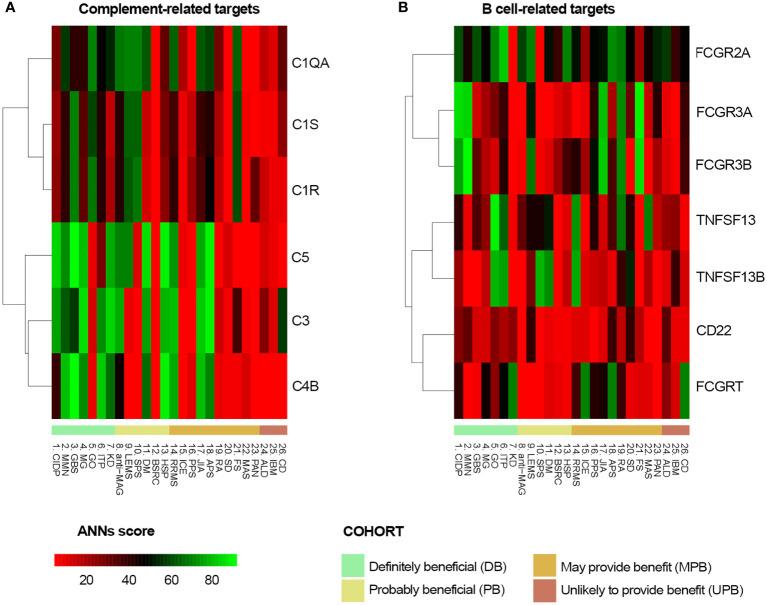
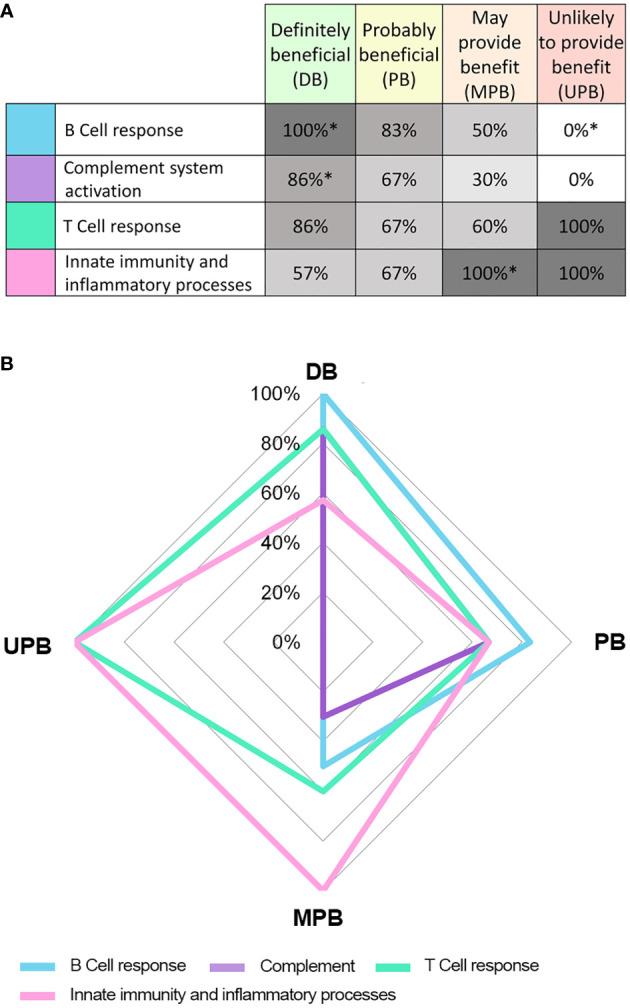
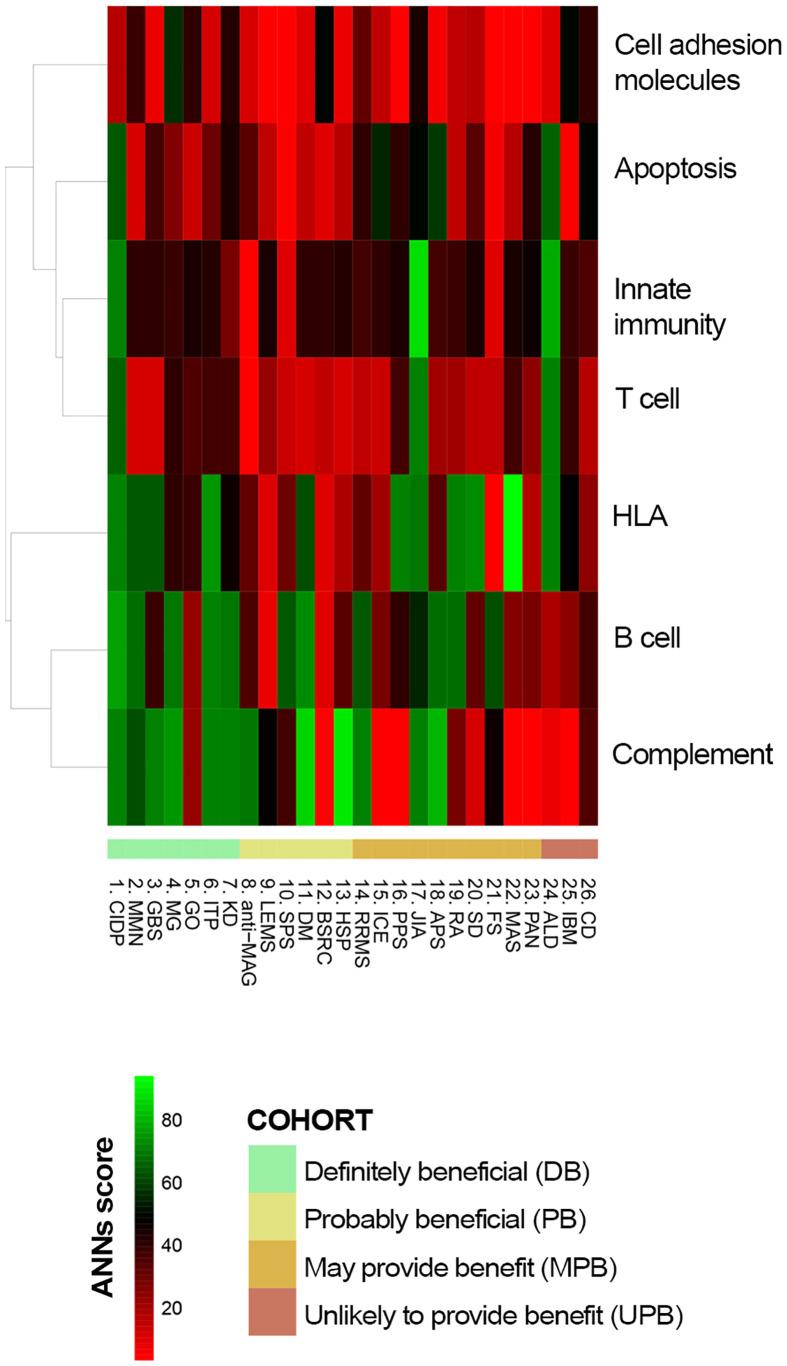
Intravenous immunoglobulin (IVIg) is used as treatment for several autoimmune and inflammatory conditions, but its specific mechanisms are not fully understood. Herein, we aimed to evaluate, using systems biology and artificial intelligence techniques, the differences in the pathophysiological pathways of autoimmune and inflammatory conditions that show diverse responses to IVIg treatment. We also intended to determine the targets of IVIg involved in the best treatment response of the evaluated diseases. Our selection and classification of diseases was based on a previously published systematic review, and we performed the disease characterization through manual curation of the literature. Furthermore, we undertook the mechanistic evaluation with artificial neural networks and pathway enrichment analyses. A set of 26 diseases was selected, classified, and compared. Our results indicated that diseases clearly benefiting from IVIg treatment were mainly characterized by deregulated processes in B cells and the complement system. Indeed, our results show that proteins related to B-cell and complement system pathways, which are targeted by IVIg, are involved in the clinical response. In addition, targets related to other immune processes may also play an important role in the IVIg response, supporting its wide range of actions through several mechanisms. Although B-cell responses and complement system have a key role in diseases benefiting from IVIg, protein targets involved in such processes are not necessarily the same in those diseases. Therefore, IVIg appeared to have a pleiotropic effect that may involve the collaborative participation of several proteins. This broad spectrum of targets and 'non-specificity' of IVIg could be key to its efficacy in very different diseases.
静脉注射免疫球蛋白(IVIg)被用于治疗多种自身免疫性和炎症性疾病,但它的具体作用机制尚未完全阐明。在此,我们旨在使用系统生物学和人工智能技术,评估对 IVIg 治疗反应不同的自身免疫性和炎症性疾病的病理生理途径的差异。我们还旨在确定 IVIg 治疗反应最佳的疾病相关靶点。我们对疾病的选择和分类是基于先前发表的系统评价,通过对文献的人工整理进行疾病特征描述。此外,我们还进行了人工神经网络和途径富集分析的机制评估。选择、分类和比较了一组 26 种疾病。我们的结果表明,明确受益于 IVIg 治疗的疾病主要表现为 B 细胞和补体系统失调。实际上,我们的结果表明,与 B 细胞和补体系统途径相关的蛋白,是 IVIg 的作用靶点,参与了临床反应。此外,与其他免疫过程相关的靶点也可能在 IVIg 反应中发挥重要作用,通过多种机制支持其广泛的作用。尽管 B 细胞反应和补体系统在受益于 IVIg 的疾病中起关键作用,但这些疾病中涉及此类过程的蛋白靶点不一定相同。因此,IVIg 似乎具有多效性作用,可能涉及多种蛋白的协同参与。IVIg 的这种广泛的作用靶点和“非特异性”可能是其在非常不同疾病中具有疗效的关键。

 Zotero 插件