
SARS-CoV-2 德尔塔变异株中缺陷的 ORF8 二聚化导致 ORF8-MHC1 相互作用的中断,从而引起更好的适应性免疫反应。
Defective ORF8 dimerization in SARS-CoV-2 delta variant leads to a better adaptive immune response due to abrogation of ORF8-MHC1 interaction.
机构信息
Gujarat Biotechnology Research Centre (GBRC), Department of Science and Technology, Government of Gujarat, 6th Floor, Block B&D, MS Building, Gandhinagar, 382011, India.
出版信息
Mol Divers. 2023 Feb;27(1):45-57. doi: 10.1007/s11030-022-10405-9. Epub 2022 Mar 3.
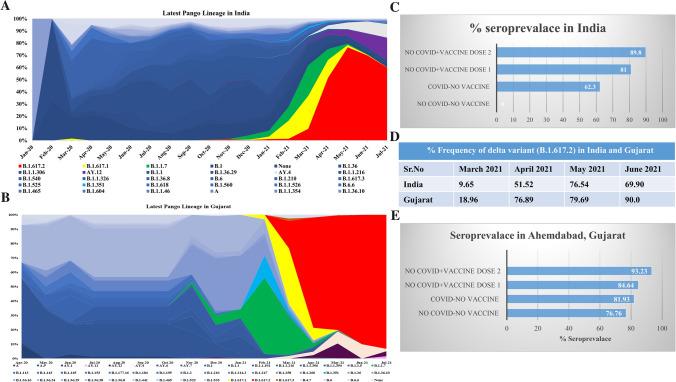
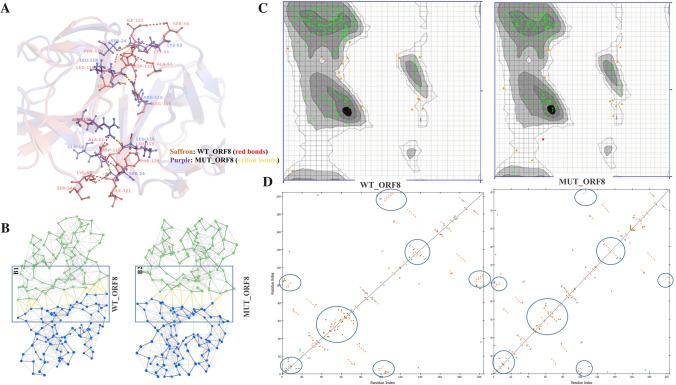
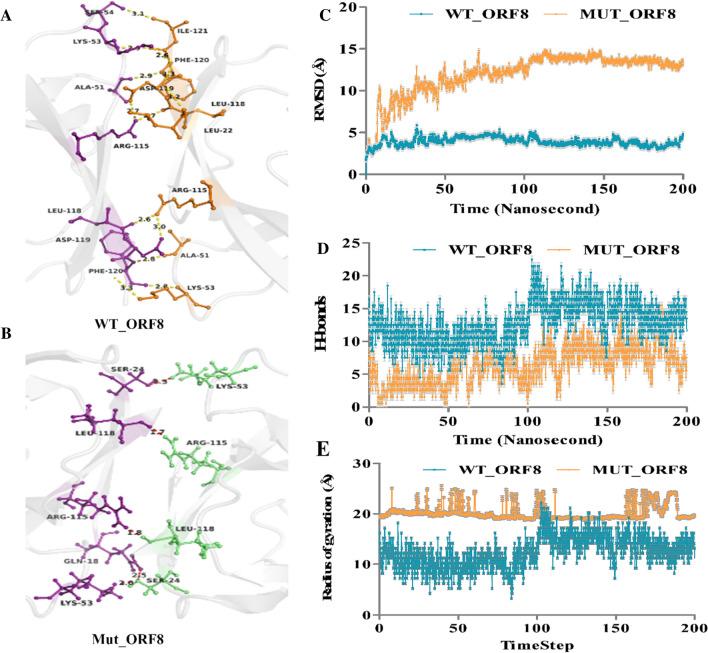
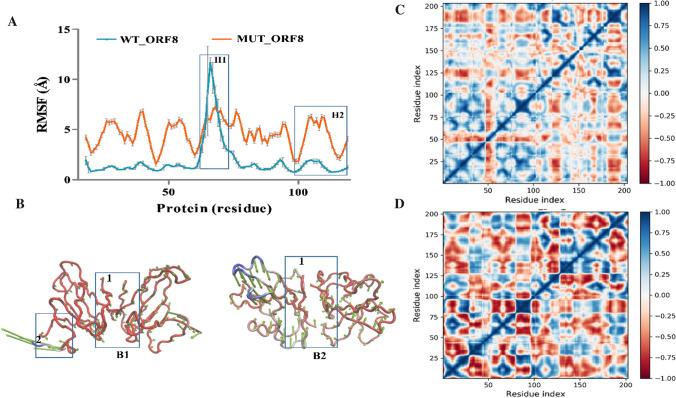
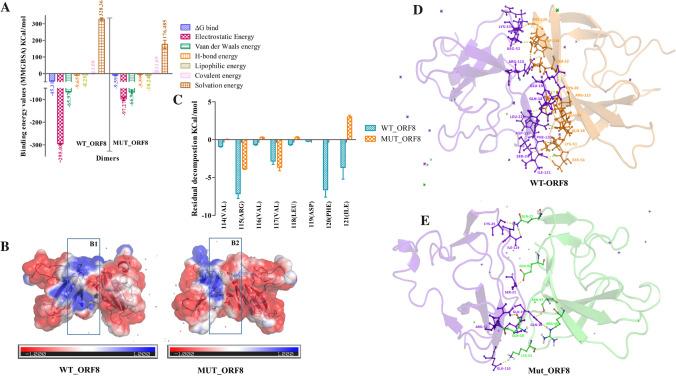
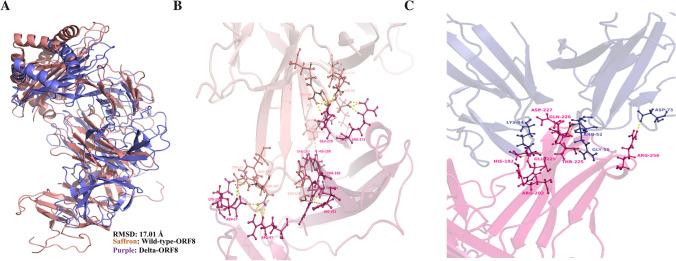
In India, during the second wave of the COVID-19 pandemic, the breakthrough infections were mainly caused by the SARS-COV-2 delta variant (B.1.617.2). It was reported that, among majority of the infections due to the delta variant, only 9.8% percent cases required hospitalization, whereas only 0.4% fatality was observed. Sudden dropdown in COVID-19 infections cases were observed within a short timeframe, suggesting better host adaptation with evolved delta variant. Downregulation of host immune response against SARS-CoV-2 by ORF8 induced MHC-I degradation has been reported earlier. The Delta variant carried mutations (deletion) at Asp119 and Phe120 amino acids which are critical for ORF8 dimerization. The deletions of amino acids Asp119 and Phe120 in ORF8 of delta variant resulted in structural instability of ORF8 dimer caused by disruption of hydrogen bonds and salt bridges as revealed by structural analysis and MD simulation studies. Further, flexible docking of wild type and mutant ORF8 dimer revealed reduced interaction of mutant ORF8 dimer with MHC-I as compared to wild-type ORF8 dimer with MHC-1, thus implicating its possible role in MHC-I expression and host immune response against SARS-CoV-2. We thus propose that mutant ORF8 of SARS-CoV-2 delta variant may not be hindering the MHC-I expression thereby resulting in a better immune response against the SARS-CoV-2 delta variant, which partly explains the possible reason for sudden drop of SARS-CoV-2 infection rate in the second wave of SARS-CoV-2 predominated by delta variant in India.
在印度,第二波 COVID-19 大流行期间,突破感染主要由 SARS-COV-2 德尔塔变异株(B.1.617.2)引起。据报道,在大多数由德尔塔变异株引起的感染中,只有 9.8%的病例需要住院治疗,而观察到的死亡率仅为 0.4%。COVID-19 感染病例在短时间内突然下降,表明宿主对进化的德尔塔变异株更好地适应。先前有报道称,ORF8 诱导 MHC-I 降解会下调宿主对 SARS-CoV-2 的免疫反应。德尔塔变异株在 Asp119 和 Phe120 氨基酸处携带突变(缺失),这些氨基酸对 ORF8 二聚化至关重要。德尔塔变异株 ORF8 中的氨基酸缺失 Asp119 和 Phe120 导致 ORF8 二聚体结构不稳定,这是由氢键和盐桥的破坏引起的,结构分析和 MD 模拟研究揭示了这一点。此外,野生型和突变型 ORF8 二聚体的柔性对接显示,与野生型 ORF8 二聚体与 MHC-I 的相互作用相比,突变型 ORF8 二聚体与 MHC-I 的相互作用减少,因此暗示其可能在 MHC-I 表达和宿主对 SARS-CoV-2 的免疫反应中起作用。因此,我们提出,SARS-CoV-2 德尔塔变异株的突变 ORF8 可能不会阻碍 MHC-I 的表达,从而导致对 SARS-CoV-2 德尔塔变异株的更好免疫反应,这部分解释了为什么在印度第二波以德尔塔变异株为主的 SARS-CoV-2 流行期间,SARS-CoV-2 感染率突然下降的可能原因。
 Zotero 插件