
跑步机训练干预对神经障碍老年人时空步态参数的影响:随机对照试验的系统评价和荟萃分析。
Effect of Treadmill Training Interventions on Spatiotemporal Gait Parameters in Older Adults with Neurological Disorders: Systematic Review and Meta-Analysis of Randomized Controlled Trials.
机构信息
Department of Kinesiology and Community Health, University of Illinois at Urbana-Champaign, Urbana, IL 61801, USA.
Department of Solid Organ Transplant, University of Chicago Medical Center, Chicago, IL 60637, USA.
出版信息
Int J Environ Res Public Health. 2022 Feb 28;19(5):2824. doi: 10.3390/ijerph19052824.
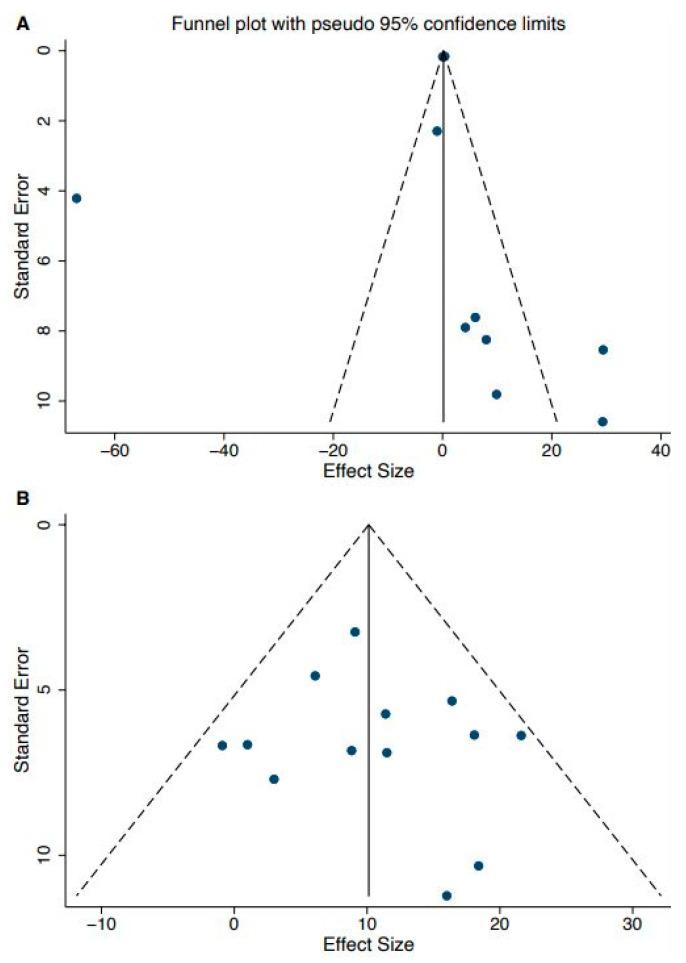
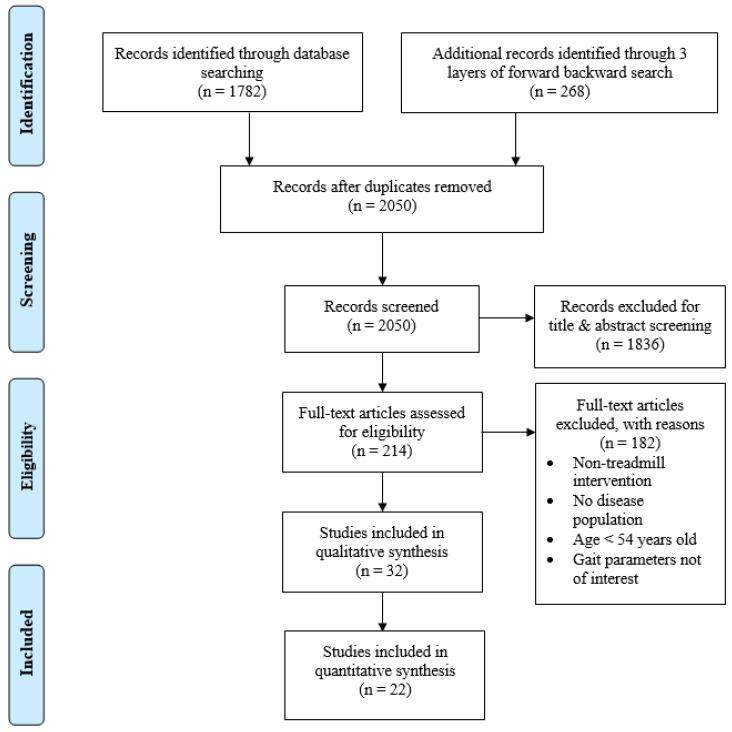
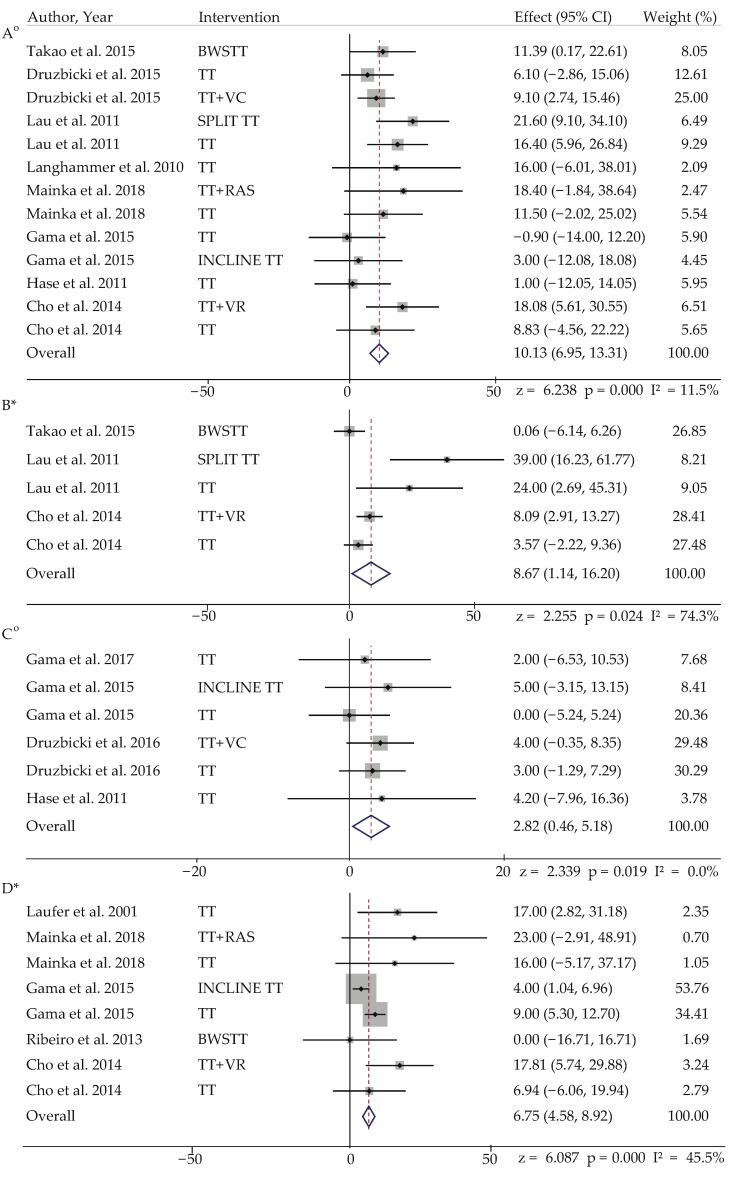
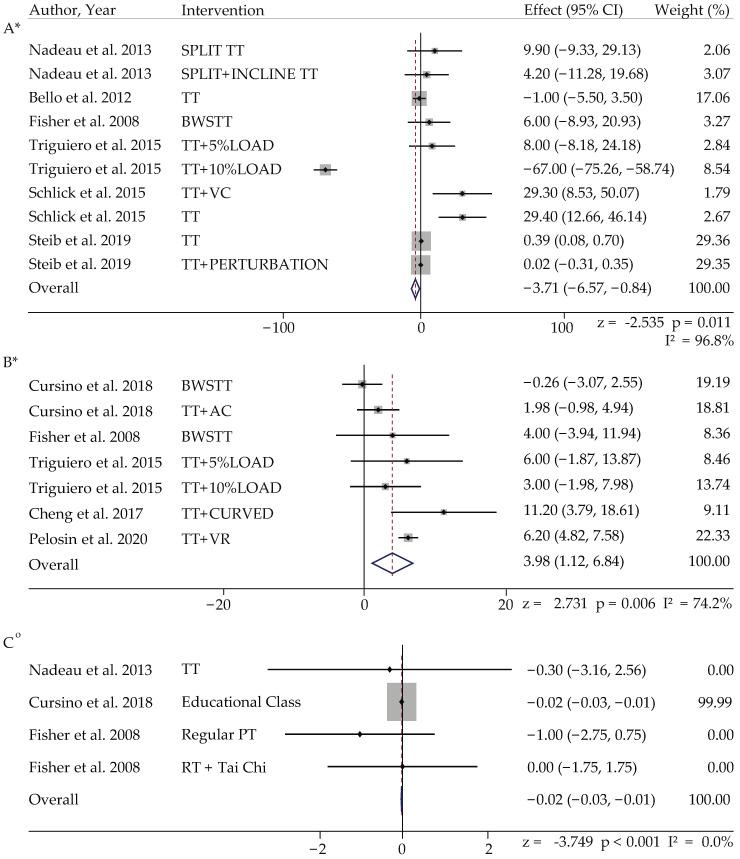
Objective: Treadmill interventions have been shown to promote ‘normal’ walking patterns, as they facilitate the proper movement and timing of the lower limbs. However, prior reviews have not examined which intervention provides the most effective treatment of specific gait impairments in neurological populations. The objective of this systematic review was to review and quantify the changes in gait after treadmill interventions in adults with neurological disorders. Data Sources: A keyword search was performed in four databases: PubMed, CINAHL, Scopus, and Web of Science (January 2000−December 2021). We performed the search algorithm including all possible combinations of keywords. Full-text articles were examined further using forward/backward search methods. Study Selection: Studies were thoroughly screened using the following inclusion criteria: study design: Randomized Controlled Trial (RCT); adults ≥55 years old with a neurological disorder; treadmill intervention; spatiotemporal gait characteristics; and language: English. Data Extraction: A standardized data extraction form was used to collect the following methodological outcome variables from each of the included studies: author, year, population, age, sample size, and spatiotemporal gait parameters including stride length, stride time, step length, step width, step time, stance time, swing time, single support time, double support time, or cadence. Data Synthesis: We found a total of 32 studies to be included in our systematic review through keyword search, out of which 19 studies included adults with stroke and 13 studies included adults with PD. We included 22 out of 32 studies in our meta-analysis that examined gait in adults with neurological disorders, which only yielded studies including Parkinson’s disease (PD) and stroke patients. A meta-analysis was performed among trials presenting with similar characteristics, including study population and outcome measure. If heterogeneity was >50% (denoted by I2), random plot analysis was used, otherwise, a fixed plot analysis was performed. All analyses used effect sizes and standard errors and a p < 0.05 threshold was considered statistically significant (denoted by *). Overall, the effect of treadmill intervention on cadence (z = 6.24 *, I2 = 11.5%) and step length (z = 2.25 *, I2 = 74.3%) in adults with stroke was significant. We also found a significant effect of treadmill intervention on paretic step length (z = 2.34 *, I2 = 0%) and stride length (z = 6.09 *, I2 = 45.5%). For the active control group, including adults with PD, we found that overground physical therapy training had the largest effect on step width (z = −3.75 *, I2 = 0%). Additionally, for PD adults in treadmill intervention studies, we found the largest significant effect was on step length (z = 2.73 *, I2 = 74.2%) and stride length (z = −2.54 *, I2 = 96.8%). Conclusion: Treadmill intervention with sensory stimulation and body weight support treadmill training were shown to have the largest effect on step length in adults with PD and stroke.
目的
跑步机干预已被证明可以促进“正常”的行走模式,因为它们有助于下肢的适当运动和定时。然而,之前的综述并没有检查哪种干预措施对神经人群的特定步态障碍提供最有效的治疗。本系统综述的目的是回顾和量化在患有神经障碍的成年人中进行跑步机干预后的步态变化。
数据来源
在四个数据库中进行了关键词搜索:PubMed、CINAHL、Scopus 和 Web of Science(2000 年 1 月至 2021 年 12 月)。我们执行了包括所有可能的关键词组合的搜索算法。使用向前/向后搜索方法进一步检查全文文章。
研究选择
使用以下纳入标准对研究进行了彻底筛选:研究设计:随机对照试验(RCT);年龄≥55 岁的患有神经障碍的成年人;跑步机干预;时空步态特征;语言:英语。
数据提取
使用标准化的数据提取表从每个纳入的研究中收集以下方法学结果变量:作者、年份、人群、年龄、样本量和时空步态参数,包括步长、步长时间、步长、步宽、步长时间、支撑时间、摆动时间、单支撑时间、双支撑时间或步速。
数据分析
通过关键词搜索,我们总共发现 32 项研究符合我们的系统综述纳入标准,其中 19 项研究纳入了中风患者,13 项研究纳入了帕金森病患者。我们纳入了 32 项研究中的 22 项,这些研究检查了患有神经障碍的成年人的步态,这些研究仅纳入了帕金森病(PD)和中风患者。在具有相似特征的试验中进行了荟萃分析,包括研究人群和结果测量。如果异质性>50%(由 I2 表示),则使用随机图分析,否则使用固定图分析。所有分析均使用效应大小和标准误差,p<0.05 被认为具有统计学意义(用表示)。总的来说,跑步机干预对中风患者的步速(z=6.24,I2=11.5%)和步长(z=2.25*,I2=74.3%)有显著影响。我们还发现跑步机干预对偏瘫步长(z=2.34*,I2=0%)和步长(z=6.09*,I2=45.5%)有显著影响。对于包括帕金森病患者的主动对照组,我们发现,地面物理治疗训练对步宽的影响最大(z=−3.75*,I2=0%)。此外,对于在跑步机干预研究中的帕金森病成年人,我们发现最大的显著影响是步长(z=2.73*,I2=74.2%)和步长(z=−2.54*,I2=96.8%)。
结论
跑步机干预结合感觉刺激和减重跑步机训练对 PD 和中风成年人的步长有最大影响。
 Zotero 插件