
日本人群功能性便秘流行病学的相关背景因素:一项横断面研究。
Background factors involved in the epidemiology of functional constipation in the Japanese population: a cross-sectional study.
作者信息
Yamamoto Sayuri, Ohashi Wataru, Yamaguchi Yoshiharu, Inamoto Shunsuke, Koshino Akira, Sugiyama Tomoya, Nagao Kazuhiro, Tamura Yasuhiro, Izawa Shinya, Ebi Masahide, Usami Jun, Hamano Koichi, Izumi Junko, Wakita Yoshinori, Funaki Yasushi, Ogasawara Naotaka, Sasaki Makoto, Maekawa Masato, Kasugai Kunio
机构信息
Division of Gastroenterology, Aichi Medical University, 1-1 Yazakokarimata, Nagakute, Aichi Prefecture, 480-1195, Japan.
Division of General Medicine, Aichi Medical University, 1-1 Yazakokarimata, Nagakute, Aichi Prefecture, 480-1195, Japan.
出版信息
Biopsychosoc Med. 2022 Mar 10;16(1):8. doi: 10.1186/s13030-022-00237-2.
BACKGROUND
Functional constipation (FC), a functional bowel disorder with symptoms of constipation, has considerable impact on quality of life. As data regarding its prevalence and epidemiology are lacking, this study aimed to evaluate the prevalence, population composition, lifestyle, quality of life, and clinical characteristics of these individuals by comparing people with and without FC. These parameters were also compared among individuals with strong and weak awareness of constipation.
METHODS
An internet survey was conducted among 10,000 individuals aged 20-69 years from the general Japanese population; they were registered with an internet survey company. The following data were obtained: age, sex, educational history, occupation, residence, history of other diseases, lifestyle (including smoking/drinking habits using the Japanese Health Practice Index, medication use, symptoms of constipation according to the Rome III criteria, stool types according to the Bristol stool scale, and use of laxatives, including the place of purchase and cost per month or acceptable cost per month. The 8-item Short Form Health Survey Questionnaire was also used; FC was diagnosed based on Rome III criteria. All respondents were classified according to their awareness of constipation (i.e. strong or weak), and their characteristic features were compared.
RESULTS
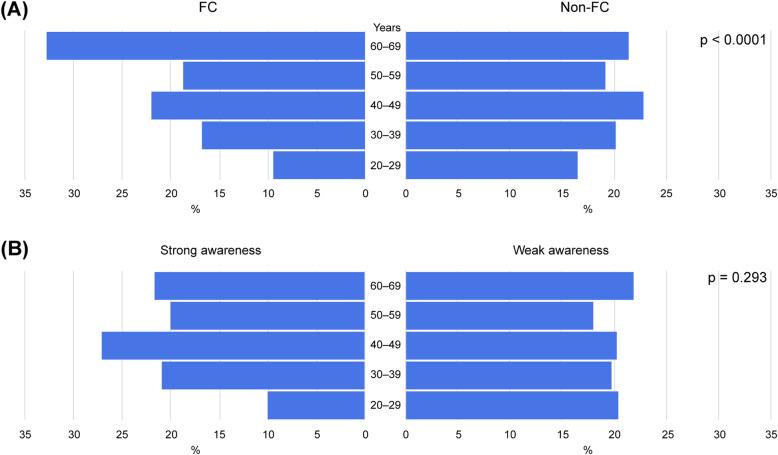
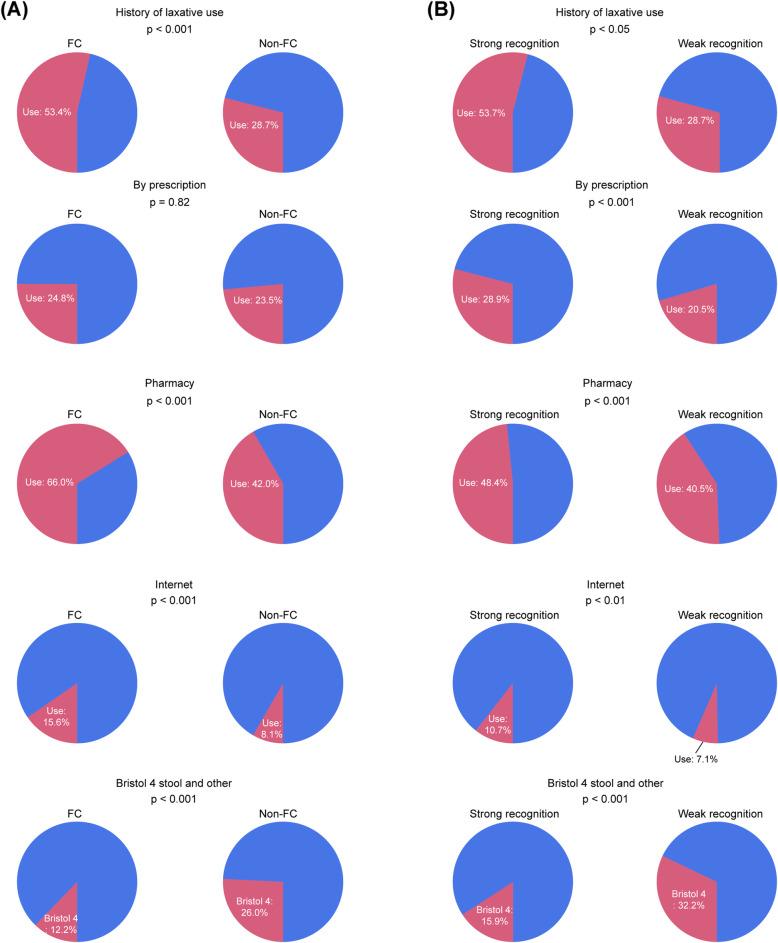
The data of 3000 respondents were evaluated; 262 (8.7%) had FC, which was common among older adults, women, and homemakers. FC was associated with changes in the frequency of bowel movement, sensation of incomplete or scanty evacuation, and the use of manual maneuvers; these are consequential clinical symptoms of FC. These individuals frequently skipped breakfast, had insufficient sleep, had more severe constipation, and had purchased laxatives in pharmacies or online more often than those without FC. A strong awareness of constipation was significantly more prevalent among women and homemakers. A history of anemia and cardiovascular disease was significantly more frequent in the strong awareness group, whereas a history of hypertension was more frequent in the weak awareness group.
CONCLUSIONS
Appropriate and comprehensive management should be provided for FC, based on the understanding of its characteristic features and considering the symptoms and lifestyle.
背景
功能性便秘(FC)是一种伴有便秘症状的功能性肠病,对生活质量有相当大的影响。由于缺乏关于其患病率和流行病学的数据,本研究旨在通过比较有无FC的人群,评估这些个体的患病率、人群构成、生活方式、生活质量和临床特征。还对便秘意识强和弱的个体的这些参数进行了比较。
方法
对来自日本普通人群的10000名年龄在20 - 69岁的个体进行了一项网络调查;他们在一家网络调查公司进行了注册。获得了以下数据:年龄、性别、教育史、职业、居住地、其他疾病史、生活方式(包括使用日本健康行为指数的吸烟/饮酒习惯、用药情况、根据罗马III标准的便秘症状、根据布里斯托大便分类法的大便类型以及泻药的使用情况,包括购买地点和每月费用或每月可接受费用)。还使用了8项简短健康调查问卷;根据罗马III标准诊断FC。所有受访者根据其便秘意识(即强或弱)进行分类,并比较其特征。
结果
对3000名受访者的数据进行了评估;262人(8.7%)患有FC,在老年人、女性和家庭主妇中较为常见。FC与排便频率改变、排便不尽或排便量少的感觉以及手法辅助排便有关;这些是FC的重要临床症状。这些个体经常不吃早餐、睡眠不足、便秘更严重,并且比没有FC的人更频繁地在药店或网上购买泻药。女性和家庭主妇中便秘意识强的情况明显更普遍。贫血和心血管疾病史在便秘意识强的组中明显更常见,而高血压史在便秘意识弱的组中更常见。
结论
应基于对FC特征的理解,并考虑症状和生活方式,为其提供适当和全面的管理。


 Zotero 插件