
胸降主动脉的蛋白质组学分析确定了动脉瘤和夹层的独特及通用特征。
Proteomic analysis of descending thoracic aorta identifies unique and universal signatures of aneurysm and dissection.
作者信息
Saddic Louis, Orosco Amanda, Guo Dongchuan, Milewicz Dianna M, Troxlair Dana, Heide Richard Vander, Herrington David, Wang Yue, Azizzadeh Ali, Parker Sarah J
机构信息
Department of Anesthesiology and Perioperative Medicine, David Geffen School of Medicine, University of California, Los Angeles, Los Angeles, Calif.
Department of Cardiology, Smidt Heart Institute, Cedars-Sinai Medical Center, Los Angeles, Calif.
出版信息
JVS Vasc Sci. 2022 Jan 22;3:85-181. doi: 10.1016/j.jvssci.2022.01.001. eCollection 2022.
OBJECTIVE
Very few clinical predictors of descending thoracic aorta dissection have been determined. Although aneurysms can dissect in a size-dependent process, most descending dissections will occur without prior enlargement. We compared the proteomic profiles of normal, dissected, aneurysm, and both aneurysm and dissected descending thoracic aortas to identify novel biomarkers and further understand the molecular pathways that lead to tissue at risk of dissection.
METHODS
We performed proteomic profiling of descending thoracic aortas with four phenotypes: normal (n = 46), aneurysm (n = 22), dissected (n = 12), and combined aneurysm and dissection (n = 8). Pairwise differential protein expression analyses using a Bayesian approach were then performed to identify common proteins that were dysregulated between each diseased tissue type and control aorta and to uncover unique proteins between aneurysmal and dissected aortas. Network and Markov cluster algorithms of differentially expressed proteins were used to find enriched ontology processes. A convex analysis of mixtures was also performed to identify the molecular subtypes within the different tissue types.
RESULTS
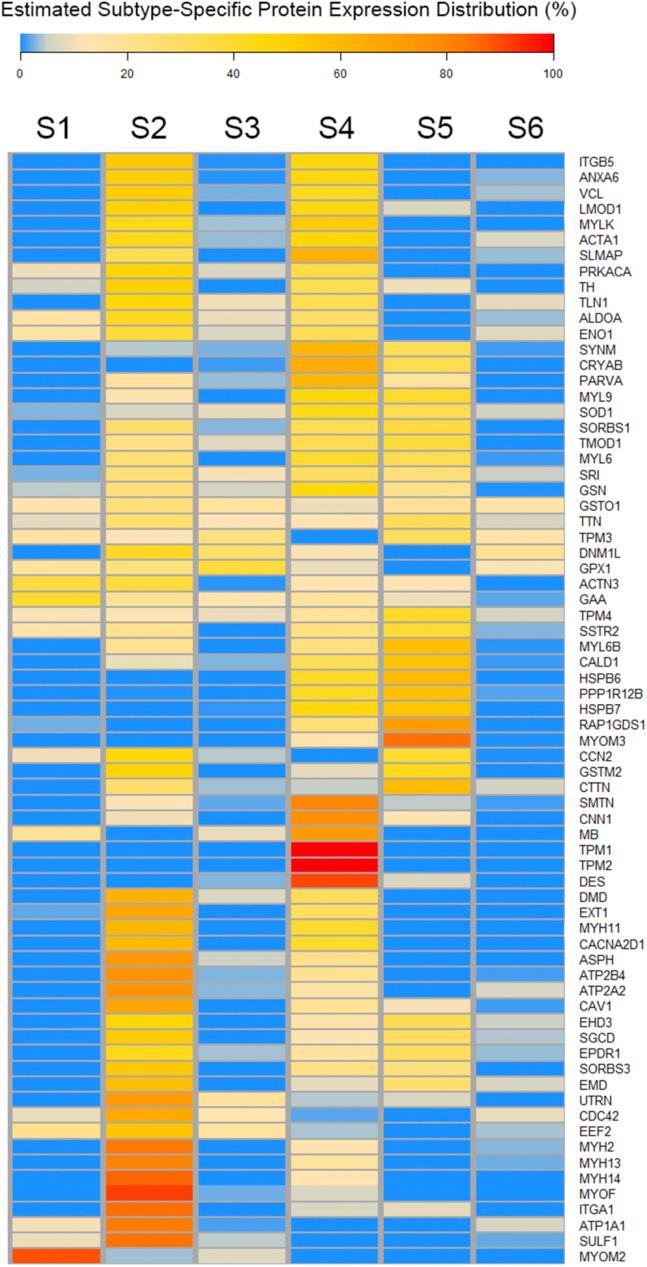
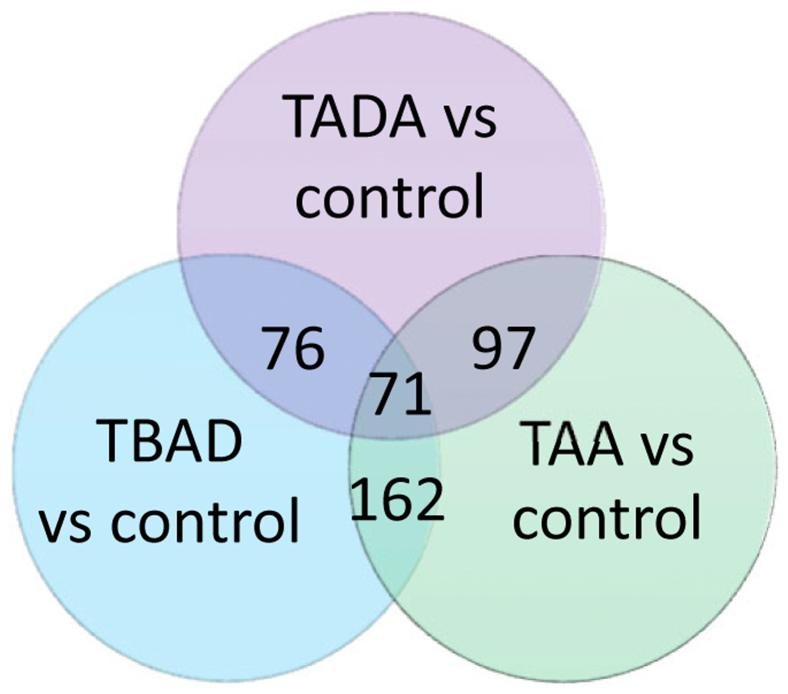
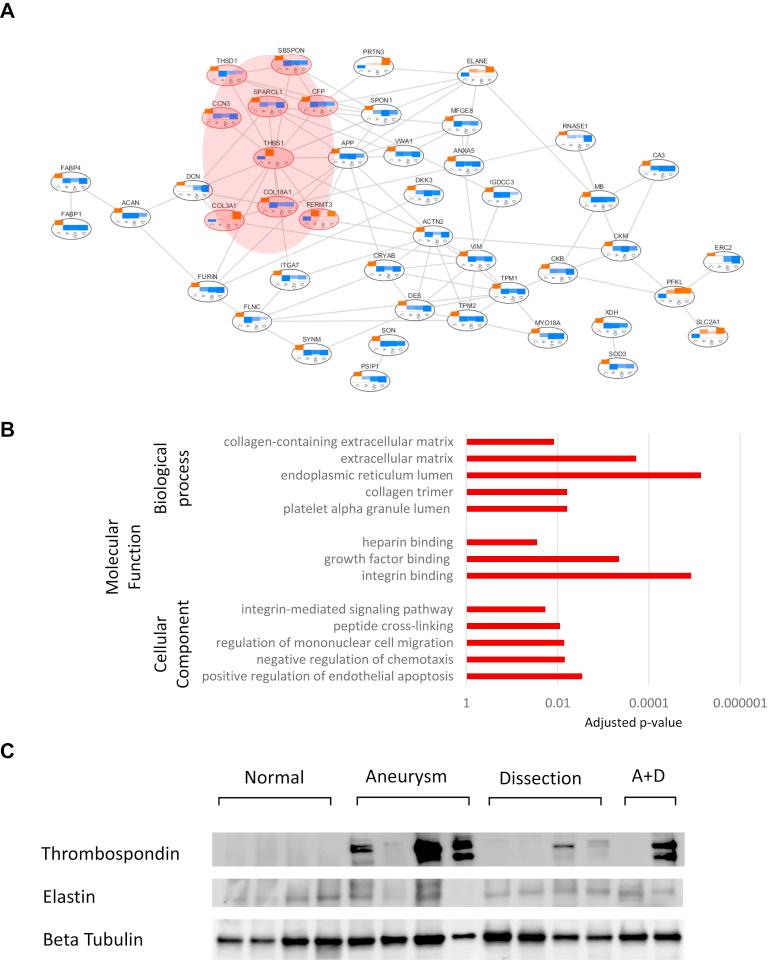
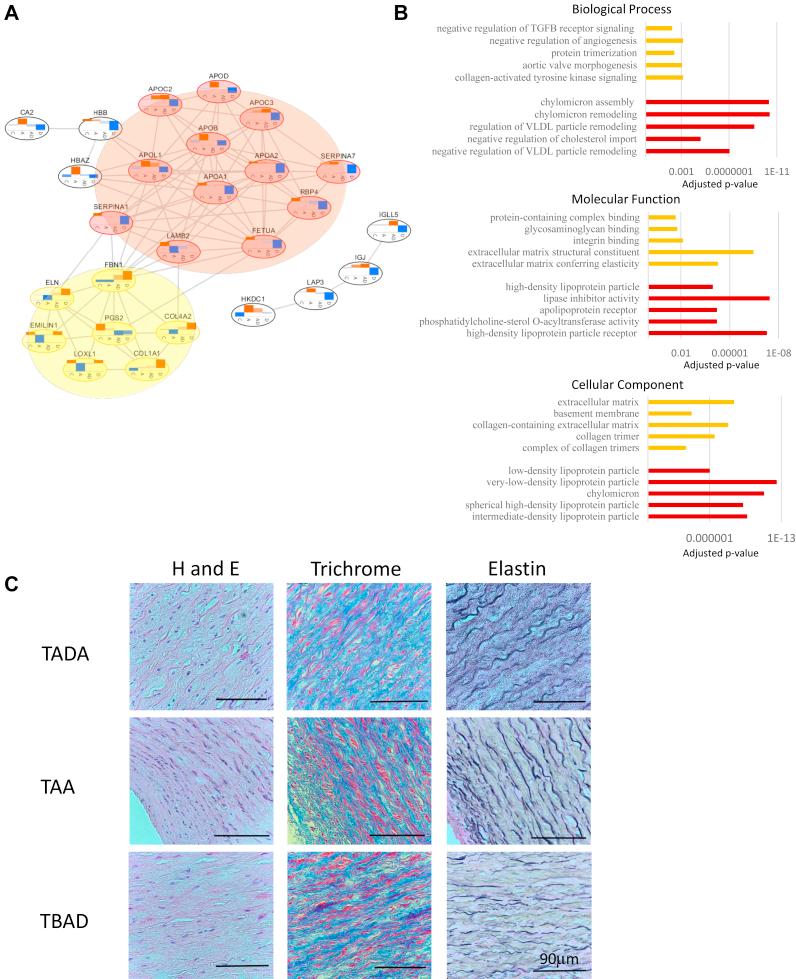
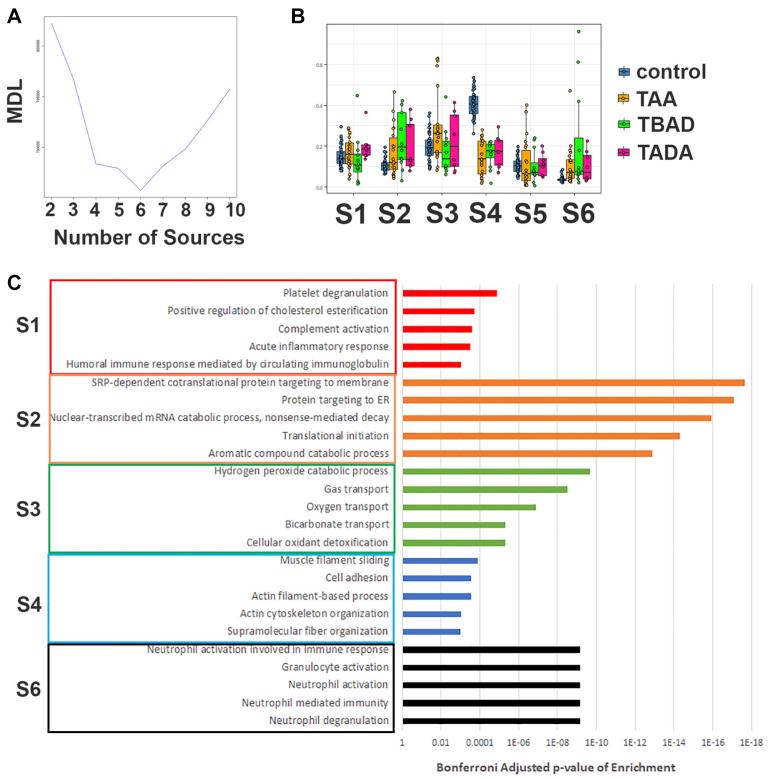
The diseased aortas had 71 common differentially expressed proteins compared with the control, including higher amounts of the protein thrombospondin 1. We found 42 differentially expressed proteins between the aneurysm and dissected tissue, with an abundance of apolipoproteins in the former and higher quantities of extracellular matrix proteins in the latter. The convex analysis of mixtures showed enhancement of a molecular subtype enriched in contractile proteins within the control tissue compared with the diseased tissue, in addition to increased proportions of molecular subtypes enriched in inflammation and red blood cell expression in the aneurysmal compared with the dissected tissue.
CONCLUSIONS
We found some overlapping differentially expressed proteins in aneurysmal and nonaneurysmal descending thoracic aortas at risk of dissection compared with normal aortas. However, we also found uniquely altered molecular pathways that might uncover mechanisms for dissection.
目的
已确定的降主动脉夹层临床预测指标极少。虽然动脉瘤可在大小依赖性过程中发生夹层,但大多数降主动脉夹层在无先前扩张的情况下就会发生。我们比较了正常、夹层、动脉瘤以及同时存在动脉瘤和夹层的降主动脉的蛋白质组学图谱,以鉴定新的生物标志物,并进一步了解导致组织有夹层风险的分子途径。
方法
我们对具有四种表型的降主动脉进行了蛋白质组学分析:正常(n = 46)、动脉瘤(n = 22)、夹层(n = 12)以及合并动脉瘤和夹层(n = 8)。然后采用贝叶斯方法进行成对差异蛋白表达分析,以鉴定每种患病组织类型与对照主动脉之间失调的常见蛋白,并揭示动脉瘤和夹层主动脉之间的独特蛋白。使用差异表达蛋白的网络和马尔可夫聚类算法来寻找富集的本体过程。还进行了混合物的凸分析,以鉴定不同组织类型内的分子亚型。
结果
与对照相比,患病主动脉有71种常见的差异表达蛋白,包括血小板反应蛋白1的含量更高。我们在动脉瘤和夹层组织之间发现了42种差异表达蛋白,前者富含载脂蛋白,后者富含细胞外基质蛋白。混合物的凸分析表明,与患病组织相比,对照组织中富含收缩蛋白的分子亚型有所增强,此外,与夹层组织相比,动脉瘤组织中富含炎症和红细胞表达的分子亚型比例增加。
结论
与正常主动脉相比,我们在有夹层风险的动脉瘤性和非动脉瘤性降主动脉中发现了一些重叠的差异表达蛋白。然而,我们也发现了独特改变的分子途径,这可能揭示夹层的机制。

 Zotero 插件