
液体活检:癌症诊疗的变革更近一步。
Liquid biopsy: a step closer to transform diagnosis, prognosis and future of cancer treatments.
机构信息
Department of Biotechnology, School of Life Sciences, Central University of Kashmir, Ganderbal, Jammu & Kashmir, India.
Laboratory of Molecular and Metabolic Imaging, Cancer Research Department, Sidra Medicine, PO BOX 26999, Doha, Qatar.
出版信息
Mol Cancer. 2022 Mar 18;21(1):79. doi: 10.1186/s12943-022-01543-7.
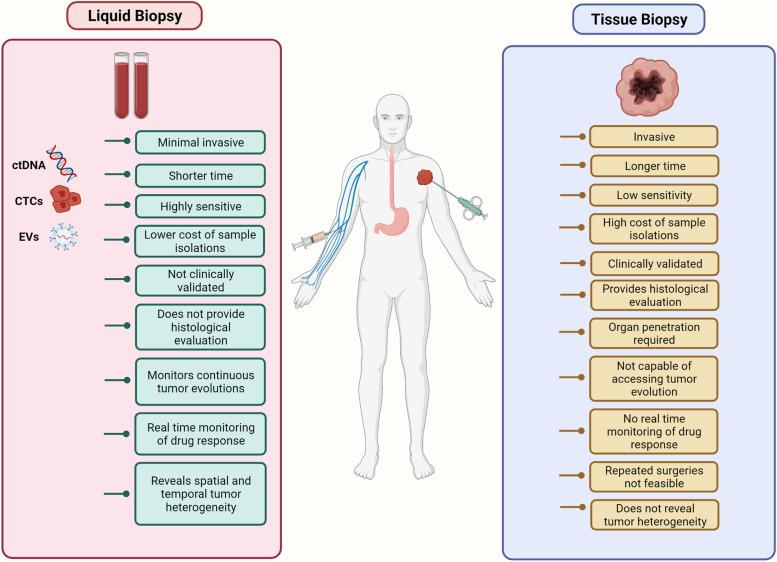
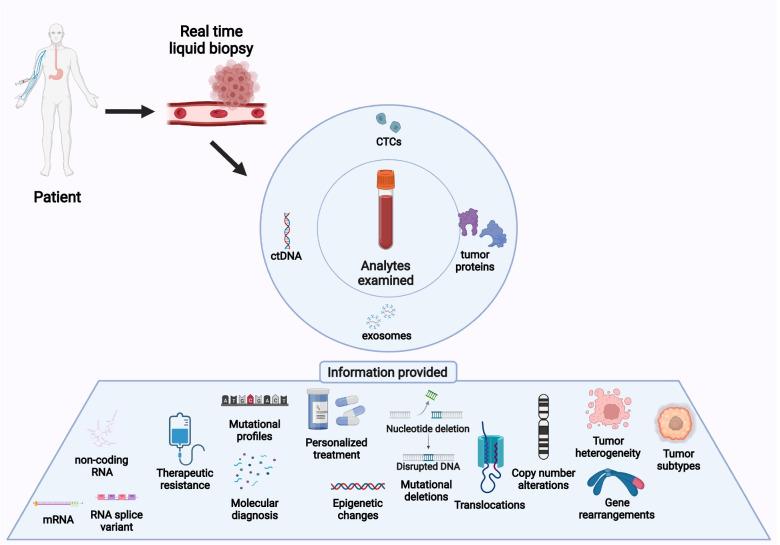
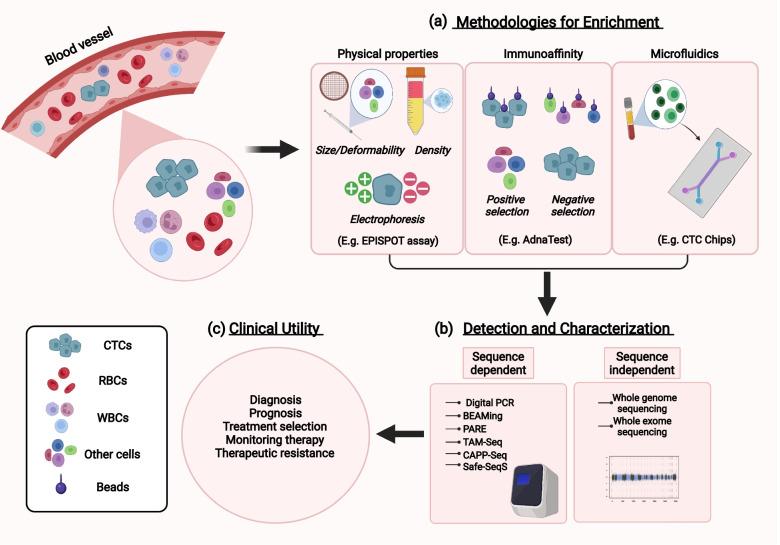
Over the past decade, invasive techniques for diagnosing and monitoring cancers are slowly being replaced by non-invasive methods such as liquid biopsy. Liquid biopsies have drastically revolutionized the field of clinical oncology, offering ease in tumor sampling, continuous monitoring by repeated sampling, devising personalized therapeutic regimens, and screening for therapeutic resistance. Liquid biopsies consist of isolating tumor-derived entities like circulating tumor cells, circulating tumor DNA, tumor extracellular vesicles, etc., present in the body fluids of patients with cancer, followed by an analysis of genomic and proteomic data contained within them. Methods for isolation and analysis of liquid biopsies have rapidly evolved over the past few years as described in the review, thus providing greater details about tumor characteristics such as tumor progression, tumor staging, heterogeneity, gene mutations, and clonal evolution, etc. Liquid biopsies from cancer patients have opened up newer avenues in detection and continuous monitoring, treatment based on precision medicine, and screening of markers for therapeutic resistance. Though the technology of liquid biopsies is still evolving, its non-invasive nature promises to open new eras in clinical oncology. The purpose of this review is to provide an overview of the current methodologies involved in liquid biopsies and their application in isolating tumor markers for detection, prognosis, and monitoring cancer treatment outcomes.
在过去的十年中,用于诊断和监测癌症的侵入性技术正逐渐被液体活检等非侵入性方法所取代。液体活检彻底改变了临床肿瘤学领域,使肿瘤取样变得更加容易,通过重复取样进行连续监测,设计个性化的治疗方案,并筛查治疗耐药性。液体活检包括分离患者体液中存在的肿瘤衍生实体,如循环肿瘤细胞、循环肿瘤 DNA、肿瘤细胞外囊泡等,然后对其中包含的基因组和蛋白质组数据进行分析。正如综述中所述,过去几年中,液体活检的分离和分析方法迅速发展,从而能够更详细地了解肿瘤特征,如肿瘤进展、肿瘤分期、异质性、基因突变和克隆进化等。癌症患者的液体活检为检测和连续监测、基于精准医学的治疗以及治疗耐药性标志物的筛选开辟了新途径。尽管液体活检技术仍在不断发展,但它的非侵入性特性有望开启临床肿瘤学的新时代。本综述的目的是概述液体活检中涉及的当前方法及其在分离肿瘤标志物用于检测、预后和监测癌症治疗结果方面的应用。

 Zotero 插件