
基于灌注的生物反应器培养和等温微量量热法用于基于患者来源的神经母细胞瘤的碳酸酐酶抑制剂 SLC-0111 的临床前药物测试。
Perfusion-Based Bioreactor Culture and Isothermal Microcalorimetry for Preclinical Drug Testing with the Carbonic Anhydrase Inhibitor SLC-0111 in Patient-Derived Neuroblastoma.
机构信息
Department of Pediatric Surgery, University Children's Hospital Basel, 4031 Basel, Switzerland.
Department of Clinical Research, University of Basel, 4031 Basel, Switzerland.
出版信息
Int J Mol Sci. 2022 Mar 14;23(6):3128. doi: 10.3390/ijms23063128.
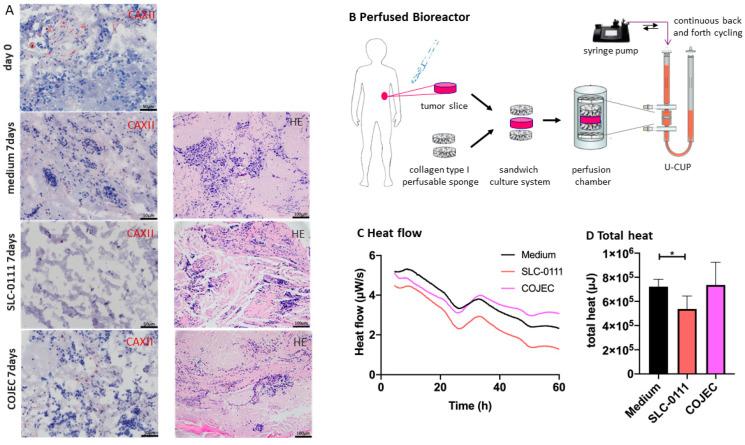
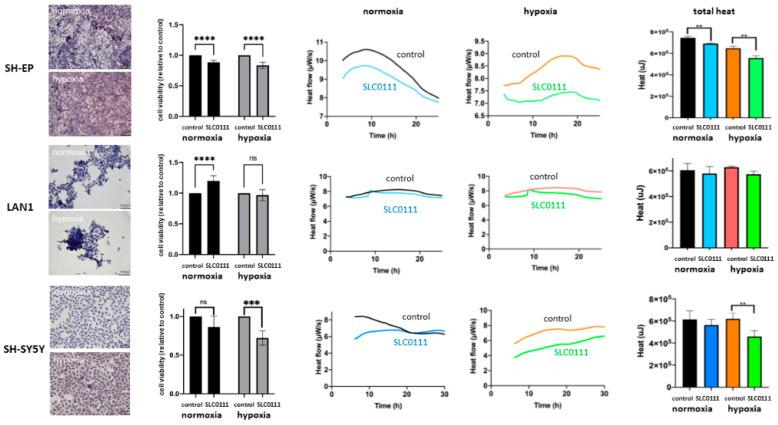
Neuroblastoma is a rare disease. Rare are also the possibilities to test new therapeutic options for neuroblastoma in clinical trials. Despite the constant need to improve therapy and outcomes for patients with advanced neuroblastoma, clinical trials currently only allow for testing few substances in even fewer patients. This increases the need to improve and advance preclinical models for neuroblastoma to preselect favorable candidates for novel therapeutics. Here we propose the use of a new patient-derived 3D slice-culture perfusion-based 3D model in combination with rapid treatment evaluation using isothermal microcalorimetry exemplified with treatment with the novel carbonic anhydrase IX and XII (CAIX/CAXII) inhibitor SLC-0111. Patient samples showed a CAIX expression of 18% and a CAXII expression of 30%. Corresponding with their respective CAIX expression patterns, the viability of SH-EP cells was significantly reduced upon treatment with SLC-0111, while LAN1 cells were not affected. The inhibitory effect on SH-SY5Y cells was dependent on the induction of CAIX expression under hypoxia. These findings corresponded to thermogenesis of the cells. Patient-derived organotypic slice cultures were treated with SLC-0111, which was highly effective despite heterogeneity of CAIX/CAXII expression. Thermogenesis, in congruence with the findings of the histological observations, was significantly reduced in SLC-0111-treated samples. In order to extend the evaluation time, we established a perfusion-based approach for neuroblastoma tissue in a 3D perfusion-based bioreactor system. Using this system, excellent tissue quality with intact tumor cells and stromal structure in neuroblastoma tumors can be maintained for 7 days. The system was successfully used for consecutive drug response monitoring with isothermal microcalorimetry. The described approach for drug testing, relying on an advanced 3D culture system combined with a rapid and highly sensitive metabolic assessment, can facilitate development of personalized treatment strategies for neuroblastoma.
神经母细胞瘤是一种罕见的疾病。在临床试验中测试新的神经母细胞瘤治疗选择的可能性也很少。尽管不断需要改善晚期神经母细胞瘤患者的治疗效果,但临床试验目前仅允许在更少的患者中测试少数物质。这增加了对神经母细胞瘤的临床前模型进行改进和推进的需求,以便为新型治疗方法预先选择有利的候选者。在这里,我们提出使用新的患者衍生的 3D 切片培养灌注式 3D 模型,结合使用等温微量热法进行快速治疗评估,并用新型碳酸酐酶 IX 和 XII(CAIX/CAXII)抑制剂 SLC-0111 进行治疗。患者样本显示 CAIX 表达为 18%,CAXII 表达为 30%。与各自的 CAIX 表达模式相对应,SLC-0111 处理显著降低了 SH-EP 细胞的活力,而 LAN1 细胞不受影响。在缺氧条件下诱导 CAIX 表达对 SH-SY5Y 细胞的抑制作用是依赖的。这些发现与细胞产热相对应。患者衍生的器官样切片培养物用 SLC-0111 处理,尽管 CAIX/CAXII 表达存在异质性,但该药物仍然非常有效。与组织学观察结果一致,SLC-0111 处理的样本中的产热量显著降低。为了延长评估时间,我们在 3D 灌注式生物反应器系统中建立了一种用于神经母细胞瘤组织的灌注式方法。使用该系统,可以在 7 天内维持神经母细胞瘤肿瘤中具有完整肿瘤细胞和基质结构的优异组织质量。该系统成功用于等温微量热法的连续药物反应监测。这种用于药物测试的方法依赖于先进的 3D 培养系统,结合快速和高度敏感的代谢评估,可以促进为神经母细胞瘤制定个性化治疗策略。


 Zotero 插件